How to Structure a Release Campaign That Feeds Spotify’s Algorithm
Most artists try to “hack” the Spotify algorithm.
They look for timing tricks, playlist strategies, or ways to spike streams in a short window. The assumption is that if you can generate enough activity quickly, the algorithm will respond.
Sometimes it does.
But the results rarely last.
The reason is simple. The Spotify algorithm is not optimized for spikes. It is optimized for sustained listener behavior.
If your release campaign is built around short-term activity, it will produce short-term results. If it is built around consistent signals, it will create momentum.
The difference is not in tactics. It is in structure.
What the Spotify Algorithm Actually Responds To
At a high level, Spotify’s algorithm prioritizes signals that indicate listener preference and retention.
Not all engagement is treated equally.
Passive actions, such as a single stream, provide limited information. Active decisions, such as saving a track or following an artist, provide stronger signals.
Over time, the algorithm learns from patterns:
- Do listeners return to the track?
- Do they save it to their library?
- Do they engage with future releases?
These behaviors suggest that the music has lasting value, not just momentary appeal.
This is why strategies that focus purely on generating streams often plateau. They create activity without reinforcing the signals the algorithm is designed to amplify.
The Shift From Volume to Quality of Signals
To structure a campaign that feeds the algorithm, you need to shift from volume to quality.
It is not just about how many interactions you generate. It is about what kind of interactions they are.
A smaller number of high-intent actions can have more long-term impact than a large number of passive streams.
This aligns with the listener progression framework:
- Streams indicate exposure
- Saves indicate reinforcement
- Follows indicate commitment
The deeper the action, the stronger the signal.
A well-structured release campaign prioritizes moving listeners through these stages.
Why Most Release Campaigns Fall Short
Traditional release strategies are designed around a timeline.
You build anticipation, launch a pre-save campaign, release the track, and push for streams. Then the cycle ends.
The problem is that this structure does not create continuity.
There is no mechanism to:
- Capture listener intent before release
- Reinforce engagement after release
- Retain listeners for future campaigns
Without these elements, each release operates in isolation. The algorithm sees activity, but not consistency.
This is why growth stalls, even when individual campaigns perform well.
Reframing the Release Campaign as a System
To align with the algorithm, your release campaign needs to function as a system, not a sequence.
This is where growth flows become essential.
A growth flow connects fan actions across time. It ensures that each interaction leads to the next, creating a continuous loop of engagement.
Instead of treating pre-save, release, and post-release as separate phases, you connect them into a single structure.
This changes how signals are generated.
Instead of a spike of activity, you create a pattern of behavior. And patterns are what the algorithm learns from.
The Three Phases of an Algorithm-Aligned Campaign
While the system is continuous, it can be understood in three core phases.
1. Pre-Release: Capture High-Intent Signals
The goal of the pre-release phase is not just awareness. It is identification.
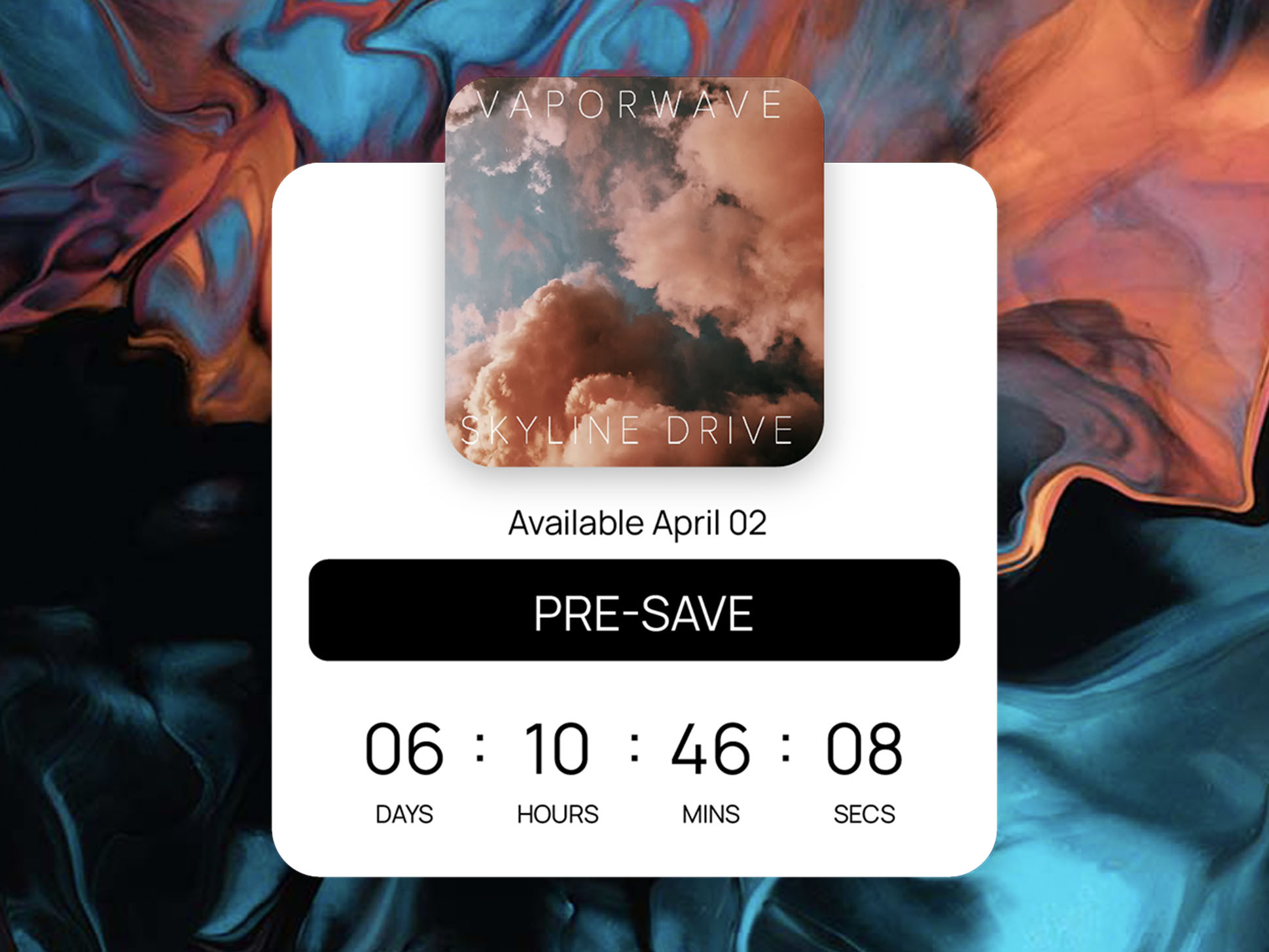
Pre-save campaigns play a central role here.
A pre-save link captures listeners who are willing to take action before hearing the track. These are high-intent fans who are more likely to engage deeply after release.
This phase should focus on:
- Attracting engaged listeners, not just volume
- Encouraging opt-in to direct channels
- Preparing for post-release interaction
This is where pre-release strategy sets the foundation for everything that follows.
2. Release: Reinforce Engagement
Release day is the moment of highest engagement.
Listeners who pre-saved are primed to listen. New listeners are discovering the track. The opportunity to generate strong signals is at its peak.
This phase should focus on:
- Delivering the track through direct channels
- Encouraging saves while engagement is high
- Prompting repeat listening
Timing is critical here.
The closer your prompts are to the moment of listening, the more likely they are to convert.
3. Post-Release: Sustain and Amplify
Most campaigns lose momentum after release. This is where compounding is either created or lost.
The post-release phase should focus on:
- Following up with engaged listeners
- Encouraging follows and deeper commitment
- Maintaining interaction over time
This is what creates continuity.
Instead of a single spike, you build a pattern of engagement that extends beyond release week.
Connecting the Phases With Growth Flows
The real advantage comes from connecting these phases into a single flow.
A simplified example might look like this:
- A fan clicks a pre-save link
- They opt into a messaging channel
- On release day, they receive the track
- After listening, they are prompted to save
- Engaged listeners are encouraged to follow
- Followers are included in future release cycles
Each step builds on the last.
This structure ensures that signals are not isolated. They are layered.
And layered signals are what drive algorithmic momentum.
Comparing Spike-Based vs System-Based Campaigns
To clarify the difference, consider how these two approaches operate.
| Spike-Based Campaign | System-Based Campaign |
|---|---|
| Focus on release-day streams | Focus on sustained engagement |
| Treat phases independently | Connect phases through growth flows |
| Generate short-term activity | Build long-term patterns |
| Relies on reach | Relies on progression and retention |
Both approaches can generate visibility.
Only one creates momentum.
Why This Approach Compounds Over Time
When your campaign structure aligns with the algorithm, the effects begin to stack.
Each release generates stronger signals. Each set of listeners is more engaged. Each campaign starts from a higher baseline.
This creates a compounding loop:
- More engagement → stronger signals
- Stronger signals → increased visibility
- Increased visibility → more listeners
- More listeners → more opportunities for engagement
Over time, this loop accelerates.
Growth becomes less dependent on external factors and more driven by the system itself.
The Strategic Shift
The idea of “feeding the algorithm” is often misunderstood.
It is not about manipulating the system. It is about aligning with it.
Spotify’s algorithm is designed to surface music that listeners consistently engage with. It rewards patterns, not spikes.
When your release strategy is built around saves, follows, and retention, you are generating the exact signals the system is designed to amplify.
This is why automation, growth flows, and fan relationship systems are becoming central to modern music marketing.
They provide the infrastructure needed to create those patterns at scale.
From Campaign Execution to System Design
The most important shift is moving from execution to design.
Instead of focusing on what to do for each release, you focus on how the system operates across releases.
This means:
- Designing for progression, not just promotion
- Prioritizing signals that create leverage
- Building continuity between interactions
When these elements are in place, the algorithm is no longer something you chase.
It becomes something you naturally align with.
And when that happens, growth is no longer unpredictable.
It becomes a function of the system you have built.