The 30-Day Instagram Marketing Plan for a New Music Release
Most artists approach a release with urgency.
They compress everything into a few key moments. A teaser. An announcement. A push on release day.
The assumption is that intensity creates results.
In reality, compression creates drop-off.
Fans need repetition. They need context. They need multiple opportunities to engage at different levels of intent.
A successful release campaign is not defined by a single moment. It is defined by how consistently you move fans through a behavioral pathway over time.
This is where a structured 30-day plan becomes valuable.
Not as a rigid schedule of posts, but as a framework for orchestrating interaction. Each week has a role. Each phase builds on the previous one. Each piece of content is designed to initiate movement.
The goal is not just to promote a release.
It is to engineer a sequence of interactions that leads to action.
The Strategic Foundation: Time as a Conversion Tool
Time is not just a constraint in a release campaign. It is an asset.
When used intentionally, time allows you to:
- Build familiarity before asking for action
- Introduce interaction gradually
- Reinforce behavior through repetition
- Capture both early and late engagement
A 30-day window creates enough space to move fans through all stages of the interaction pathway:
- Awareness
- Participation
- Conversation
- Conversion
Without this structure, campaigns tend to skip steps. And when steps are skipped, conversion suffers.
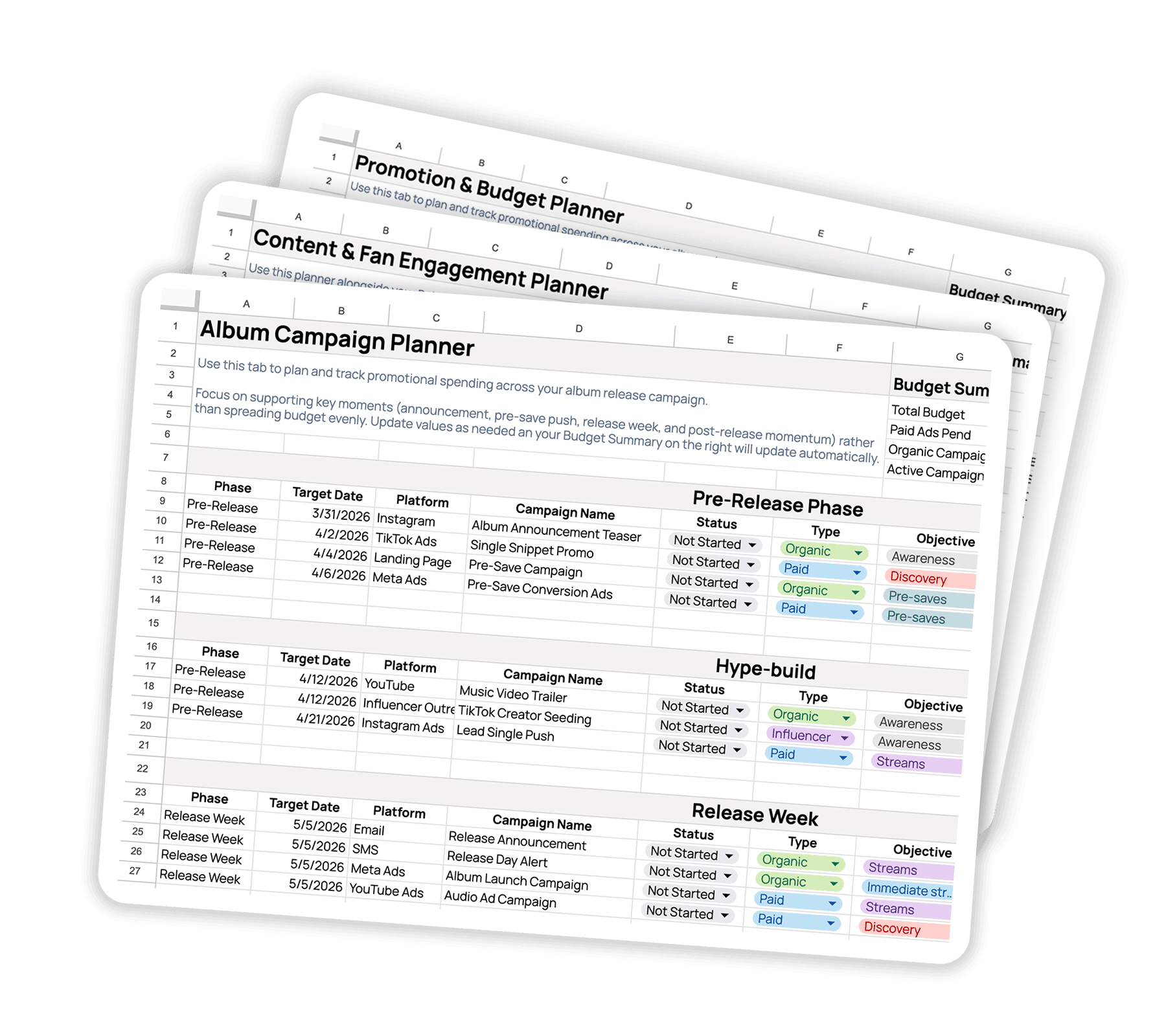
The 30-Day Framework at a Glance
The plan is divided into four phases, each with a specific role:
| Phase | Timeline | Primary Goal |
|---|---|---|
| Phase 1 | Days 1–7 | Build context and familiarity |
| Phase 2 | Days 8–14 | Introduce interaction and curiosity |
| Phase 3 | Days 15–23 | Drive DMs and pre-saves |
| Phase 4 | Days 24–30 | Create urgency and convert |
Each phase is not just about what you post, but what behavior you are trying to create.
Phase 1 (Days 1–7): Build Context Before You Ask
The biggest mistake artists make is asking too early.
If fans do not understand the project, they will not engage deeply with it.
This phase focuses on pre-release positioning.
You are not announcing the release yet. You are building familiarity.
Content during this phase might include:
- Visual identity or artwork fragments
- Studio moments or behind-the-scenes clips
- Conceptual hints about the project
- Emotional or narrative framing
The goal is subtle repetition.
By the end of this phase, the project should feel recognizable, even if it has not been formally introduced.
This reduces resistance when you move into interaction-driven content.
Phase 2 (Days 8–14): Introduce Interaction Pathways
Once familiarity is established, the next step is participation.
This phase shifts the audience from passive consumption to active interaction.
The focus is not yet conversion. It is engagement with intent.
Effective formats include:
- Teaser content that invites response
- Story polls and question stickers
- Posts that encourage opinions or reactions
- Soft prompts that hint at upcoming access
For example:
- “Should I drop this sooner or later?”
- “What do you think this track sounds like?”
These interactions serve two purposes:
- They increase visibility through engagement
- They prepare fans to respond to future prompts
This is where behavioral conditioning begins.
Fans learn that interacting leads to something more.
Phase 3 (Days 15–23): Drive DMs and Pre-Saves
This is the core conversion phase.
By now, the audience is familiar with the project and comfortable interacting.
The campaign shifts from engagement to structured interaction pathways.
This is where comment automation becomes central.
A typical post might look like:
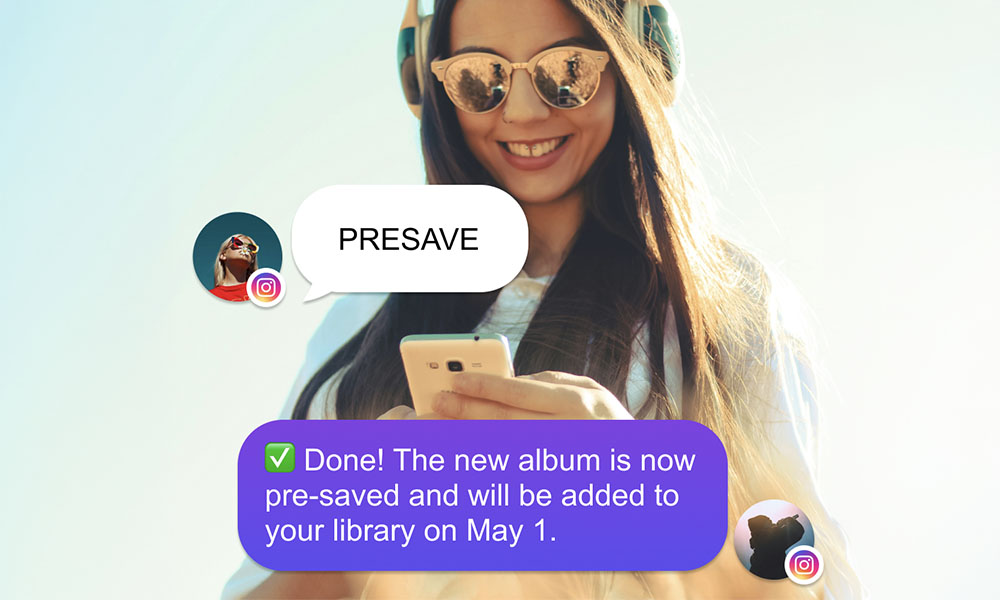
“New album dropping soon. Comment ‘PRESAVE’ and I’ll send you the link.”
This transforms the post into an entry point:
- The comment triggers a DM
- The DM delivers the pre-save link
- The conversation guides the action
At this stage, repetition is critical.
Multiple posts, stories, and variations should reinforce the same interaction pattern.
The objective is to normalize the behavior:
- Comment → DM → Action
Over time, participation increases because the pathway becomes familiar.
Phase 4 (Days 24–30): Create Urgency and Capture Late Conversion
As release day approaches, the campaign shifts again.
The goal is no longer to introduce interaction. It is to accelerate action.
This phase introduces urgency:
- “Dropping in 3 days. Last chance to pre-save.”
- “Release is tomorrow. I’m sending the link to everyone who comments.”
The structure remains the same, but the messaging changes.
Instead of curiosity, the driver becomes immediacy.
This phase captures fans who were aware but had not yet acted.
It also reinforces the importance of the moment.
Release Day: Activation, Not Announcement
By release day, most of the work should already be done.
If the campaign has been structured correctly, you have already:
- Built awareness
- Initiated interactions
- Collected high-intent engagement
Release day becomes an activation layer.
DMs can be used to:
- Notify fans that the release is live
- Share streaming links
- Encourage immediate listening
Because these fans have already engaged, response rates are significantly higher.
This is the compounding effect of a structured campaign.
Post-Release: Extending the Lifecycle
The campaign does not end when the music is live.
Post-release is where long-term engagement is reinforced.
This phase often includes:
- Fan feedback prompts
- Additional content tied to the release
- Continued DM interaction
For example:
- “Have you listened yet?”
- “Which track is your favorite?”
These interactions maintain continuity and extend the lifespan of the campaign.
Content Planning Within the 30-Day System
It is tempting to think of this plan as a content calendar.
But the real focus is not the content itself. It is the role each piece plays within the system.
Every post should answer a specific question:
- Does this build familiarity?
- Does this create interaction?
- Does this move the fan into a DM?
- Does this guide toward action?
If a piece of content does not serve one of these roles, it may generate engagement, but it will not contribute to the campaign outcome.
Why This Structure Works
This approach works because it aligns with how fans actually behave.
Fans rarely convert on first exposure.
They need multiple touchpoints. They need context. They need interaction.
By spreading the campaign over 30 days, you create multiple entry points.
Some fans engage early. Others engage late.
But the system captures both.
This is what makes the campaign resilient.
It does not depend on a single post or moment. It builds momentum over time.
From Posting to Orchestrating
The most important shift in this plan is not the timeline.
It is the mindset.
You are not just posting content.
You are orchestrating interactions.
Each piece connects to the next. Each interaction builds on the previous one. Each phase moves the fan closer to action.
This is what transforms Instagram from a content platform into a campaign engine.
And once that system is in place, each new release becomes easier to execute, more predictable, and more effective.
Not because you are working harder.
But because you are designing the pathway more intentionally.