The Listener Intent Ladder: How Fans Move from Streams to Algorithmic Promotion
Most artists understand that some listeners matter more than others.
What is less understood is why.
On Spotify, not all engagement is treated equally. The platform does not simply count activity. It evaluates the type of activity and what that behavior reveals about listener intent.
This creates a hidden structure beneath every release.
A progression of actions that listeners move through, from passive consumption to active commitment.
This progression can be understood as the Listener Intent Ladder.
And once you see it clearly, it changes how you approach music marketing, release strategy, and long-term growth.
What the Listener Intent Ladder Actually Represents
The Listener Intent Ladder is a framework for understanding how listener behavior evolves over time.
At the bottom of the ladder are low-intent actions. At the top are high-intent signals that indicate a durable relationship between the listener and the artist.
Each step requires more effort, more attention, and more commitment.
Just as importantly, each step carries more weight in how Spotify interprets that listener’s behavior.
A stream says “this was heard.”
A save says “this matters.”
A follow says “I want more of this in the future.”
These are fundamentally different signals.
Spotify’s algorithm is designed to detect that difference and respond accordingly.
The Core Levels of Listener Intent
While listener behavior can vary, most actions fall into a recognizable hierarchy.
From lowest to highest intent:
- Passive Stream
The listener encounters the track through a playlist, radio, or recommendation and listens briefly. This is exposure, not commitment. - Active Stream
The listener chooses to play the track directly, often by searching or tapping intentionally. This indicates initial interest. - Repeat Listen
The listener returns to the track within a short period. This signals resonance and early preference. - Playlist Addition
The listener adds the track to a personal playlist. This suggests curation and future listening intent. - Library Save
The track is saved to the listener’s library. This is a strong signal of long-term value. - Artist Follow
The listener follows the artist, connecting future releases to their listening experience.
Each step represents a shift from temporary interaction to lasting relationship.
Importantly, the ladder is not just descriptive. It is predictive.
Listeners who climb higher on the ladder are more likely to engage with future releases, and Spotify’s system is built to prioritize those listeners.
Why the Ladder Drives Algorithmic Promotion
Spotify’s goal is to recommend music that listeners will care about enough to return to.
To do that, it relies on patterns of behavior.
High-intent actions act as confirmation signals. They tell the system that a listener is not just consuming content, but valuing it.
When enough listeners perform these actions at a meaningful rate, the algorithm responds by increasing distribution.
This is how tracks move into:
- Release Radar
- Discover Weekly
- Radio and autoplay recommendations
The key factor is not the total number of streams, but the quality of engagement per listener.
A track with fewer streams but higher save rates can outperform a track with significantly more plays but weaker intent signals.
This is why understanding the ladder is critical. It explains not just what happens after a release, but why certain songs continue to grow while others stall.
The Gap Between Exposure and Progression
Most music marketing efforts focus on the bottom of the ladder.
They aim to maximize exposure.
Ads, playlist placements, and social promotion are all effective at driving streams. But streams alone do not guarantee progression.
A listener can remain at the bottom of the ladder indefinitely.
They can stream once, never return, and never perform a higher-intent action.
From a growth perspective, this is a dead end.
The real objective is not just to reach listeners, but to move them upward.
And that requires intentional design.
Designing Campaigns That Move Listeners Up the Ladder
A strong release strategy does not treat all engagement as equal.
It creates pathways that guide listeners toward higher-intent actions.
This is where pre-release strategy becomes especially important.
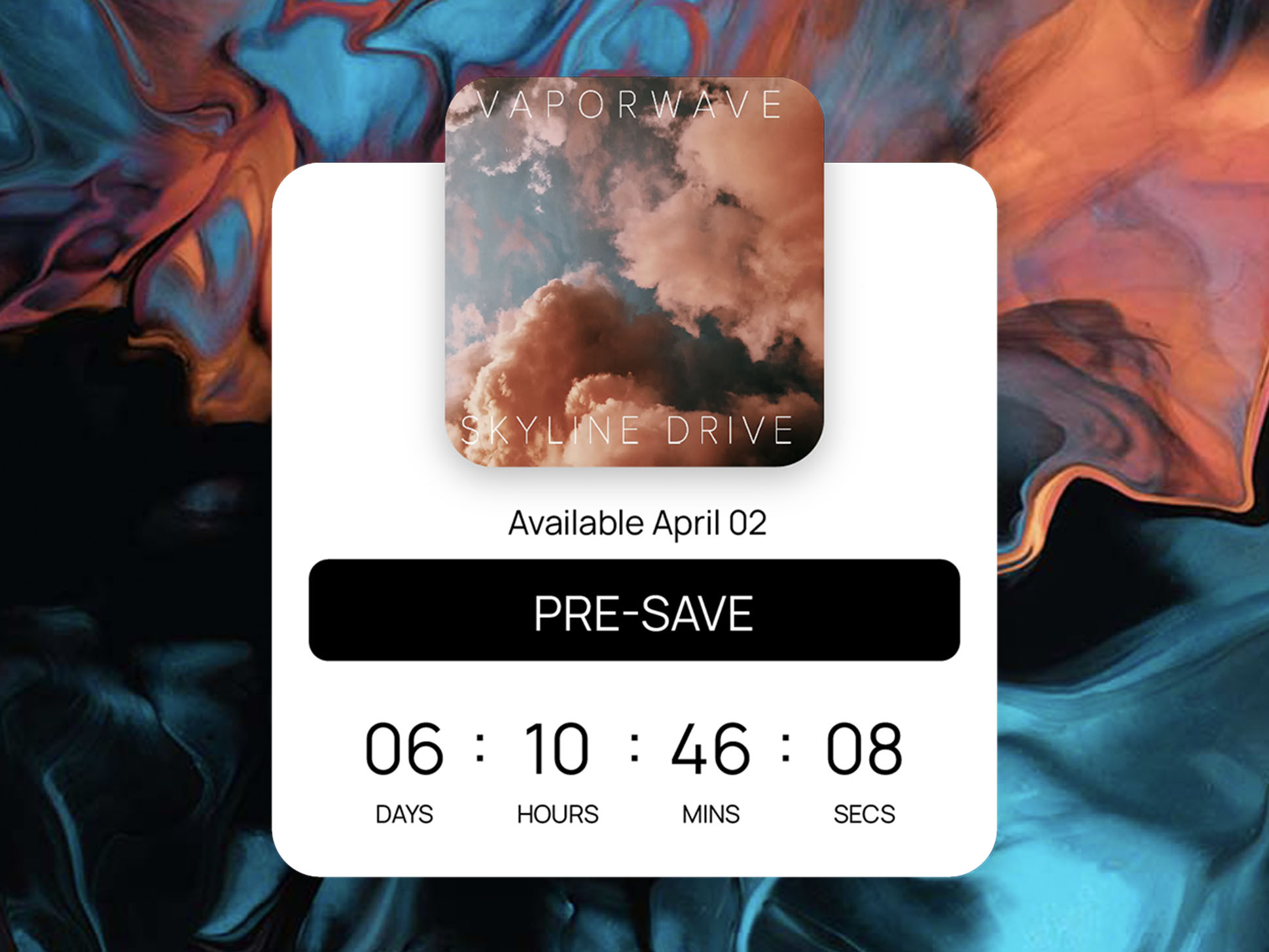
A pre-save campaign, for example, does more than generate early interest. It effectively places listeners higher on the ladder before the release even begins.
When a listener pre-saves a track, they are committing to future listening behavior. At release, this converts into immediate library saves and early engagement signals.
This compresses the ladder.
Instead of starting at passive streams, those listeners enter the ecosystem closer to the top.
Beyond pre-saves, campaigns can be structured to encourage progression at every stage:
- Direct listeners to experiences that prompt saves or follows
- Reinforce engagement through post-release messaging
- Create repeated touchpoints that encourage return behavior
The goal is not to force actions, but to make them natural next steps.
Why Pre-Save Strategy Shapes the Entire Release
Pre-saves are often discussed as a launch tactic.
In reality, they are a structural advantage.
They influence how a track is interpreted from the moment it enters Spotify’s system.
A release with strong pre-save activity generates immediate signals of intent:
- Early library saves
- High engagement rates relative to streams
- Faster listener return patterns
These signals set the tone for algorithmic evaluation.
Instead of waiting for listeners to discover the track and decide whether it matters, the campaign provides that data upfront.
This is why pre-save links should not be treated as simple promotional tools.
They are mechanisms for shaping listener behavior before the first stream ever occurs.
The Role of Post-Release Reinforcement
Climbing the Listener Intent Ladder does not end at release.
In many cases, the most valuable progression happens after the initial listening moment.
Listeners who stream a track once can still be moved upward through follow-up engagement.
This is where cross-channel strategies become important.
Direct communication, such as SMS or messaging, allows artists to re-engage listeners and guide them toward higher-intent actions.
For example, a listener who streamed a track can be encouraged to:
- Save the track to their library
- Follow the artist for future releases
- Engage with additional content
These actions reinforce the signals that drive algorithmic promotion.
They also extend the lifecycle of the release beyond its initial window.
From Individual Actions to Systemic Growth
When viewed in isolation, each step on the ladder may seem small.
But collectively, they create a feedback loop.
Higher-intent actions lead to increased distribution. Increased distribution leads to more listeners entering the ladder. Some of those listeners progress upward, reinforcing the cycle.
This is how sustainable growth is built.
Not through one viral moment, but through consistent movement up the ladder across multiple releases.
Over time, this creates a compounding effect.
Each new release benefits from a base of listeners who are already higher on the ladder and more likely to engage immediately.
Rethinking Release Strategy Around Intent
A modern release strategy is not just about timing and promotion.
It is about behavioral design.
It asks:
- How are listeners entering the funnel?
- What actions are they taking after discovery?
- What mechanisms exist to move them upward?
Answering these questions requires a shift from campaign thinking to system thinking.
Instead of optimizing for a single release, the focus moves toward building infrastructure that supports ongoing progression.
This includes:
- Pre-save systems that capture early intent
- Landing experiences designed for conversion
- Messaging channels that enable continued engagement
- Analytics that track movement across the ladder
Together, these elements form a cohesive growth engine.
The Real Objective of Music Marketing
At its core, music marketing is not about generating attention.
It is about building relationships.
The Listener Intent Ladder provides a way to measure that relationship through behavior.
Streams introduce listeners.
Saves and follows retain them.
And algorithmic promotion amplifies the connection.
When these elements align, growth becomes less about chasing numbers and more about strengthening signals.
This is the shift that defines modern music marketing.
Not more streams.
But better ones.


Keep reading
All posts
Is Spotify Discovery Mode Worth It? The 30% Commission, Run as Math

How to Build a 3-Step Action Flow: SMS Sign-Up to Pre-Save and Follow