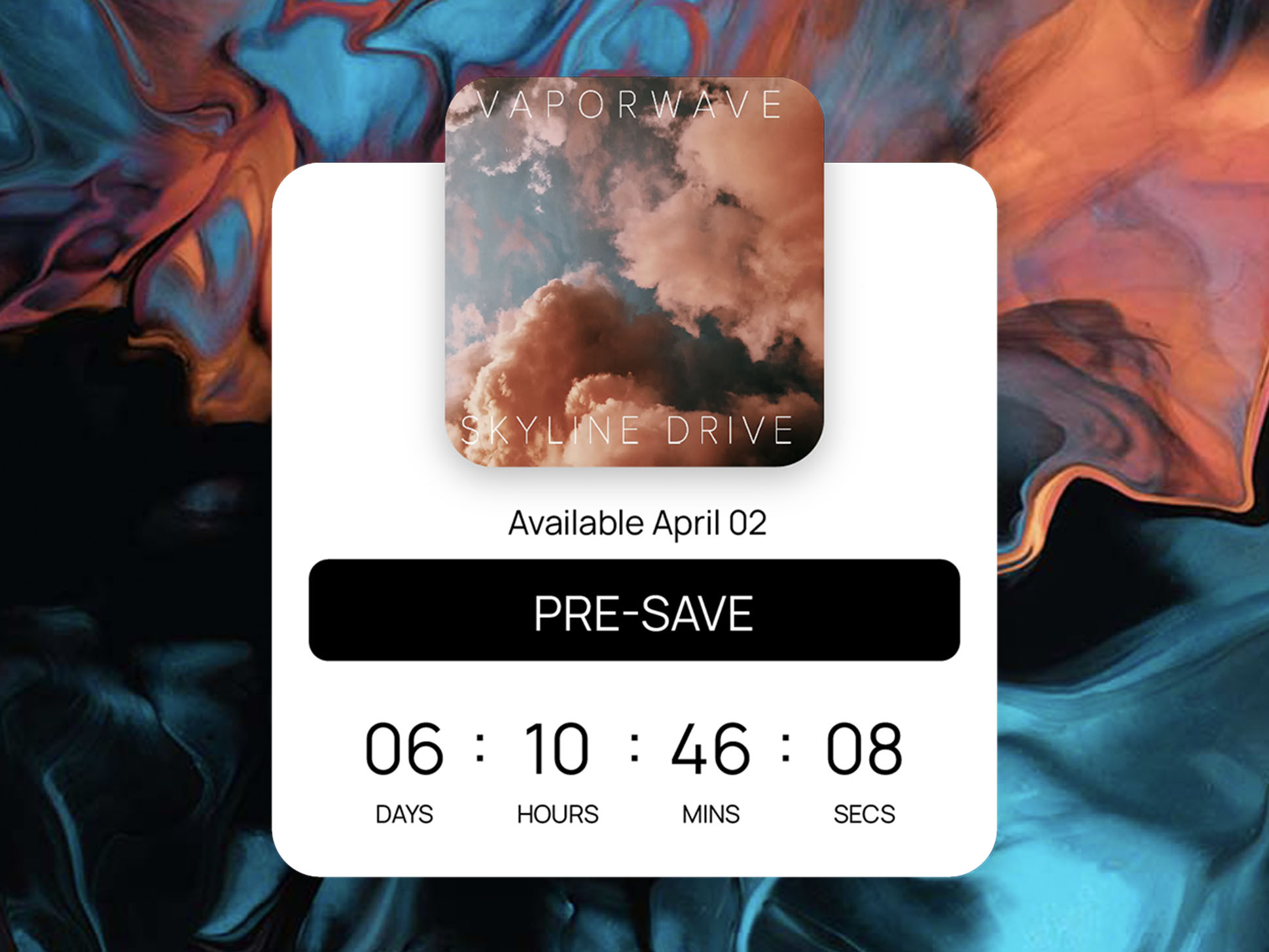
The Modern Release Strategy: Why You Should Optimize for Saves, Not Streams
Most release strategies are built around a single moment.
Release day.
Everything leads up to it. The pre-save campaign. The content. The promotion. The outreach. Then the track drops, the streams come in, and the focus shifts to the next release.
On paper, this approach makes sense. Streams are the most visible metric. They are easy to measure, easy to compare, and closely tied to how success is perceived.
But visibility does not equal value.
Streams tell you that a track was played. They do not tell you whether it mattered.
If your goal is long-term growth, optimizing for streams alone is not just insufficient. It is structurally limiting.
The modern release strategy is not built around streams. It is built around saves.
The Problem With Stream-Centric Thinking
Streams are a consumption metric.
They reflect exposure, not commitment.
A listener can generate a stream without any meaningful connection to the artist. The track might have appeared in a playlist. It might have autoplayed after another song. It might have been played once and never revisited.
This creates a misleading signal.
High stream counts can coexist with low retention. A track can perform well in the short term while failing to build any lasting audience.
This is why many artists experience volatility. One release performs well. The next struggles to replicate the same numbers. There is no consistent baseline.
The issue is not effort. It is what the strategy is optimizing for.
Why Saves Are a More Meaningful Metric
A save represents a different type of behavior.
When a listener saves a track on Spotify, they are choosing to keep it. They are adding it to their personal library, creating a direct pathway back to that music.
This has several implications:
- The listener is more likely to return
- The track becomes part of their ongoing listening habits
- The platform receives a strong signal of preference
From both a behavioral and algorithmic perspective, saves indicate value.
They suggest that the track is not just being heard, but remembered.
Within a growth flow, saves act as reinforcement. They strengthen the connection between the listener and the artist, increasing the probability of future engagement.
This is why saves are central to compounding.
Reframing the Goal of a Release
If you shift your focus from streams to saves, the entire structure of your release strategy changes.
Instead of asking, “How do we get as many plays as possible?” you begin asking, “How do we get listeners to care enough to save this?”
This leads to a different set of priorities:
- Timing becomes more important than volume
- Context becomes more important than reach
- Continuity becomes more important than spikes
In other words, the strategy becomes more aligned with how listeners actually form preferences.
The Role of Pre-Saves in a Save-Driven Strategy
Pre-save campaigns are often positioned as a way to increase release-day streams.
In a save-driven strategy, their role is more nuanced.
A pre-save identifies listeners who are willing to take action before hearing the track. This makes them high-intent participants in your release.
When integrated into a growth flow, pre-saves become:
- A filter for identifying engaged listeners
- A trigger for post-release interaction
- An entry point into a system designed to increase saves
This changes how you evaluate pre-release strategy.
The goal is not just to accumulate pre-saves. It is to build a pipeline of listeners who are likely to engage deeply after release.
Designing a Release Strategy That Increases Saves
Optimizing for saves requires a structured approach.
It is not about asking listeners to save more often. It is about creating conditions where saving becomes the natural next step.
A practical framework includes three phases.
1. Build Anticipation With Intent
Use pre-save links, content, and messaging to attract listeners who are genuinely interested.
The goal is not maximum reach. It is high-quality engagement.
Listeners who opt in early are more likely to take meaningful actions later.
2. Capture and Connect
When a listener engages, establish a direct connection.
This might be through SMS, email, or another owned channel. The key is to create a way to reach the listener at the right moment.
Without this connection, timing becomes difficult to control.
3. Reinforce at the Moment of Engagement
Deliver the track and prompt the save when the listener is most engaged.
This typically happens:
- On release day
- Immediately after listening
- During follow-up interactions
This is where automation becomes essential. It ensures that the prompt aligns with behavior, not just a schedule.
Comparing Stream-Driven vs Save-Driven Strategies
To make the distinction clearer, it helps to compare the two approaches directly.
| Stream-Driven Strategy | Save-Driven Strategy |
|---|---|
| Optimizes for plays | Optimizes for retention |
| Focuses on release-day spikes | Focuses on long-term engagement |
| Relies heavily on reach | Relies on progression and timing |
| Produces volatile results | Produces consistent growth |
Both strategies can generate activity. But only one builds momentum.
How Saves Lead to Compounding Growth
The impact of a save extends beyond the individual track.
Each saved track increases the likelihood of repeat listening. It keeps the artist present in the listener’s library. It strengthens the signals that influence recommendations.
Over time, this creates a compounding loop:
- More saves → more repeat engagement
- More engagement → stronger platform signals
- Stronger signals → increased visibility
- Increased visibility → more listeners entering the system
This loop is more stable than one driven by streams alone.
It is built on behavior that persists, not just spikes.
Integrating Saves Into a Growth Flow
The most effective strategies do not treat saves as isolated actions.
They integrate them into a broader system.
A simple growth flow might look like this:
- A fan clicks a pre-save link
- They are connected to a messaging channel
- On release day, they receive the track
- After listening, they are prompted to save
- Saved listeners are prioritized for future releases
Each step builds on the last.
This structure ensures that saves are not left to chance. They are guided outcomes.
Why This Shift Changes Release Strategy
Optimizing for saves changes how you think about success.
It moves the focus from immediate output to long-term value.
Instead of measuring how many people listened once, you measure how many people chose to return.
This leads to more consistent growth.
Each release builds on a stronger foundation. Each campaign benefits from the last. The system improves over time.
This is the defining characteristic of a compounding strategy.
From Metrics to Mechanisms
The most important shift is moving from metrics to mechanisms.
Streams are a result. Saves are a mechanism.
They influence future behavior. They shape how listeners interact with your music over time.
By designing your release strategy around saves, you are not just optimizing for a number.
You are building a system that turns attention into retention.
And in a landscape where attention is increasingly fragmented, retention is what drives growth.