The Problem with “Get More Streams” as a Marketing Goal
“Get more streams” sounds like a clear objective.
It is measurable. It is visible. It aligns with how success is often presented across the music industry.
But as a marketing goal, it is fundamentally flawed.
Not because streams do not matter.
But because they are a lagging indicator of something else.
Streams are the result of growth, not the driver of it.
And when they become the primary objective, they pull strategy in the wrong direction.
Why Streams Feel Like the Right Metric
There is a reason streams dominate how artists think about performance.
They are easy to understand. They accumulate quickly. They provide immediate feedback.
More importantly, they are public.
They signal momentum to fans, industry partners, and collaborators.
This visibility creates a natural incentive to optimize for stream count.
Campaigns are judged by how many plays they generate. Ads are evaluated based on cost per stream. Playlist placements are pursued for their potential to increase volume.
At a surface level, this makes sense.
But it overlooks how Spotify actually determines what to promote.
The Difference Between Measuring and Driving Growth
A useful metric is not always a useful objective.
Streams are effective for measuring reach.
They are less effective for guiding strategy.
This is because they do not distinguish between passive and active engagement.
A listener who streams a track once and never returns contributes the same to your total as a listener who saves it, replays it, and follows your profile.
From a growth perspective, those two behaviors are not equal.
Spotify’s system is designed to recognize that difference.
It does not reward activity alone. It rewards signals of intent.
This creates a gap between what artists measure and what the algorithm values.
How “More Streams” Leads to the Wrong Tactics
When streams become the primary goal, campaigns tend to prioritize exposure over behavior.
The logic becomes simple.
More traffic equals more streams.
So the focus shifts to maximizing reach.
This often leads to:
- Driving traffic directly to Spotify
- Prioritizing playlist placement over listener engagement
- Running ads optimized for clicks and plays rather than conversion
- Treating each release as an isolated push
These tactics can generate volume.
But they rarely generate progression.
Listeners arrive, listen, and leave without taking higher-intent actions.
The campaign succeeds in hitting its metric, but fails to build a foundation for future growth.
The Listener Intent Ladder Changes the Objective
The Listener Intent Ladder provides a more accurate framework for understanding what matters.
At the bottom are passive streams.
At the top are actions like saves, follows, and repeat listening.
Each step represents a deeper level of engagement.
And each step carries more weight in how Spotify evaluates a track.
When viewed through this lens, the objective shifts.
The goal is not to maximize streams.
It is to move listeners upward.
Streams introduce listeners.
Intent signals retain them.
And retention is what drives algorithmic promotion.
Why Intent Signals Drive Everything That Follows
Spotify’s recommendation system is built on prediction.
It uses listener behavior to determine what should be surfaced next.
High-intent actions provide the strongest predictive signals.
When a listener saves a track, follows an artist, or returns to listen again, they are indicating future preference.
This data is actionable.
It allows the system to recommend music with confidence.
As a result, tracks that generate strong intent signals are more likely to receive:
- Increased placement in Release Radar
- Inclusion in Discover Weekly
- Expansion through radio and autoplay
These forms of distribution generate additional streams.
But those streams are a consequence of the signals, not the cause.
The Compounding Effect Only Happens With Intent
One of the most important dynamics in Spotify growth is the compounding effect.
High-intent actions create a feedback loop.
Saves lead to repeat listening.
Repeat listening strengthens engagement signals.
Stronger signals lead to increased distribution.
New listeners enter the system and repeat the process.
This is how a track continues to grow over time.
Without intent signals, this loop never begins.
A campaign can generate thousands of streams, but if those streams do not convert into saves or follows, the growth stops when the initial push ends.
Why Pre-Save Strategy Aligns With Real Growth
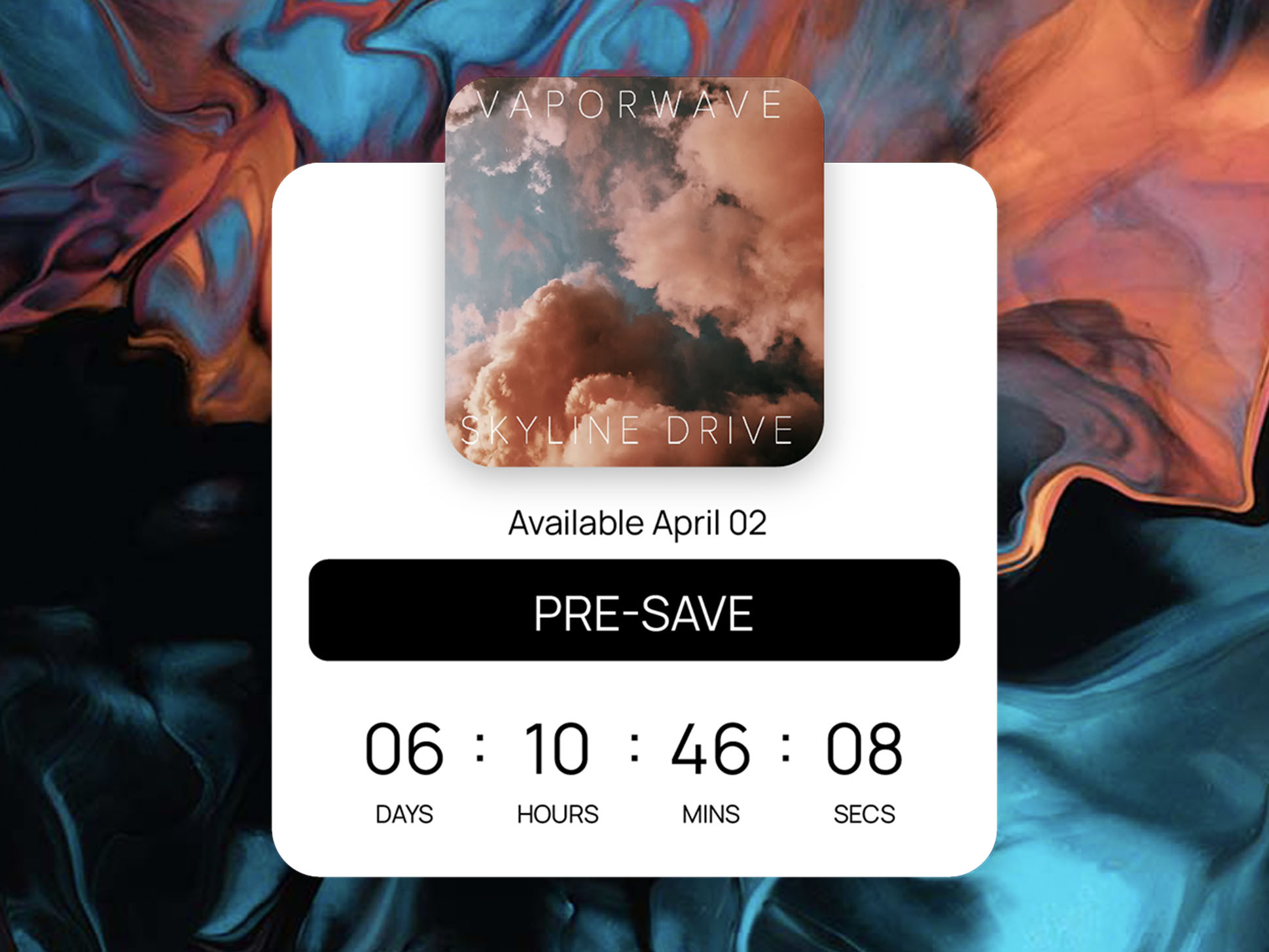
Pre-save campaigns represent a shift away from stream-first thinking.
They focus on capturing intent before the release.
When a listener pre-saves a track, they are committing in advance. At release, this converts into an immediate save, placing the listener higher on the Listener Intent Ladder from the start.
This creates stronger early signals.
It increases the likelihood of repeat listening.
And it improves the chances of algorithmic promotion.
In this context, pre-save links are not just promotional tools.
They are mechanisms for shaping behavior.
Reframing the Goal: From Volume to Quality
If “get more streams” is the wrong goal, what replaces it?
A more effective objective is to increase high-intent actions per listener.
This can be measured through:
- Save rate relative to total streams
- Growth in followers over time
- Repeat listening patterns
- Engagement across multiple releases
These metrics provide a clearer picture of how listeners are interacting with your music.
They also align with the signals that drive distribution.
When strategy is built around these indicators, streams begin to scale naturally.
Not because they are being chased, but because they are being reinforced.
Building a Strategy That Reflects How Growth Actually Works
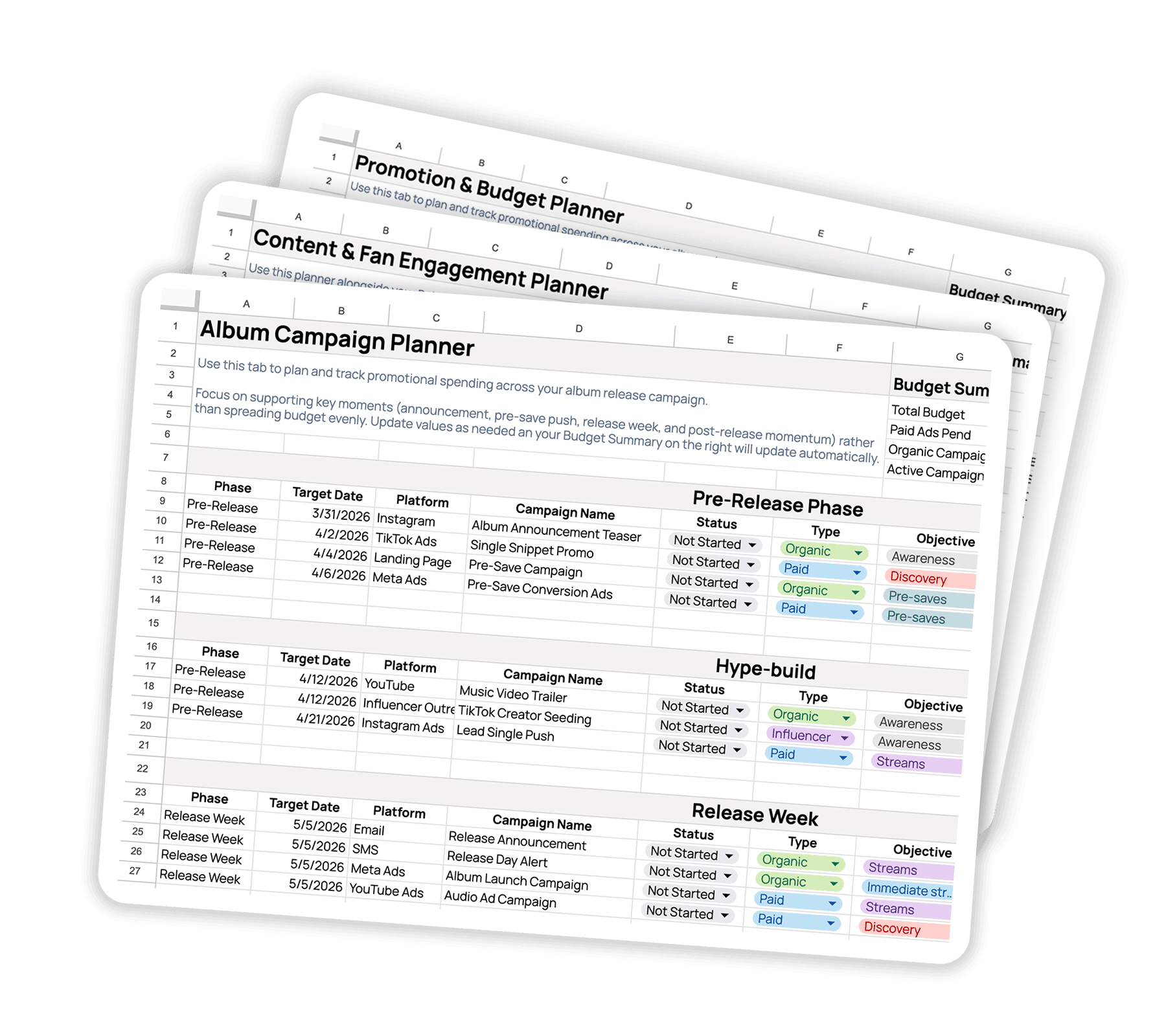
A release strategy built on intent looks different from one built on streams.
It is structured to guide behavior at every stage.
This includes:
- Pre-release
Capture early intent through pre-save campaigns and pre-release engagement. - Release
Direct traffic to experiences that encourage saving, following, and repeat listening. - Post-release
Reinforce engagement through ongoing communication and additional touchpoints.
Each phase contributes to the same objective.
Strengthening the signals that drive the system.
From Campaign Thinking to System Thinking
The deeper issue with stream-focused goals is that they encourage short-term thinking.
Each release becomes a standalone effort.
Each campaign is evaluated in isolation.
But growth on Spotify is cumulative.
It depends on building and reinforcing signals over time.
This requires a system.
A system that captures intent, nurtures engagement, and carries momentum from one release to the next.
Within this system, streams are not ignored.
They are contextualized.
They become an outcome of a larger process.
What Success Actually Looks Like
When the goal shifts from streams to intent, the definition of success changes.
A successful campaign is not one that generates the most plays.
It is one that creates the strongest signals.
It is one that converts listeners into fans.
It is one that builds a base of engaged listeners who return for future releases.
These outcomes are less visible in the short term.
But they are far more valuable over time.
The Real Problem With “Get More Streams”
The phrase itself is not inherently wrong.
But it is incomplete.
It focuses on what is easy to measure rather than what actually drives growth.
It encourages tactics that generate activity without building momentum.
And it obscures the underlying mechanics of how Spotify works.
Once those mechanics are understood, the limitation becomes clear.
Streams matter.
But only when they are supported by intent.
The Better Question to Ask
Instead of asking how to get more streams, a more useful question emerges.
How do we create more meaningful interactions per listener?
This question leads to better strategy.
It aligns with how the platform evaluates music.
And it shifts the focus from chasing numbers to building relationships.
Because in the end, growth is not driven by how many times your music is played.
It is driven by how many people choose to keep it.

Keep reading
All posts
Is Spotify Discovery Mode Worth It? The 30% Commission, Run as Math

How to Build a 3-Step Action Flow: SMS Sign-Up to Pre-Save and Follow