What Is an Action Flow? Turning Fan Actions Into Automated Growth
Most music marketing strategies stop at the action.
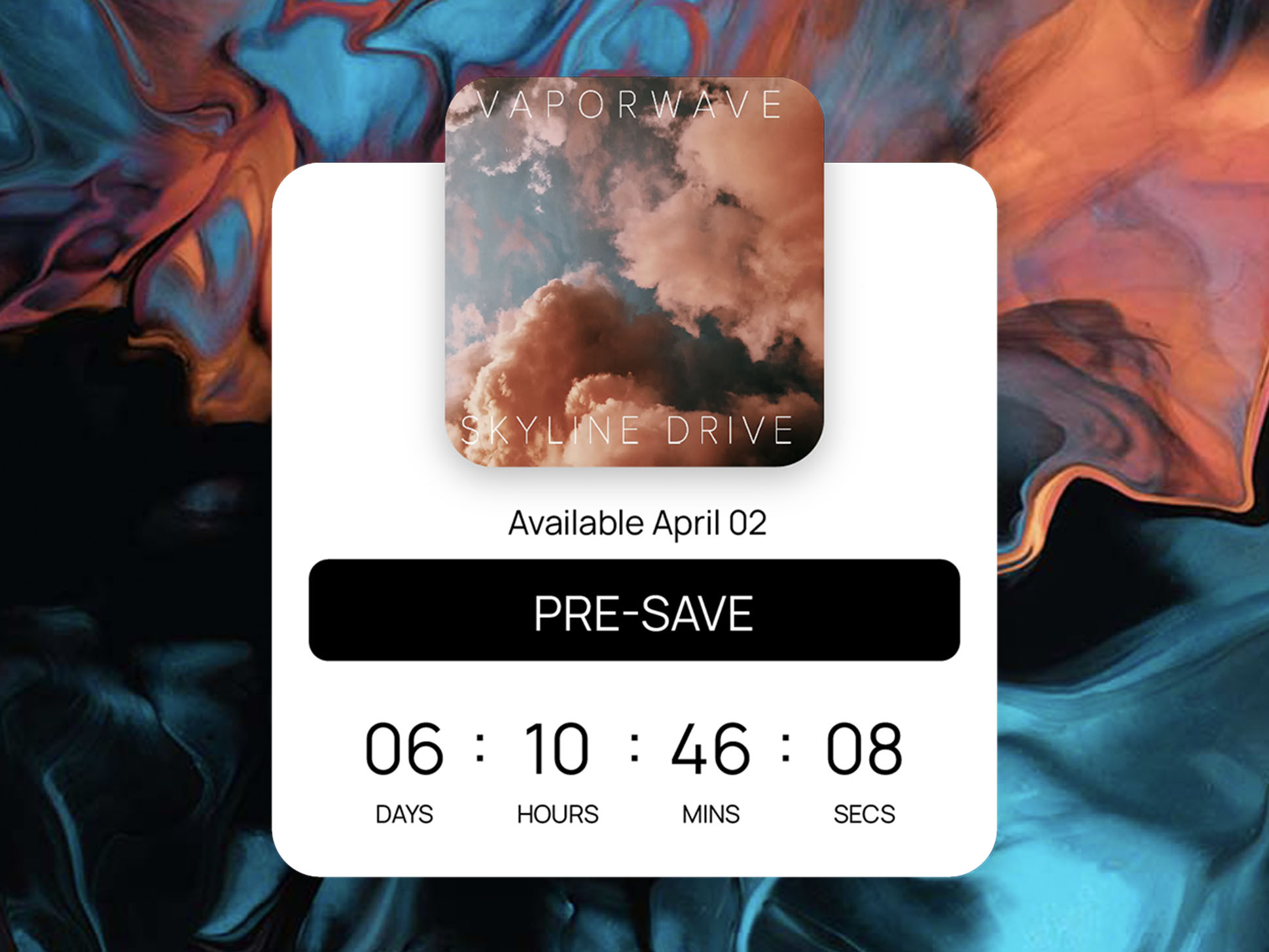
A fan clicks a pre-save link. They stream a track. They follow on Spotify. They opt into SMS.
Each of these moments feels like progress. And individually, they are.
But in most cases, nothing happens next.
The action is recorded. The metric increases. And then the system resets.
This is the core limitation of campaign-based marketing. It captures activity, but it does not build continuity.
An Action Flow exists to solve this.
It transforms individual fan actions into the starting point of a system. Instead of treating each interaction as an endpoint, it treats it as a trigger.
And that shift is what allows growth to compound.
From Actions to Systems
At its simplest, an Action Flow is a structured sequence where a fan’s behavior triggers an automated response.
But that definition undersells its importance.
An Action Flow is not just automation. It is a framework for designing how fans move through your ecosystem over time.
In traditional marketing, you decide what to send and when to send it.
In an Action Flow, the fan decides.
Their behavior determines what happens next.
This is what makes the system responsive instead of reactive.
Why Fan Actions Are the Most Valuable Signals
Throughout modern music marketing, we have emphasized the importance of signals over volume.
A stream tells you that a track was played. A save tells you that it mattered. A follow tells you that the listener wants a relationship.
Each of these actions carries intent.
An Action Flow uses that intent as input.
Instead of broadcasting the same message to every listener, it responds differently based on what each fan has already done.
This is what allows the system to feel personalized at scale.
And more importantly, it ensures that each interaction builds on the last.
The Core Structure of an Action Flow
Every Action Flow follows a simple pattern:
- Trigger
A fan takes an action. - Response
The system delivers a relevant next step. - Progression
The fan moves deeper into the relationship.
This structure aligns directly with the listener progression model we have established across this cluster.
- Pre-save → release-day engagement
- Listen → save
- Save → follow
- Follow → long-term retention
Each step becomes both an outcome and a trigger for the next.
This is how isolated interactions become a continuous journey.
Examples of Action Flows in Practice
To make this more concrete, consider how Action Flows operate across common scenarios.
Pre-Save to Release-Day Engagement
- Trigger: A fan clicks a pre-save link
- Response: They are prompted to opt into SMS or email
- Progression: On release day, they receive the track directly
This ensures that pre-save intent translates into actual listening behavior.
Listener to Saver
- Trigger: A fan listens to a track
- Response: They receive a prompt to save it
- Progression: The track becomes part of their library
This reinforces engagement and increases repeat listening.
Engaged Listener to Follower
- Trigger: A fan saves multiple tracks
- Response: They are encouraged to follow the artist
- Progression: They become part of the long-term audience
This creates continuity across releases.
Each of these flows is simple on its own.
Together, they form a system that compounds.
Why Automation Alone Is Not Enough
It is important to distinguish between automation and Action Flows.
Automation is the mechanism. Action Flows are the strategy.
You can automate messages without creating progression. You can schedule campaigns without responding to behavior.
An Action Flow requires:
- Clear triggers based on real fan actions
- Contextual responses aligned with timing
- A defined progression toward deeper engagement
Without these elements, automation becomes noise.
With them, it becomes infrastructure.
Connecting Action Flows Across Channels
One of the most powerful aspects of Action Flows is their ability to operate across channels.
Fan behavior is not confined to a single platform.
A listener might:
- Click a pre-save link from social media
- Receive a message via SMS
- Listen on Spotify
- Engage again on the next release
An effective system connects these touchpoints.
This is what turns fragmented interactions into a cohesive experience.
It also allows you to build a direct relationship with the fan, rather than relying entirely on platform algorithms.
How Action Flows Drive Compounding Growth
The impact of Action Flows becomes clear over time.
Each fan who enters the system is guided through a progression. Each step increases the likelihood of future engagement.
This creates a compounding loop:
- More fans take initial actions
- More fans progress to deeper engagement
- More fans are retained across releases
- Each release starts with a larger, more engaged audience
Unlike campaign-based strategies, this system does not reset.
It builds.
And because it is automated, it scales without requiring proportional effort.
Designing Your First Action Flow
The most effective way to start is simple.
You do not need a complex system. You need a clear progression.
A basic Action Flow might look like this:
- Trigger: fan opts in via SMS
- Response: send pre-save link
- Progression: send release-day message with the track
This creates continuity between pre-release and release.
From there, you can add layers:
- Post-listen save prompts
- Follow prompts for engaged fans
- Ongoing updates for retained listeners
The system evolves over time, guided by real behavior.
Comparing Campaigns vs Action Flows
To understand the shift, it helps to compare the two approaches directly.
| Campaign-Based Marketing | Action Flow-Based Marketing |
|---|---|
| Focus on one-time actions | Focus on continuous progression |
| Sends the same message to all | Responds to individual behavior |
| Operates on a schedule | Operates in real time |
| Resets after each release | Compounds over time |
This is not just a tactical difference.
It is a shift in how growth is created.
From Tools to Infrastructure
The concept of an Action Flow reflects a broader shift in music marketing.
Artists are moving from using tools to building systems.
Instead of managing individual campaigns, they are designing infrastructure that connects fan actions across time.
This is what enables:
- More efficient conversion from listeners to fans
- Stronger engagement signals on platforms like Spotify
- More predictable growth across releases
In this context, pre-save campaigns, release strategies, and album promotion are no longer isolated efforts.
They become components of a larger system.
The Strategic Takeaway
An Action Flow is not just a feature or a tactic.
It is a way of thinking.
It reframes every fan interaction as part of a sequence. It prioritizes progression over activity. And it uses automation to scale that progression across your audience.
This is what turns music marketing into a system that compounds.
Because once every action leads to another, growth is no longer dependent on constant reinvention.
It becomes a function of the system you have built.