Why Every Artist Needs Follow and Save Buttons (Not Just Links)
Most music marketing still revolves around links.
Link in bio. Pre-save link. Smart link. Landing page link.
The assumption is straightforward: if you can direct attention to a destination, you can drive engagement. But this assumption overlooks a fundamental mismatch between how fans behave and how campaigns are structured.
Links are passive. They require interpretation, navigation, and decision-making. Buttons, when designed correctly, are active. They reduce friction, clarify intent, and guide behavior in a single step.
This distinction is not just about user experience. It directly impacts the quality and quantity of signals generated from your audience.
The Structural Limitation of Links
Links are inherently ambiguous.
When a fan clicks a link, they are not committing to a specific action. They are entering an environment where multiple options exist. Even the best-designed landing pages introduce choices, and every additional choice increases the likelihood of drop-off.
This creates a gap between intent and action.
A fan may click a pre-save link with the intention of supporting an artist, but once inside the page, they must decide again. Do they connect Spotify? Do they scroll? Do they leave?
Every step introduces friction.
This is why many campaigns report high click-through rates but low conversion rates. The link captures attention, but it does not efficiently convert that attention into meaningful signals.
Buttons as Action Interfaces
A button is not just a design element. It is an instruction.
“Follow on Spotify.”
“Save this release.”
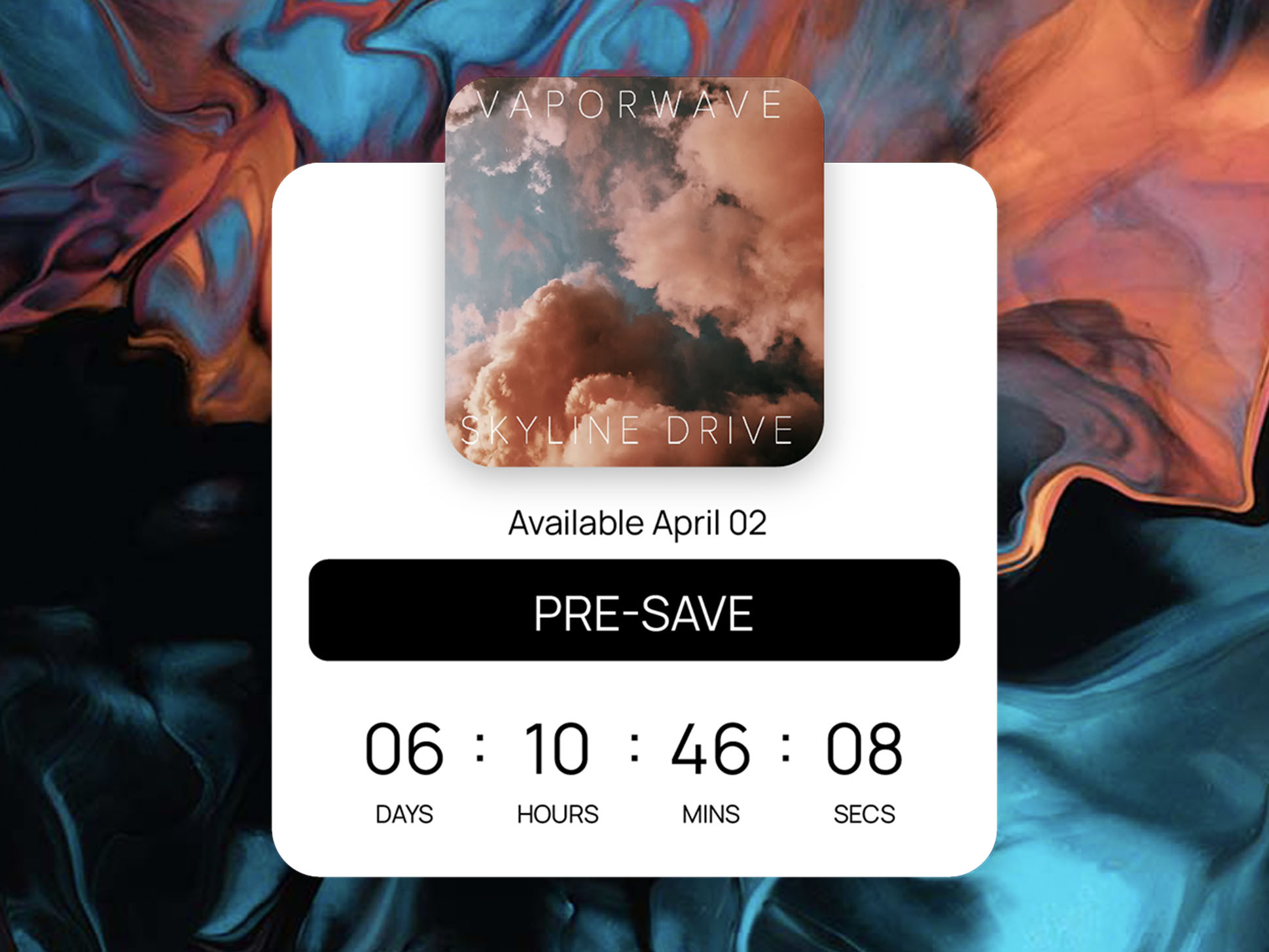
“Pre-save the album.”
Each button communicates a single, clear action. It removes ambiguity and compresses the decision-making process into a single step.
This clarity changes behavior.
When fans are presented with a button tied to a specific outcome, they are more likely to complete that action because the path is obvious. There is no need to interpret what happens next.
In practical terms, this means higher conversion rates and more consistent engagement patterns.
But the deeper advantage is structural.
Buttons allow you to map directly to the signals that matter.
Mapping Buttons to Spotify Signals
As discussed in previous articles in this cluster, modern release strategy is built around generating high-quality signals rather than maximizing low-intent interactions.
Follow and save actions are among the most important signals available to artists. They indicate long-term interest and increase the likelihood of future engagement.
Buttons allow you to target these signals directly.
Instead of sending fans to a general-purpose link, you can present them with specific actions:
- a follow button to capture artist-level intent
- a save button to capture track-level intent
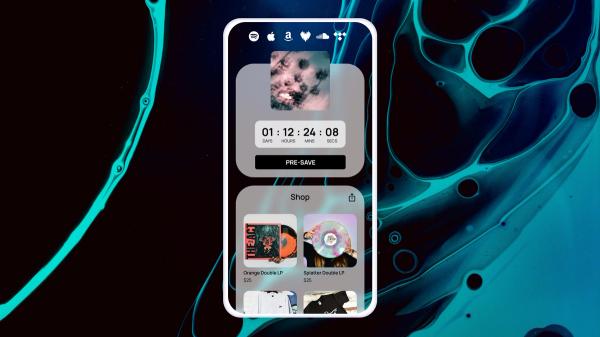
- a pre-save button to capture pre-release anticipation
Each button corresponds to a distinct behavioral signal.
This is a more efficient way to translate fan intent into measurable outcomes.
From Destinations to Actions
Traditional campaigns are built around destinations.
You send fans to a page and hope they take the right action.
Action-driven campaigns invert this model.
You present the action first, and the system handles the rest.
This shift may seem subtle, but it has significant implications.
In a destination-based model:
- the user must navigate
- the user must choose
- the user must complete multiple steps
In an action-driven model:
- the action is defined upfront
- the path is pre-structured
- the system reduces friction
The result is a tighter connection between intent and outcome.
Integrating Buttons Into a Fan Growth System
Buttons become significantly more powerful when they are integrated into a broader fan growth system.
On their own, they improve conversion. Within a system, they become entry points into sequences.
For example, a follow button is not just a one-time action. It can trigger:
- a confirmation message
- a prompt to pre-save an upcoming release
- a follow-up sequence tied to future campaigns
Similarly, a save button can be connected to post-release engagement, encouraging repeat listens or additional actions.
This is where the concept of Action Flows becomes relevant.
An Action Flow allows a single button interaction to initiate a series of events. The button captures intent, and the system expands it into multiple signals over time.
This transforms buttons from static UI elements into dynamic components of a campaign engine.
Why This Matters for Pre-Save Campaigns
Pre-save campaigns often rely heavily on links because they are designed as standalone experiences.
But when viewed through the lens of a fan growth system, pre-saves should be one part of a broader sequence.
Buttons allow you to position the pre-save alongside other actions rather than isolating it.
For example:
- a pre-save button captures early intent
- a follow button ensures long-term connection
- a save button reinforces post-release engagement
When these actions are presented together or in sequence, they create a more complete engagement pattern.
This aligns with how Spotify evaluates momentum.
Instead of a single pre-save signal, you generate a cluster of signals that reinforce each other.
The Compounding Effect of Action Clarity
One of the most important advantages of buttons is consistency.
When fans are repeatedly presented with clear, action-oriented prompts, they learn how to engage.
This reduces cognitive load over time. Fans do not need to figure out what to do. They recognize the pattern.
This is how engagement compounds.
A fan who has previously used a follow button is more likely to use it again. A fan who has saved a track through a direct prompt is more likely to repeat that behavior.
Over multiple releases, this creates a system where actions become habitual.
Links do not create this effect. They require interpretation each time.
Buttons create familiarity.
Common Implementation Mistakes
Despite their advantages, buttons are often underutilized or implemented incorrectly.
A few patterns reduce their effectiveness:
- placing multiple competing buttons without clear hierarchy
- hiding buttons behind additional navigation steps
- treating buttons as secondary to links rather than primary actions
- failing to connect button actions to follow-up sequences
Each of these issues reintroduces friction or breaks continuity.
The goal is to make buttons the central interface for interaction, not an optional layer.
Reframing the Role of Links
This does not mean links are obsolete.
Links still serve a purpose, particularly for discovery, aggregation, and providing additional context.
But their role should be secondary.
Links are best used as supporting infrastructure. Buttons should handle primary actions.
This distinction allows you to maintain flexibility without sacrificing conversion efficiency.
The Strategic Takeaway
Modern music marketing is not about driving traffic. It is about generating signals.
Links are effective at moving people. Buttons are effective at converting intent into action.
When you prioritize follow and save buttons within your release strategy, you create a more direct path between fan behavior and algorithmic impact.
More importantly, when those buttons are integrated into a broader system of Action Flows and fan growth infrastructure, each interaction becomes more valuable.
A single click becomes a sequence. A single fan becomes a source of multiple signals.
This is how release campaigns evolve from isolated promotions into scalable growth systems.