Cross-Channel Growth: The Missing Layer in Music Marketing
For over a decade, music marketing has been organized around moments.
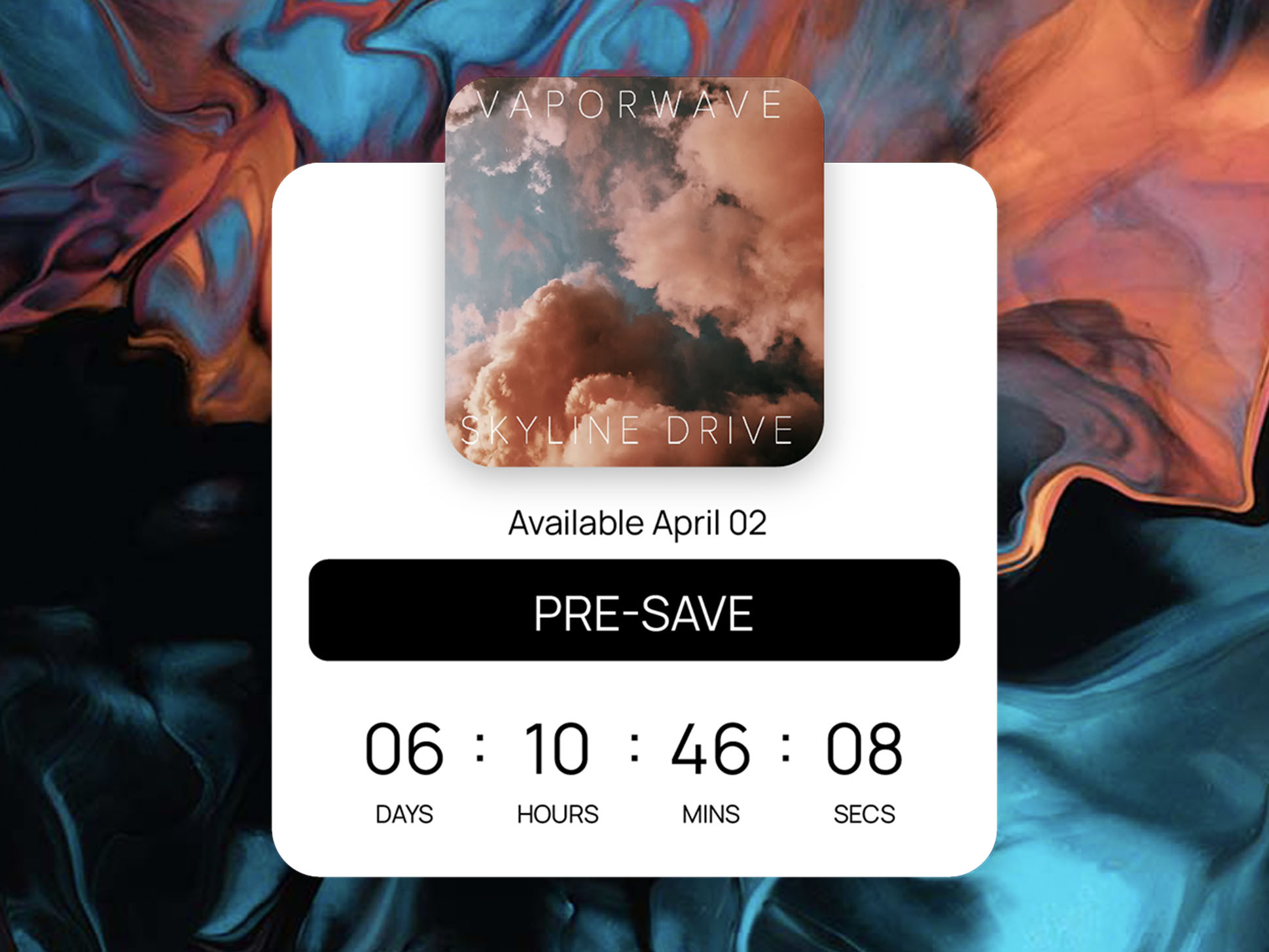
The pre-save.
The release day spike.
The playlist pitch.
The social media push.
Each tactic is optimized individually, measured individually, and ultimately forgotten individually.
This model has produced an ecosystem of tools and strategies that excel at driving short-term actions. But it has also created a structural limitation. Most artists are not lacking tactics. They are lacking continuity.
Cross-channel growth is the layer that connects these isolated moments into a system. It is not another tactic. It is the framework that determines whether your release strategy compounds over time or resets with every campaign.
Understanding this distinction changes how you think about pre-saves, fan acquisition, and long-term growth.
The Problem With Campaign-Based Thinking
Most modern music marketing still operates as a sequence of campaigns rather than a connected system.
An artist launches a pre-save link, promotes it across social channels, collects a burst of engagement, and then moves on. After the release, attention shifts to streaming numbers, playlist placements, and content distribution. Each phase is treated as a separate initiative.
The result is a fragmented experience for both the artist and the fan.
From the artist’s perspective, growth feels inconsistent. Metrics spike and fall. Effort does not reliably translate into long-term audience expansion.
From the fan’s perspective, interactions feel transactional. A pre-save is a one-time action. A follow is a passive state. There is no evolving relationship that deepens over time.
This is not a failure of execution. It is a limitation of the model itself.
Campaign-based thinking assumes that each action exists in isolation. Cross-channel growth challenges that assumption by treating every action as part of a connected system.
What Cross-Channel Growth Actually Means
Cross-channel growth is the practice of linking fan actions across multiple platforms and touchpoints into a continuous flow.
Instead of optimizing for individual outcomes, such as a pre-save or a click, the system is designed to guide fans through a sequence of meaningful interactions over time.
At its core, cross-channel growth answers a simple question:
What happens after the first action?
A pre-save is not the end goal. It is the entry point.
An email opt-in is not just a contact record. It is a bridge to future engagement.
An SMS interaction is not a broadcast channel. It is a real-time connection that can trigger additional actions.
When these channels are connected, each interaction becomes more valuable because it creates the opportunity for the next one.
The Role of Pre-Saves in a Connected System
The pre-save has become one of the most recognized tools in music marketing, but it is often misunderstood.
A pre-save link allows fans to save an upcoming release to their streaming library before it is available. On release day, the music is automatically added to their account, increasing early engagement and signaling activity to platform algorithms.
This mechanism is useful, but its strategic value depends on what surrounds it.
In a traditional pre-release strategy, the goal is to maximize the number of pre-saves before launch. Success is measured by volume.
In a cross-channel model, the goal is to convert pre-saves into ongoing fan relationships.
The difference is subtle but important.
A high number of pre-saves without follow-up does not create lasting growth. It creates a temporary spike in activity. A smaller number of pre-saves that feed into a connected system can generate significantly more long-term value.
For example, a pre-save flow might lead into:
- A follow action on the streaming platform
- An SMS opt-in for release reminders
- A post-release engagement sequence
- Future release automation
Each step builds on the previous one. The pre-save becomes the first node in a network rather than a standalone metric.
Why Channels Fail When They Operate Alone
Each marketing channel in music has inherent strengths, but also inherent limitations.
Social media is excellent for discovery, but unreliable for direct reach.
Streaming platforms are powerful for consumption, but limited in communication.
Email and SMS provide direct access, but require intentional opt-in.
When these channels operate independently, their weaknesses become more pronounced.
A fan who discovers an artist on social media may never convert into a long-term listener. A fan who pre-saves a track may never engage again. A subscriber on an email list may never take meaningful action.
Cross-channel growth works by offsetting these limitations through connection.
Consider the difference:
| Channel | Standalone Outcome | Connected Outcome |
|---|---|---|
| Social | Views, likes | Entry into owned audience |
| Pre-save | One-time save | Ongoing engagement sequence |
| SMS | Broadcast messages | Triggered actions and flows |
| Streaming | Passive listening | Action-based engagement |
The shift is not about replacing channels. It is about orchestrating them.
From Campaigns to Growth Flows
A useful way to understand cross-channel growth is through the concept of growth flows.
A growth flow is a structured sequence of fan interactions that spans multiple channels and is designed to guide behavior over time.
Instead of asking how to promote a release, you ask how to design a system that moves fans from discovery to sustained engagement.
A simple example might look like this:
- A fan encounters a piece of content on social media
- They are directed to a pre-save link
- During the pre-save process, they opt into SMS updates
- On release day, they receive a message prompting them to listen
- After listening, they are encouraged to follow the artist or save additional content
- Future releases automatically re-engage this fan without requiring new acquisition
Each step is connected. Each action increases the likelihood of the next.
What makes this powerful is not the individual tactics. It is the continuity between them.
The Compounding Effect of Connected Actions
The most important advantage of cross-channel growth is compounding.
In a campaign-based model, each release starts from zero. Even if previous campaigns performed well, their impact does not reliably carry forward.
In a connected system, each interaction increases the value of future interactions.
A fan who has already opted into SMS is easier to reach for the next release. A fan who has followed on a streaming platform is more likely to engage with new music. A fan who has completed multiple actions becomes significantly more engaged over time.
This creates a feedback loop:
- More connections lead to higher engagement
- Higher engagement leads to better algorithmic performance
- Better performance leads to increased reach
- Increased reach feeds back into the system
Over time, the difference between isolated campaigns and connected growth becomes substantial.
Designing a Cross-Channel Release Strategy
Building a cross-channel system does not require abandoning existing tactics. It requires rethinking how they connect.
A strong release strategy begins by defining the flow rather than the individual components.
Instead of asking, “How do we get more pre-saves?” the better question is:
“What sequence of actions do we want fans to take before, during, and after the release?”
From there, you can design the structure:
- Entry point: where fans first engage
- Conversion step: the first meaningful action
- Connection layer: how fans are retained and reachable
- Engagement loop: how fans are reactivated over time
This approach shifts focus from short-term optimization to long-term system design.
Infrastructure vs Tools
Most platforms in music marketing are built as tools. They perform specific functions well but do not inherently connect those functions into a system.
A pre-save link generator creates links. An email platform sends emails. An SMS tool sends messages.
Individually, these are useful. Collectively, they often require manual coordination.
Infrastructure operates differently.
Infrastructure defines how data flows, how actions trigger other actions, and how systems persist over time. It is less about executing a single task and more about enabling continuous interaction.
In the context of music marketing, infrastructure allows:
- Fan data to persist across campaigns
- Actions to trigger follow-up actions automatically
- Channels to communicate with each other
- Growth to accumulate rather than reset
This is the layer that cross-channel growth depends on.
Why This Shift Matters Now
The shift toward cross-channel growth is not just a theoretical improvement. It reflects changes in how audiences behave and how platforms operate.
Attention is fragmented. Fans interact across multiple platforms, often within short timeframes. Relying on a single channel is increasingly unreliable.
At the same time, platforms reward sustained engagement. Algorithms prioritize consistent activity, not isolated spikes.
Artists who continue to operate with campaign-based strategies will find it harder to maintain momentum. Those who build connected systems will benefit from compounding growth.
Rethinking the Pre-Release Strategy
The pre-release phase is where most artists invest heavily, but it is also where cross-channel thinking is most underutilized.
A pre-release strategy is typically focused on building anticipation and maximizing pre-saves. This is effective in the short term, but it often overlooks the opportunity to establish long-term connections.
A more effective approach treats the pre-release phase as the foundation of a broader system.
Instead of viewing the pre-save link as the goal, it becomes the beginning of a relationship.
Fans who engage during this phase are the most valuable because they have demonstrated early intent. Capturing that intent and extending it across channels is what determines whether that engagement persists.
The Future of Music Marketing Systems
Music marketing is moving toward systems that resemble modern growth infrastructure in other industries.
In SaaS, growth is not driven by isolated campaigns. It is driven by onboarding flows, lifecycle messaging, and continuous engagement systems.
The same principles are beginning to apply to music.
Artists are no longer just promoting releases. They are building networks of fans, actions, and channels that interact over time.
Cross-channel growth is the layer that enables this shift.
It transforms pre-saves from a metric into a mechanism.
It transforms release strategy from a plan into a system.
It transforms marketing from a series of efforts into an infrastructure for growth.

Keep reading
All posts
How to Build a 3-Step Action Flow: SMS Sign-Up to Pre-Save and Follow

New Project or New Landing Page? How to Structure Sonikit for Multiple Releases, Artists, or Tours