From Clicks to Signals: Designing Landing Pages That Drive Saves and Follows
Most landing pages in music marketing are designed to capture clicks.
They are optimized for traffic, structured around links, and measured by how many people arrive. But arrival is not the outcome that matters. What matters is what happens after the click.
This is where most campaigns break down.
A fan clicks a pre-save link, lands on a page, and is presented with options. Some complete the action. Many do not. The page becomes a dead end rather than a continuation of intent.
The problem is not design in the visual sense. It is structural.
Landing pages are often treated as destinations. In a modern release strategy, they should be treated as conversion systems that translate attention into signals.
The Shift From Traffic to Signal Generation
In earlier articles in this cluster, we introduced a core idea: growth on streaming platforms is driven by signals of intent, not raw activity.
Saves, follows, and coordinated listening behavior carry more weight than passive interactions like clicks or impressions.
This reframes the purpose of a landing page.
A landing page is not a place to collect attention. It is a mechanism for converting attention into specific actions that generate meaningful signals.
This distinction changes how pages should be designed.
Instead of asking, “How do we get more clicks?”, the more relevant question becomes, “How do we ensure every click produces a signal?”
Why Most Music Landing Pages Underperform
Most pre-save and smart link pages follow a familiar pattern.
They present a collection of streaming platforms, links, and options, often with equal visual weight. The fan is expected to choose what to do next.
This creates three problems:
- Decision fatigue: too many options reduce the likelihood of any single action
- Ambiguity: the page does not clearly communicate the primary goal
- Friction: each additional step introduces drop-off
From a user perspective, this experience feels neutral. From a performance perspective, it is inefficient.
The page captures attention but fails to direct it.
Designing for Actions, Not Options
A high-performing landing page is built around a single principle: every element should guide the user toward a specific action.
This does not mean limiting functionality. It means structuring the experience so that the most valuable action is always clear.
In the context of a release campaign, that action is typically one of the following:
- pre-saving the release
- saving the track post-release
- following the artist
These are not interchangeable. Each represents a different type of signal. The page should reflect this hierarchy.
A common mistake is treating all actions equally. A more effective approach is to prioritize actions based on campaign stage and intent.
The Role of Action Hierarchy
Action hierarchy is the foundation of conversion-focused design.
At any given moment, a landing page should have one primary action and a small number of secondary actions that support it.
For example, during a pre-release phase:
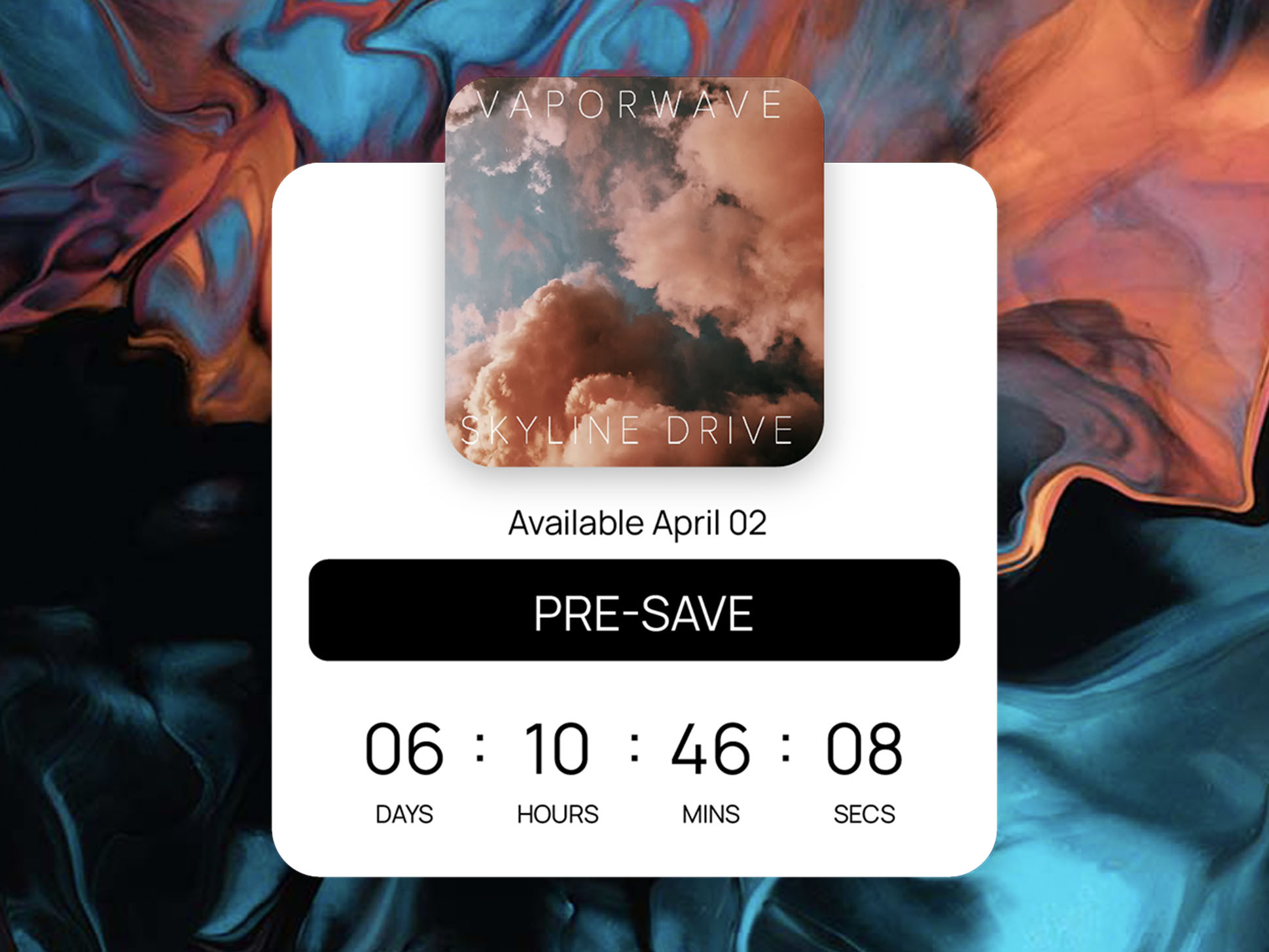
- the primary action might be a pre-save
- a secondary action might be following the artist
After release:
- the primary action might shift to saving the track
- the follow action remains as a secondary path
This hierarchy ensures that the page aligns with the fan’s current context.
Without it, the page becomes a neutral interface rather than a guided experience.
Integrating Buttons as the Primary Interface
As discussed in the previous article, buttons function as action interfaces.
They are the most direct way to translate intent into behavior because they remove ambiguity.
On a landing page, buttons should replace links as the primary mechanism for interaction.
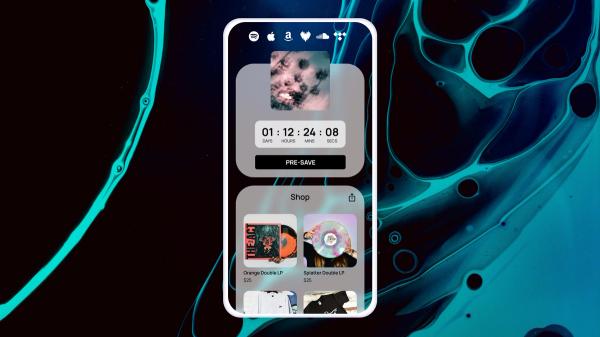
Instead of presenting a list of platforms, the page should present actions:
- “Pre-save on Spotify”
- “Follow on Spotify”
- “Save this release”
Each button represents a clear outcome. The system handles the underlying complexity.
This approach aligns the user interface with the signals you want to generate.
Connecting Landing Pages to Action Flows
A landing page becomes significantly more powerful when it is connected to an Action Flow.
Rather than treating the page as a standalone conversion point, it becomes the entry point into a sequence.
For example, when a fan clicks a pre-save button:
- the system records the action
- the fan can be prompted to follow immediately after
- the fan can be added to a release-day notification sequence
- the fan can receive post-release prompts to save and re-engage
This transforms the landing page from a static endpoint into a dynamic component of a fan growth system.
The page captures intent. The system expands it.
Designing for Momentum, Not Completion
One of the most important shifts in landing page strategy is moving from completion-focused design to momentum-focused design.
Completion-focused pages aim to get the user to finish a single action. Once that action is completed, the experience ends.
Momentum-focused pages treat each action as the beginning of the next.
This can be implemented in subtle ways:
- immediately prompting a follow after a pre-save
- reinforcing the action with confirmation messaging
- guiding the user toward the next step without requiring a new decision
The goal is to maintain the fan’s intent across multiple actions.
This is how a single click becomes multiple signals.
Timing and Context Within the Page Experience
Landing pages are often thought of as static, but their effectiveness depends heavily on timing and context.
A pre-save page before release should feel different from a page after release.
Before release, the focus is on anticipation and commitment.
After release, the focus shifts to engagement and reinforcement.
This means the same page should adapt its primary action based on context.
For example:
- before release: emphasize pre-save
- on release day: emphasize listening and saving
- after release: emphasize follow and continued engagement
This dynamic approach ensures that the page remains aligned with the fan’s intent at every stage.
Reducing Friction Without Removing Intent
There is a common misconception that reducing friction always leads to better results.
In practice, the goal is not to eliminate friction entirely. It is to remove unnecessary friction while preserving meaningful intent.
A single, clear action with a direct path is ideal. But the action itself should still represent a conscious decision.
This is why structured flows, such as those involving messaging or authentication, can outperform simple clicks. They introduce a small amount of friction that filters for higher-quality engagement.
Landing pages should respect this balance.
They should make the path clear and efficient, but not trivialize the action.
Measuring What Matters
If landing pages are designed to generate signals, then they should be evaluated based on signal output, not just traffic metrics.
Traditional metrics like click-through rate or page views provide limited insight.
More meaningful metrics include:
- pre-save conversion rate
- follow rate
- save rate after release
- sequence completion across multiple actions
These metrics reflect how effectively the page translates attention into engagement.
They also align more closely with long-term growth outcomes.
From Pages to Infrastructure
The most important takeaway is not about layout or design patterns. It is about how landing pages fit into a larger system.
A landing page should not be an isolated asset. It should be part of a broader infrastructure that captures, sequences, and amplifies fan intent.
When connected to Action Flows and integrated with follow and save mechanics, the page becomes more than a conversion tool.
It becomes a node in a fan growth system.
This is what separates modern release strategies from traditional campaigns.
Instead of building pages that collect clicks, you build systems that generate signals.