From One Fan to Thousands: How Music Marketing Growth Compounds Over Time
Most artists think in terms of reach.
How many people saw the post. How many clicked the pre-save link. How many streams came in on release day.
But growth in music does not actually come from reach. It comes from accumulation.
The difference is subtle but important. Reach is momentary. Accumulation is structural. One creates spikes. The other creates trajectories.
This is why two artists with similar visibility can end up in completely different positions a year later. One is still chasing attention. The other has built a system where each new fan makes the next one easier to acquire.
That system is what turns one fan into thousands.
The Misunderstanding of Growth in Music Marketing
The dominant mental model in music marketing is still linear.
You promote a release. You generate a burst of activity. Then you start over.
In that model, each campaign is disconnected from the last. The audience is treated as a temporary pool rather than a growing asset.
This is why so many artists experience the same pattern:
- A spike in streams during release week
- A sharp drop-off afterward
- Little carryover into the next release
The underlying issue is not the quality of the campaign. It is the absence of compounding.
Compounding happens when each action increases the probability of future actions. Without that mechanism, growth remains flat, no matter how strong individual campaigns appear.
What Compounding Actually Means in Music Marketing
Compounding in music marketing is the process by which fan interactions build on each other over time, increasing both retention and future engagement.
A single fan action, such as clicking a pre-save link, has limited value on its own. But when that action is connected to future interactions, it becomes part of a larger system.
For example:
- A fan pre-saves a track
- That fan receives a release-day message
- They are prompted to follow the artist
- They receive updates for future releases automatically
Each step increases the likelihood that the fan will engage again.
This is not just retention. It is amplification.
Because each retained fan becomes part of the next campaign, the starting point keeps rising. Over time, this creates exponential rather than linear growth.
Why Most Growth Never Compounds
If compounding is so powerful, why does it rarely happen in practice?
The issue is not effort. It is structure.
Most release strategies are designed around events, not systems. They focus on maximizing output at a specific moment instead of building continuity between moments.
This leads to three structural limitations:
- No persistent connection to the fan
After a pre-save or stream, there is no mechanism to continue the interaction. - No memory of past behavior
Each campaign treats fans the same, regardless of what they have already done. - No progression path
Fans are not guided toward deeper levels of engagement over time.
Without these elements, growth resets with every release.
This is why even strong album release promotion efforts often fail to build lasting momentum.
The Role of Growth Flows in Compounding
Growth flows exist to solve this exact problem.
A growth flow is a structured system where fan actions trigger the next step in their journey. It connects pre-save campaigns, messaging, and platform engagement into a continuous loop.
Instead of asking how to promote a single release, growth flows ask how each interaction contributes to long-term audience development.
This shift introduces a new layer of strategy.
Each fan action is no longer an isolated metric. It becomes a signal that determines what should happen next.
For example:
- A pre-save becomes a trigger for follow-up messaging
- A follow becomes a signal for future release targeting
- An SMS opt-in becomes a direct communication channel
These connections create continuity. And continuity is what enables compounding.
The Transition From Output to System Design
To understand how growth compounds, it helps to compare two approaches side by side.
| Output-Driven Strategy | System-Driven Strategy |
|---|---|
| Focus on campaign performance | Focus on fan progression |
| Optimize for clicks and streams | Optimize for retention and repeat engagement |
| Treat each release independently | Connect releases through shared audience systems |
| Measure success in spikes | Measure success in growth over time |
The key difference is where effort is applied.
Output-driven strategies invest heavily in generating attention. System-driven strategies invest in capturing and retaining that attention.
Over time, the second approach produces stronger results, even with less initial reach.
The Compounding Loop: How One Fan Becomes Many
Compounding in music marketing is not abstract. It follows a predictable loop.
- Capture
A fan takes an initial action, such as clicking a pre-save link or engaging with content. - Convert
That fan is connected to a channel you control, such as SMS, email, or a direct follow. - Engage
You deliver relevant, timely interactions based on their behavior. - Retain
The fan remains active across releases instead of dropping off. - Amplify
Retained fans increase the effectiveness of future campaigns, leading to more conversions.
This loop repeats with every new fan.
The important detail is that amplification happens automatically once retention is in place. You are not just adding fans. You are increasing the efficiency of every future effort.
Why Pre-Saves Alone Do Not Compound
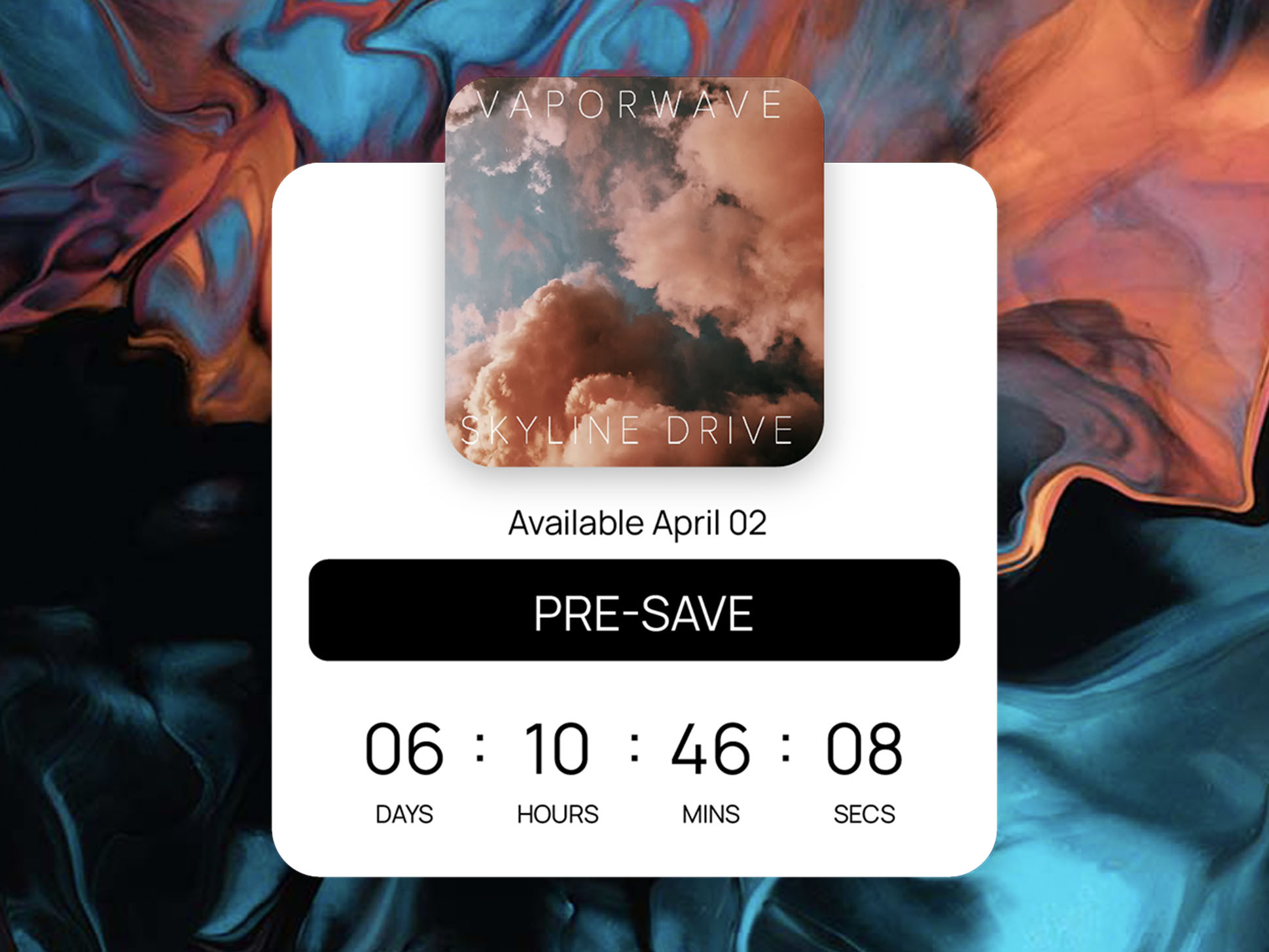
Pre-save campaigns are often positioned as a growth tool, but on their own, they do not create compounding.
A pre-save link captures intent, but it does not establish a relationship.
Without follow-up, the interaction ends at the moment of the pre-save. The fan listens on release day, and the system resets.
This is why many artists see strong pre-save numbers without corresponding long-term growth.
The missing piece is continuity.
When pre-saves are integrated into a growth flow, their role changes. They become the first step in a sequence rather than the final goal.
This is where pre-release strategy evolves from promotion into system design.
Designing for Fan Progression, Not Just Conversion
One of the most effective ways to enable compounding is to design for progression.
Progression means guiding fans from low-commitment actions to higher-value ones over time.
For example:
- Viewing content → clicking a pre-save link
- Pre-saving → opting into messaging
- Messaging → following on streaming platforms
- Following → engaging across multiple releases
Each step increases both familiarity and likelihood of future interaction.
Importantly, progression does not require aggressive tactics. It requires alignment with intent.
Fans who have already taken one action are more likely to take the next, as long as the transition feels natural.
This is why automation plays a central role. It allows these transitions to happen in real time, without manual intervention.
The Time Horizon of Compounding
One of the reasons compounding is often overlooked is that it does not produce immediate results.
The first campaign built around growth flows may look similar to a traditional campaign. The difference becomes visible over time.
After several release cycles, the system begins to show its effects:
- Higher baseline engagement
- Faster audience growth
- Increased conversion rates
- More predictable performance
At that point, growth is no longer dependent on constant reinvestment in attention. The system itself becomes a source of momentum.
This is the inflection point where one fan truly becomes thousands.
Growth as an Outcome of Structure
It is tempting to think of growth as a result of better content, better ads, or better timing.
Those factors matter, but they are not sufficient on their own.
Sustained growth is the result of structure.
Structure determines whether fan interactions are isolated or connected. It determines whether each release builds on the last or starts from zero.
In modern music marketing, the artists who grow consistently are not necessarily the ones with the most exposure. They are the ones with the most effective systems.
They understand that growth is not something you generate. It is something you design.