Why Automation Is the Most Underrated Tool in Music Marketing
For an industry built on momentum, music marketing still relies heavily on manual effort.
Artists launch a pre-save campaign, promote it across social platforms, collect a wave of engagement, and then… nothing happens next. The campaign ends. The energy fades. The audience disappears back into the algorithm.
This is not a tooling problem. It is a systems problem.
Most music marketing today is still campaign-based, not system-based. It is structured around isolated moments instead of connected experiences. And that is precisely where automation becomes the most undervalued advantage in the entire ecosystem.
Automation is not about saving time. It is about building continuity.
The Hidden Gap Between Attention and Relationship
At its core, music marketing is the process of turning attention into a relationship.
A pre-save link captures intent. A stream reflects passive consumption. A follow or library add signals deeper interest. But these actions are rarely connected in a meaningful way.
This creates a structural gap.
You generate attention through ads, social content, or playlist exposure. Fans take a single action. Then the system resets. Every release starts from zero again.
Automation exists to close that gap.
When implemented correctly, automation connects fan actions into a continuous journey. Instead of treating each campaign as a standalone effort, it turns every interaction into the beginning of the next one.
That shift changes everything about how growth compounds.
What Automation Actually Means in Music Marketing
Automation in music marketing is often misunderstood as scheduled posting or email sequences.
In reality, the most effective form of automation is event-driven.
Event-driven automation means that fan actions trigger immediate, relevant responses. The system reacts in real time based on what the fan just did, not based on a predefined calendar.
For example:
- A fan clicks a pre-save link
- A fan texts a keyword to opt in
- A fan follows on Spotify
- A fan comments on a post
Each of these actions becomes a trigger. And each trigger can initiate a sequence of connected actions across platforms.
This is fundamentally different from traditional campaign logic.
Instead of asking, “What should we send this week?” you begin asking, “What should happen next for this fan?”
That is the foundation of a growth system.
From Campaigns to Growth Flows
The limitation of traditional release strategy is that it treats marketing as a timeline.
You build hype, launch a pre-save, release the track, push for streams, and move on.
Automation reframes this as a flow.
A growth flow is a system where each fan action leads to the next step in a structured journey. It connects messaging, streaming behavior, and audience segmentation into a unified experience.
Consider the difference:
| Campaign Thinking | Growth Flow Thinking |
|---|---|
| Promote a pre-save link | Trigger follow-ups based on pre-save behavior |
| Send one SMS blast | Send contextual messages based on fan actions |
| Focus on release day spike | Build ongoing engagement loops |
| Measure streams | Measure fan progression |
The underlying strategy shifts from maximizing short-term output to increasing long-term fan value.
This is where automation becomes multiplicative instead of additive.
Why Automation Feels Optional (But Isn’t)
If automation is so powerful, why is it still underused?
The answer is structural.
Most tools in the market are designed around campaigns, not systems. They help you launch something, not sustain it. As a result, automation feels like an advanced feature instead of a foundational layer.
There are three common reasons it gets overlooked:
- It is invisible when it works well
Good automation does not feel like automation. It feels like a seamless experience. Because of that, its impact is often underestimated. - It requires upfront thinking
Campaigns are reactive. Automation requires designing a system before the results appear. That shift in mindset is not intuitive. - It does not produce immediate spikes
Automation compounds over time. In an industry obsessed with short-term metrics, long-term systems are often deprioritized.
But the irony is that the artists who invest in automation early are the ones who eventually outperform on every metric that matters.
The Compounding Effect of Automated Systems
The real value of automation is not efficiency. It is compounding.
Every automated interaction builds on the last one. Over time, this creates a layered relationship with your audience.
A fan who pre-saves today might:
- Receive a follow-up message on release day
- Be prompted to follow on streaming platforms
- Get added to a segmented audience group
- Receive tailored messages for future releases
Each step increases the probability of future engagement.
This is how casual listeners become repeat fans.
And importantly, this compounding effect does not depend on scale. It works the same whether you have 100 fans or 100,000. The system simply processes more inputs.
Automation as Marketing Infrastructure
Once you view automation through this lens, it stops being a feature and starts becoming infrastructure.
Infrastructure is not visible at the surface level. It is what enables everything else to work more effectively.
In modern music marketing, automation acts as the connective layer between:
- Pre-save campaigns
- SMS and messaging channels
- Streaming platform actions
- Audience segmentation
- Analytics and behavioral data
Without automation, these components operate independently. With automation, they become a coordinated system.
This is what allows artists to move beyond one-off campaigns and start building durable growth engines.
A Practical Example: The Evolution of a Pre-Save
To understand the impact of automation, it helps to examine a familiar concept.
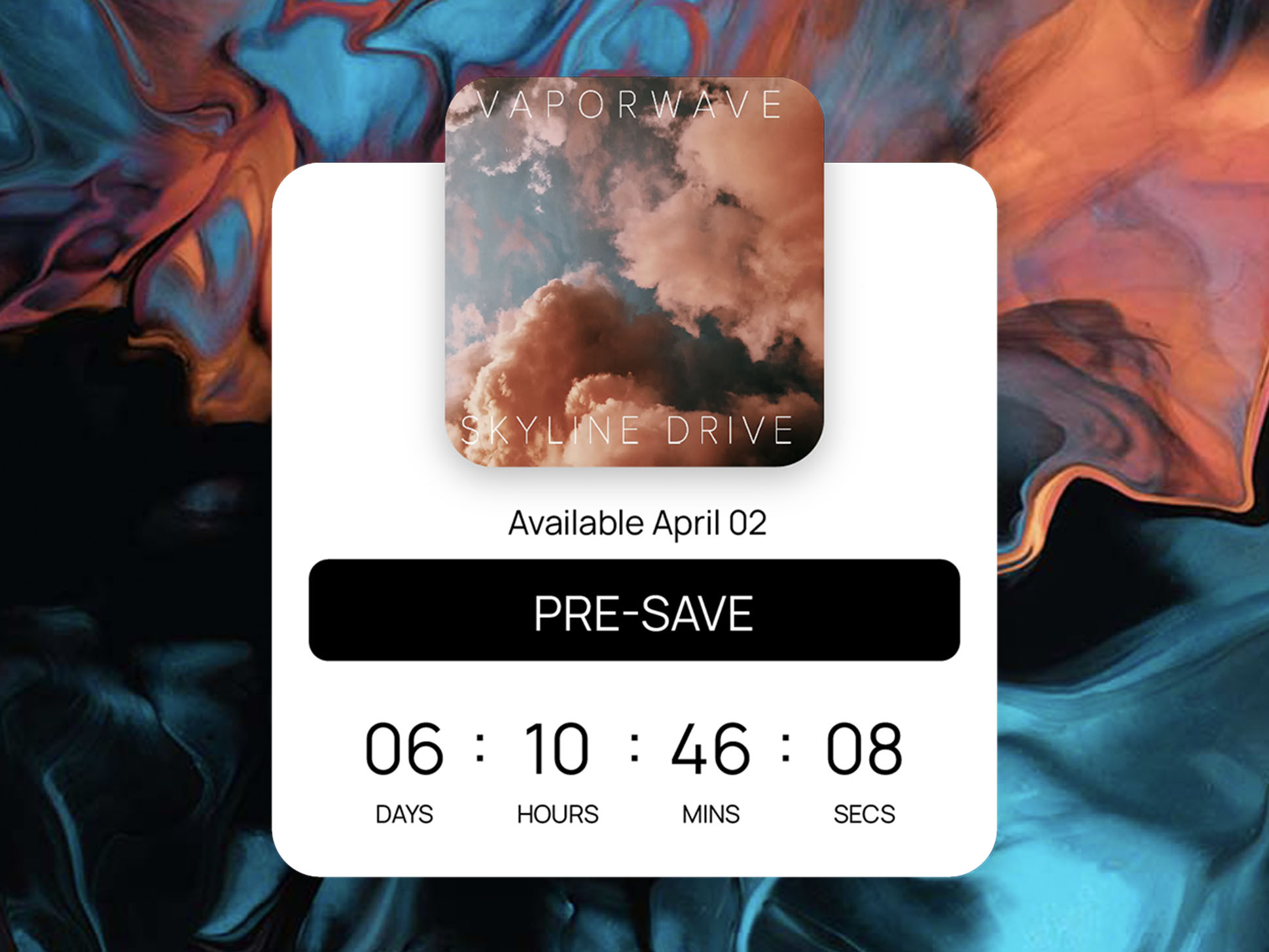
A traditional pre-save campaign looks like this:
- Share a pre-save link
- Collect fan actions
- Release the track
The value is concentrated in a single moment.
Now compare that to an automated growth flow built around the same pre-save:
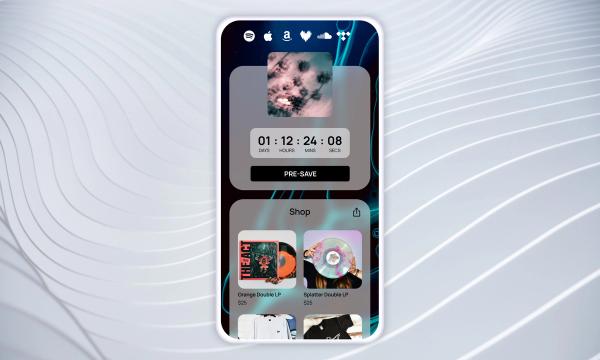
- A fan clicks the pre-save link
- They are prompted to opt in via SMS or another channel
- On release day, they receive a personalized message with the track
- After listening, they are encouraged to follow the artist
- Future releases trigger additional touchpoints automatically
The pre-save is no longer an endpoint. It is the entry point into an ongoing system.
This is a fundamentally different approach to album release promotion and pre-release strategy.
Designing Effective Automation Without Overengineering
One of the risks with automation is overcomplication.
The goal is not to build an elaborate system with dozens of steps. The goal is to create simple, logical progressions that align with fan behavior.
A strong starting framework often includes:
- One or two key triggers
- A clear next action for the fan
- A feedback loop that informs future interactions
For example:
- Trigger: fan opts in via SMS
- Action: send pre-save link
- Follow-up: send release notification
This may seem simple, but even this level of automation creates continuity that most campaigns lack.
As the system matures, additional layers can be added based on real behavior data.
The Strategic Shift Ahead
The broader shift happening in music marketing is moving from distribution to relationship management.
Streaming platforms control distribution. Social platforms control attention. But the artist still controls the relationship with their audience.
Automation is the mechanism that makes that relationship scalable.
It allows you to respond to fan behavior in real time, build structured journeys, and create systems that improve with each release instead of resetting.
In that sense, automation is not just underrated. It is foundational to the next generation of music marketing strategy.
The artists who recognize this early will not just run better campaigns. They will build systems that continue working long after the campaign ends.