How to Build a Cross-Channel Album Release System
Most album release strategies are designed as timelines.
There is a pre-release phase, a release day push, and a post-release follow-up. Each stage is planned, executed, and measured independently.
This approach works well for coordination, but it does not inherently create growth.
The issue is not the structure of the timeline. It is what happens between the stages.
Fans do not experience releases as phases. They experience them as interactions. They move between channels, engage at different moments, and return unpredictably.
A cross-channel album release system is designed around this reality.
Instead of organizing efforts by time, it organizes them by movement. It connects actions across channels, captures intent as it happens, and builds continuity beyond a single release window.
This is the shift from campaign execution to growth infrastructure.
What Makes a Release “Cross-Channel”
A cross-channel release system is not defined by the number of platforms used. It is defined by how those platforms are connected.
In a traditional release strategy:
- Social drives awareness
- A pre-save link drives a single conversion
- Streaming platforms host the release
- Messaging channels operate independently, if they exist at all
Each channel performs a role, but they do not interact in a meaningful way.
In a cross-channel system, channels are coordinated through shared data and structured flows.
An action in one channel triggers or informs actions in another.
A pre-save leads to an SMS connection.
An SMS message drives a streaming action.
A streaming action feeds back into future messaging.
The system is not a collection of tools. It is a network of interactions.
From Release Campaign to Release System
The distinction between a campaign and a system is foundational.
A campaign is time-bound. It is designed to achieve a specific outcome within a defined window.
A system persists. It accumulates value over time and improves with each iteration.
When applied to album release promotion, this changes the objective.
Instead of asking how to maximize attention during release week, you ask how to build a structure that:
- Captures fan intent before the release
- Converts that intent into owned audience connections
- Activates those connections at the right moment
- Extends engagement beyond the release
This aligns directly with the frameworks introduced earlier: cross-channel growth, conversion layering, owned audience, and the fan journey map.
The Architecture of a Cross-Channel Release System
Before building, it is important to understand the components that make the system function.
A complete release system typically includes:
- Entry points that capture attention and drive initial engagement
- Conversion hubs where high-intent actions occur, such as pre-saves
- Connection layers that establish owned audience relationships
- Activation mechanisms that trigger behavior at release
- Continuity flows that sustain engagement over time
Each component corresponds to a stage in the fan journey.
What makes it a system is how these components interact.
Step 1: Define the Entry Points
Every release system begins with discovery.
Entry points are where fans first encounter the release. These can include social media, short-form video, live events, or external placements.
The goal at this stage is not conversion. It is movement into the system.
This means every entry point should clearly direct fans toward a structured interaction, not just passive consumption.
For example, instead of promoting the release broadly, the entry point might guide fans to:
- Text a keyword to initiate a flow
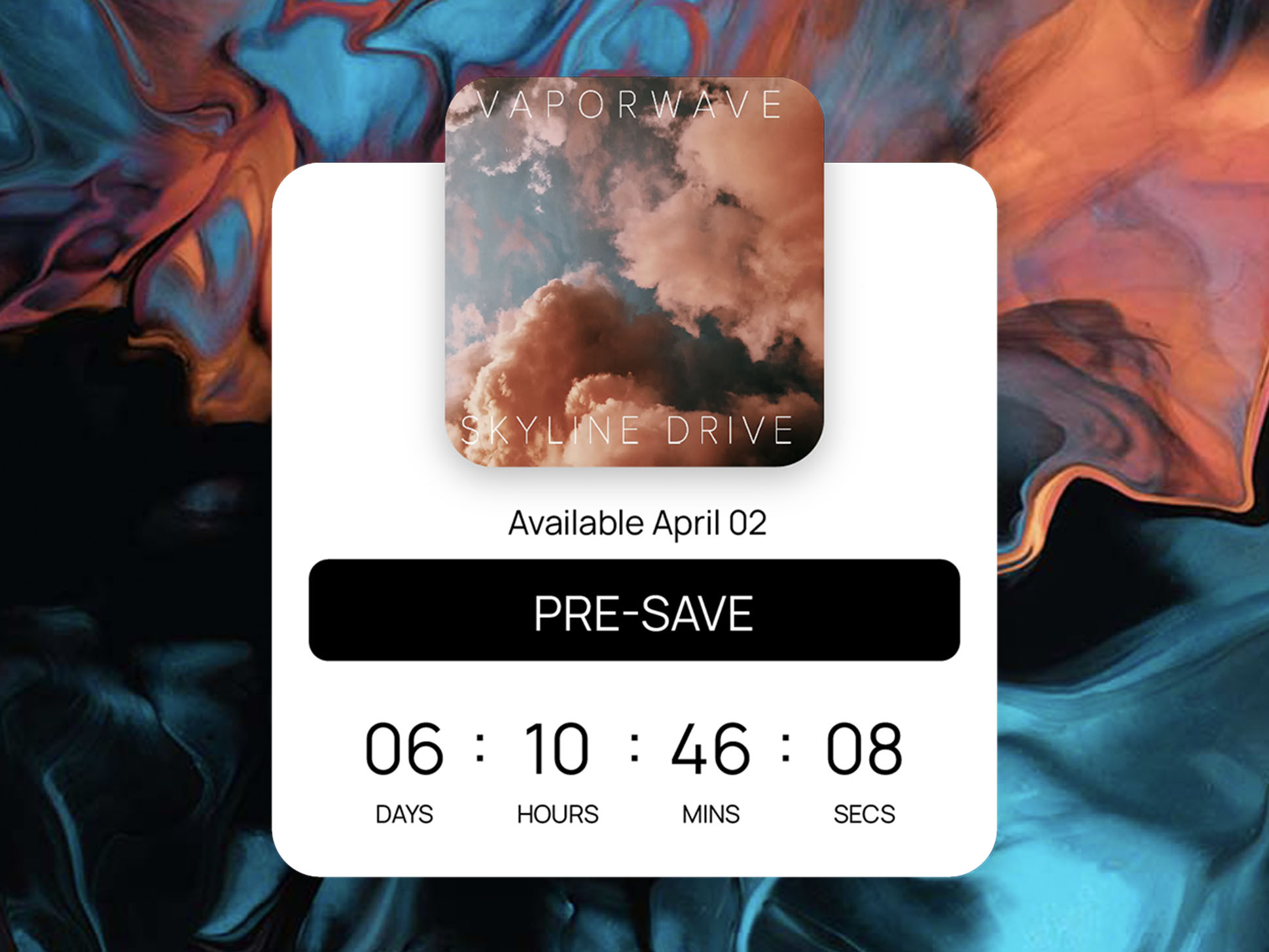
- Visit a pre-save experience designed as a conversion hub
- Engage with content that leads into a defined next step
Clarity here determines how effectively fans enter the system.
Step 2: Build the Pre-Save as a Conversion Hub
The pre-save is one of the most valuable moments in the release cycle.
As discussed earlier, it represents a point of high intent. A fan is choosing to engage before the music is available.
In a cross-channel system, the pre-save is not treated as a single conversion. It is treated as a hub.
This means the experience should be designed to:
- Capture the pre-save action
- Establish a connection through SMS or email
- Introduce additional actions that deepen engagement
The pre-save link becomes part of a broader flow rather than the endpoint.
This is where conversion layering begins.
Step 3: Establish the Connection Layer
Without a connection layer, the system cannot persist.
This is where owned audience is created.
At the moment of engagement, the system should capture:
- A direct communication channel, such as SMS or email
- Identifiable fan data that can be used across interactions
- Context about how and where the fan entered the system
This transforms anonymous engagement into a structured relationship.
It allows future actions to be triggered without relying on algorithmic reach.
Step 4: Design Activation for Release Day
Release day is where the system is activated.
In a traditional campaign, this relies heavily on platform visibility and organic reach.
In a cross-channel system, activation is driven by direct communication.
Fans who have already engaged can be reached instantly and guided toward specific actions:
- Listening to the release
- Saving or following on streaming platforms
- Sharing or engaging with content
Because these fans have already moved through earlier stages of the journey, their likelihood of engagement is significantly higher.
This creates strong initial signals within streaming platforms, which in turn supports algorithmic distribution.
Step 5: Layer Conversions Across Channels
Activation should not be limited to a single outcome.
This is where conversion layering becomes critical.
A fan who listens on release day can be guided toward:
- Following the artist
- Saving additional tracks
- Engaging with future content
- Remaining active within the communication channel
Each action reinforces the next.
Over time, this creates a more engaged and responsive audience.
Step 6: Build Continuity Beyond the Release
Most album release strategies end too early.
Once the initial promotion window closes, engagement drops and the system resets.
A cross-channel release system is designed to prevent this.
Continuity flows extend the interaction beyond the release by:
- Re-engaging fans with new content
- Introducing future releases into the same system
- Maintaining communication through owned channels
This is where long-term growth is established.
Each release adds to the system rather than starting from zero.
How the System Compounds Over Time
The true value of a cross-channel release system is not fully visible in a single campaign.
It becomes clear over multiple releases.
Each time a fan moves through the system, their level of connection increases.
A fan who has:
- Pre-saved a release
- Opted into SMS
- Engaged on release day
- Responded to follow-up messages
Is significantly more likely to engage again in the future.
This creates a compounding effect.
The system becomes more effective with each iteration because the audience becomes more connected.
Common Mistakes in Release System Design
Even when artists attempt to build more advanced strategies, a few patterns tend to limit effectiveness:
- Treating channels as separate tools rather than connected components
- Focusing on pre-save volume without building connection layers
- Relying on release day visibility instead of pre-release intent
- Failing to design continuity beyond the initial campaign
These are not tactical issues. They are structural.
A system only works when each part supports the others.
Infrastructure as the Foundation
At the core of a cross-channel release system is infrastructure.
Infrastructure determines how data flows, how actions are triggered, and how interactions persist.
Without it, even well-designed strategies remain fragmented.
With it, the system can:
- Track fan movement across channels
- Trigger actions based on behavior
- Maintain continuity across releases
- Enable growth to compound over time
This is the layer that transforms marketing from execution into strategy.
A More Durable Model for Album Release Promotion
Album release promotion does not need more tactics. It needs better structure.
When you move from campaigns to systems:
- Pre-saves become entry points into relationships
- Messages become triggers for action
- Fans become part of a persistent network
- Releases become moments within an ongoing system
This is the model that supports long-term growth.
Designing for Systems, Not Moments
The most important shift is conceptual.
You are no longer optimizing for isolated moments of attention.
You are designing a system that captures, connects, and extends those moments.
Every concept in this cluster reinforces this idea:
Cross-channel growth connects interactions.
Conversion layering multiplies outcomes.
Owned audience provides continuity.
The fan journey map defines movement.
A cross-channel album release system brings these ideas together into a single, cohesive structure.

Keep reading
All posts
How to Build a 3-Step Action Flow: SMS Sign-Up to Pre-Save and Follow

New Project or New Landing Page? How to Structure Sonikit for Multiple Releases, Artists, or Tours