How to Capture Fan Intent Before They Ever Open Spotify
Most music marketing strategies begin too late.
They activate only after the listener arrives on Spotify.
At that point, the platform has already become the primary environment shaping behavior. Discovery algorithms, competing recommendations, playlists, notifications, and endless listening options all begin competing for attention simultaneously.
This creates a structural disadvantage for artists.
By the time a listener opens Spotify, intent is already fragmented.
The most effective release strategies operate earlier. They capture fan intent before the streaming session begins and guide that intent into coordinated actions that carry into Spotify later.
This is one of the defining shifts in modern music marketing. Growth is no longer driven solely inside streaming platforms. Increasingly, it is driven by the systems that prepare listener behavior before streaming platforms are ever opened.
Understanding Fan Intent
Fan intent is the likelihood that a listener will take a meaningful action.
Not all engagement reflects the same level of intent.
A passive view on social media indicates awareness. A pre-save indicates anticipation. A text opt-in signals willingness to continue engaging beyond a single moment.
The stronger the intent signal, the more likely the listener is to:
- stream immediately upon release
- save the track
- follow the artist
- return for future releases
This is why modern release strategies prioritize actions that occur before listening itself.
They are not merely promotional. They are predictive.
Why Spotify Is a Poor Starting Point
Spotify is highly effective at amplifying momentum, but it is less effective at creating initial commitment.
Inside Spotify, listeners are exposed to infinite alternatives. Even if a fan arrives with some level of interest, that interest competes with playlists, recommendations, and platform behavior patterns.
This means artists who rely entirely on Spotify-native discovery are often competing for fragmented attention.
Cross-channel systems solve this by creating commitment before the listener enters the platform.
Instead of hoping a fan decides to engage once they arrive on Spotify, the system establishes intent in advance.
This changes the entire dynamic of the release.
Pre-Saves as Intent Infrastructure
Pre-saves are often misunderstood as simple marketing mechanics.
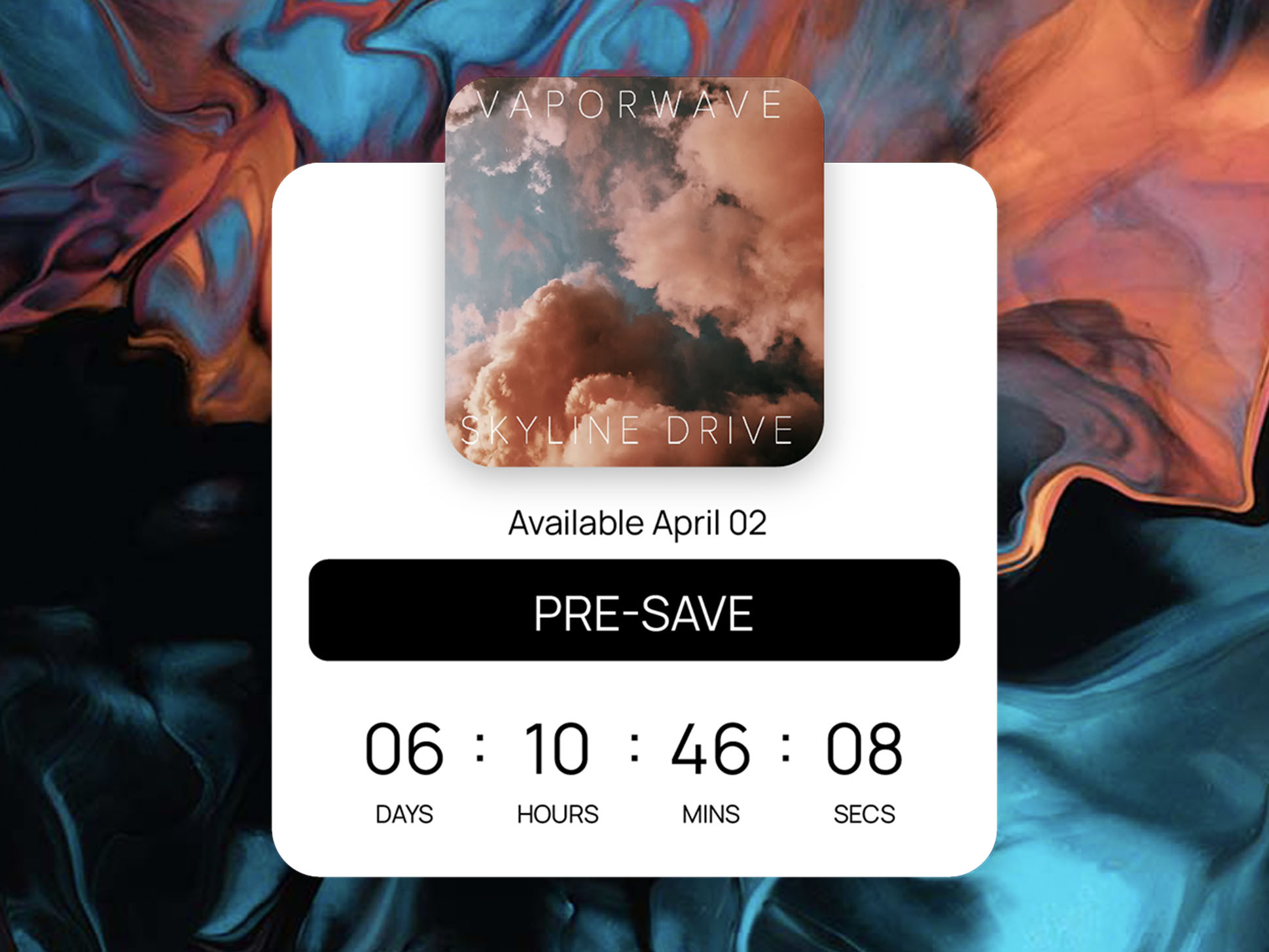
In reality, a pre-save is a behavioral commitment.
When a listener pre-saves a release, they are signaling future engagement before the music is available. This is fundamentally different from passive streaming behavior.
But the deeper value of pre-saves is not just the save itself. It is the sequence of behaviors that pre-saves enable.
A well-designed pre-save system can lead to:
- release-day listening
- post-release saves
- follows
- repeat engagement
The pre-save becomes the beginning of a larger Action Flow rather than an isolated conversion point.
This is why pre-save infrastructure matters more than pre-save volume alone.
Capturing Intent Outside Streaming Platforms
The strongest fan intent signals are often generated outside Spotify entirely.
These actions include:
- texting a keyword
- replying to an Instagram Story
- opting into SMS updates
- commenting on a post
- clicking a follow or save button before release
Each action represents intentional participation rather than passive exposure.
More importantly, these actions occur within environments where the artist can maintain continuity.
This is critical.
Spotify can amplify engagement, but it does not provide ownership of the audience relationship. Messaging systems, SMS flows, and cross-channel infrastructure do.
This allows artists to shape fan behavior before streaming even begins.
The Cross-Channel Path to Streaming Signals
One of the central ideas throughout this content cluster is that modern growth comes from coordinated signals rather than isolated actions.
Capturing intent before Spotify allows those signals to be sequenced strategically.
A typical sequence might look like this:
- A fan discovers content on Instagram or TikTok
- The fan enters a messaging flow or clicks a pre-save CTA
- The system captures the fan through SMS or direct interaction
- The fan receives reminders leading up to release
- Release-day messaging drives immediate listening
- Follow-up prompts encourage saves and follows
By the time the listener opens Spotify, their behavior has already been influenced.
The platform becomes the destination for intent, not the origin of it.
Why Messaging Channels Matter So Much
Messaging channels are uniquely powerful because they preserve continuity between moments of attention.
Social platforms are optimized for discovery but not persistence. Content appears briefly and disappears quickly.
SMS and direct messaging operate differently.
They create an ongoing relationship layer that exists independently of platform algorithms.
This allows artists to:
- reactivate listeners before release
- reinforce anticipation over time
- coordinate release-day engagement directly
The result is a denser cluster of streaming signals once the music becomes available.
This is why messaging systems increasingly function as the connective infrastructure underneath successful release campaigns.
Turning Attention Into Structured Momentum
One of the biggest weaknesses in traditional music marketing is that attention is treated as the outcome.
But attention decays quickly.
Intent, by contrast, can be reinforced and extended.
The purpose of cross-channel infrastructure is not merely to generate visibility. It is to transform visibility into structured momentum.
This happens through continuity.
Every action should lead naturally into another:
- an Instagram interaction leads to messaging
- messaging leads to pre-save behavior
- pre-save behavior leads to release-day listening
- listening leads to saves and follows
This continuity is what creates compounding engagement.
Without it, campaigns produce spikes. With it, they produce systems.
The Difference Between Reach and Readiness
A useful way to think about fan intent is through the distinction between reach and readiness.
Reach measures how many people encountered the content.
Readiness measures how prepared those people are to act when the release arrives.
An artist with smaller reach but higher readiness will often outperform an artist with larger but passive audiences.
This is because readiness produces stronger downstream behavior:
- faster listening velocity
- higher save rates
- more consistent follow conversion
- better repeat engagement
These are the behaviors streaming algorithms respond to most strongly.
Action Flows as Intent Coordination Systems
Earlier in this cluster, we introduced Action Flows as systems that connect fan actions into coordinated sequences.
Capturing intent before Spotify is one of their most important functions.
For example:
- a fan comments on a post
- the comment triggers a DM
- the DM prompts a text opt-in
- the opt-in triggers a pre-save flow
- the pre-save triggers release-day reminders
Each action increases the likelihood of the next one occurring.
The system continuously compounds intent before the listener ever enters Spotify.
This is the strategic layer behind many modern growth systems.
Why This Strategy Produces Stronger Release-Day Performance
Release-day performance is heavily influenced by what happens before release day.
Artists often focus intensely on launch-day promotion while underinvesting in pre-release infrastructure.
But by the time a release goes live, much of the listener behavior has already been determined.
Fans who have:
- pre-saved
- opted into messaging
- interacted repeatedly before release
are significantly more likely to engage immediately once the music becomes available.
This creates concentrated listening activity early in the release cycle, which strengthens momentum signals inside Spotify.
In many cases, the quality of pre-release intent matters more than the quantity of launch-day traffic.
Reframing the Role of Spotify
Spotify remains critically important, but its role in the growth process has changed.
The platform is no longer the sole engine of artist growth. Increasingly, it functions as the environment where previously captured intent is converted into measurable signals.
This distinction matters strategically.
Artists who depend entirely on Spotify-native discovery remain vulnerable to algorithmic volatility and fragmented attention.
Artists who capture intent beforehand enter Spotify with momentum already forming.
They arrive with coordinated listeners rather than passive traffic.
The Strategic Takeaway
The most effective release strategies begin before streaming behavior starts.
They capture fan intent early, reinforce it through cross-channel systems, and guide it into coordinated listening actions once the release goes live.
This is the underlying principle behind modern fan growth systems.
Instagram creates discovery. Messaging channels preserve continuity. Pre-save systems coordinate anticipation. Spotify validates intent through behavioral signals.
When these systems work together, releases stop functioning like isolated promotional events.
They become infrastructure-driven growth cycles that compound over time.