How to Turn Every Fan Action Into Multiple Conversions in Music Marketing
Most music marketing strategies are built around single outcomes.
A fan clicks a link.
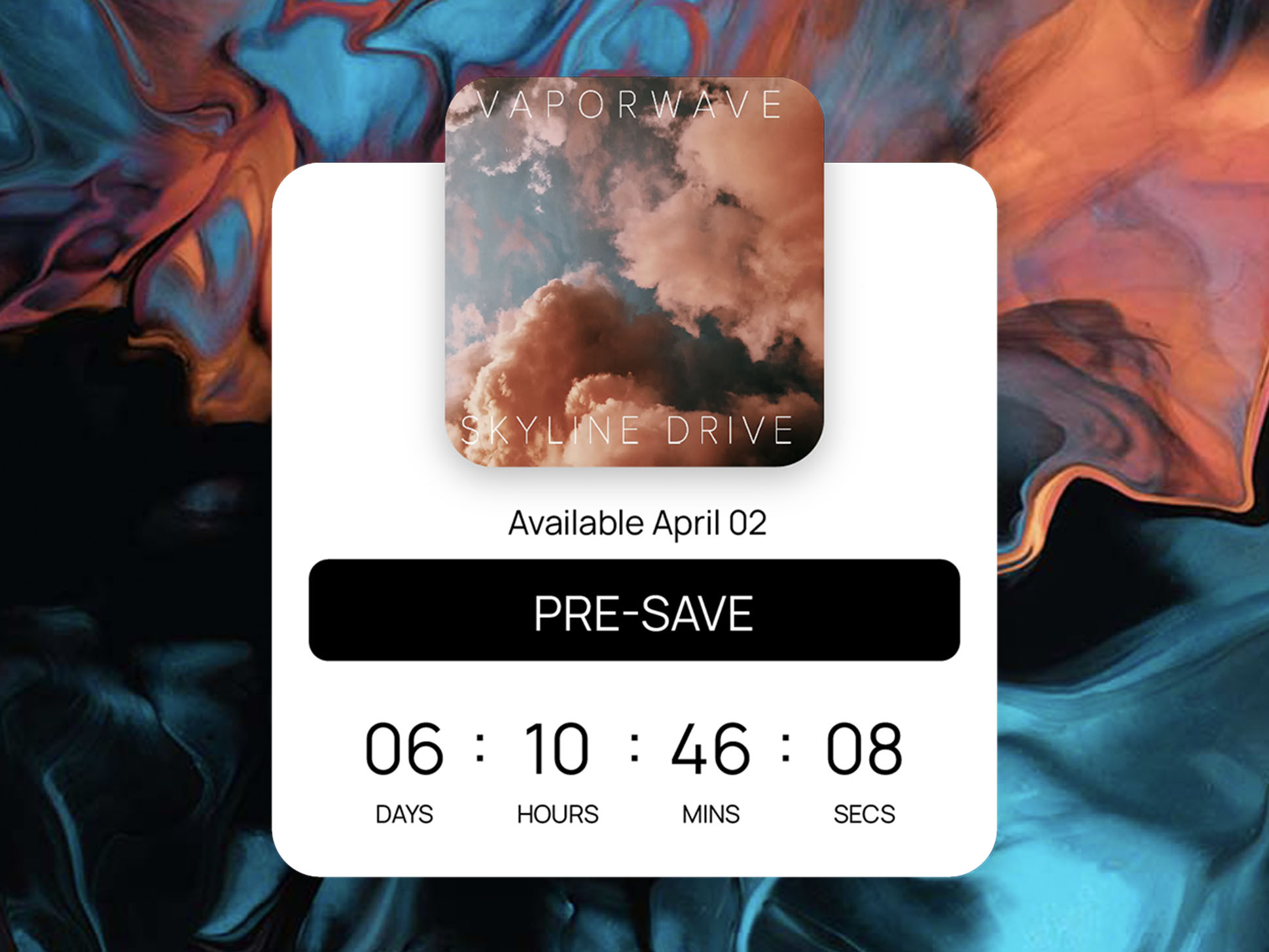
A fan pre-saves a track.
A fan follows an artist.
Each of these is treated as a success. The campaign records the result, reports the metric, and moves on.
But this way of thinking quietly limits growth.
When every fan action is treated as a final conversion, you cap the value of that interaction. You measure what happened, but you do not extend it.
The more effective approach is to treat every fan action as a starting point. Not as a result, but as an opportunity to generate additional actions across channels.
This is the foundation of conversion layering. It is one of the most important shifts in modern music marketing, and it sits directly on top of the cross-channel growth model.
The Hidden Constraint of Single-Conversion Thinking
In traditional campaign design, each action is optimized in isolation.
A pre-save campaign is designed to maximize pre-saves.
An email campaign is designed to drive clicks.
An SMS campaign is designed to generate responses.
This creates clarity in measurement, but it also creates fragmentation in strategy.
A fan who completes one action is rarely guided toward another. The system captures the moment, but it does not build on it.
This is why many campaigns feel effective in the short term but fail to produce sustained growth. Each interaction exists in a closed loop.
Conversion layering breaks that loop.
What “Multiple Conversions” Actually Means
Turning a single fan action into multiple conversions does not mean forcing users through aggressive funnels. It means designing flows where one action naturally leads to another, across different channels and contexts.
A conversion, in this sense, is any meaningful step that deepens the relationship between the fan and the artist.
This can include:
- Saving music to a streaming library
- Following the artist on a platform
- Opting into SMS or email
- Clicking through to additional content
- Engaging with future releases
The key idea is that no action exists alone.
A pre-save is not just a streaming event. It is a moment of intent. That intent can be extended into multiple forms of engagement if the system is designed to capture it.
The Pre-Save as a Conversion Hub
The pre-save is one of the clearest examples of where conversion layering can be applied.
In most campaigns, a pre-save link is designed to do one thing. Capture a save before release.
But structurally, the pre-save moment is much more valuable than that.
It represents a fan who is:
- Aware of the release
- Willing to take action
- Engaged before the music is even available
This is one of the highest-intent states a fan can be in.
When treated as a conversion hub rather than a single endpoint, the pre-save becomes the center of a broader system.
Instead of asking how many pre-saves were generated, the more useful question becomes:
What else can happen while the fan is here?
Designing Conversion Layers Into a Flow
Conversion layering is not about adding friction. It is about structuring optional pathways that extend engagement.
A well-designed flow does not interrupt the primary action. It builds around it.
For example, a pre-save flow might include:
- The core action
The fan completes the pre-save on their preferred streaming platform. - A secondary connection
Immediately after, they are invited to opt into SMS or email for updates. - A reinforcement action
They are prompted to follow the artist or save related content. - A future trigger
Their connection is used to re-engage them on release day and beyond.
Each step is optional, but connected. The system captures additional value without compromising the initial experience.
Why Cross-Channel Context Matters
Conversion layering only works when channels are connected.
If each platform operates independently, there is no way to extend actions across them.
For example:
- A streaming platform does not provide direct communication
- Social platforms limit reach and visibility
- Email and SMS require explicit opt-in
Without coordination, each channel becomes a silo.
Cross-channel growth enables conversion layering by allowing actions in one channel to influence behavior in another.
A pre-save can lead to an SMS opt-in.
An SMS message can drive a streaming action.
A streaming action can inform future messaging.
This continuity is what transforms isolated conversions into a system.
From Linear Funnels to Interaction Systems
Traditional marketing funnels are linear.
A fan moves from awareness to action in a single direction, and the process ends once the goal is achieved.
In music marketing, this often looks like:
Discovery → Pre-save → Release day listen
The problem is that this structure does not reflect how fans actually behave.
Fan engagement is not linear. It is cyclical and multi-directional.
A more accurate model is an interaction system.
In this model:
- Actions can trigger other actions at any point
- Fans can re-enter the system through multiple channels
- Engagement is sustained over time rather than completed once
Conversion layering fits naturally into this structure because it assumes that every action is part of an ongoing cycle.
The Compounding Value of Layered Conversions
The most important impact of conversion layering is not immediate. It is cumulative.
When a single fan action leads to multiple conversions, each additional connection increases future leverage.
A fan who has only pre-saved a track has limited reachability.
A fan who has pre-saved, followed, and opted into SMS can be re-engaged repeatedly.
Over time, this creates a widening gap between two types of audiences:
- Audiences built on isolated actions
- Audiences built on connected interactions
The second group becomes significantly more valuable with each release.
This is why conversion layering is not just a tactic. It is a growth multiplier.
Applying This to a Release Strategy
To integrate conversion layering into a release strategy, the focus must shift from maximizing single metrics to designing interconnected flows.
A practical way to approach this is to define the role of each stage in the release cycle.
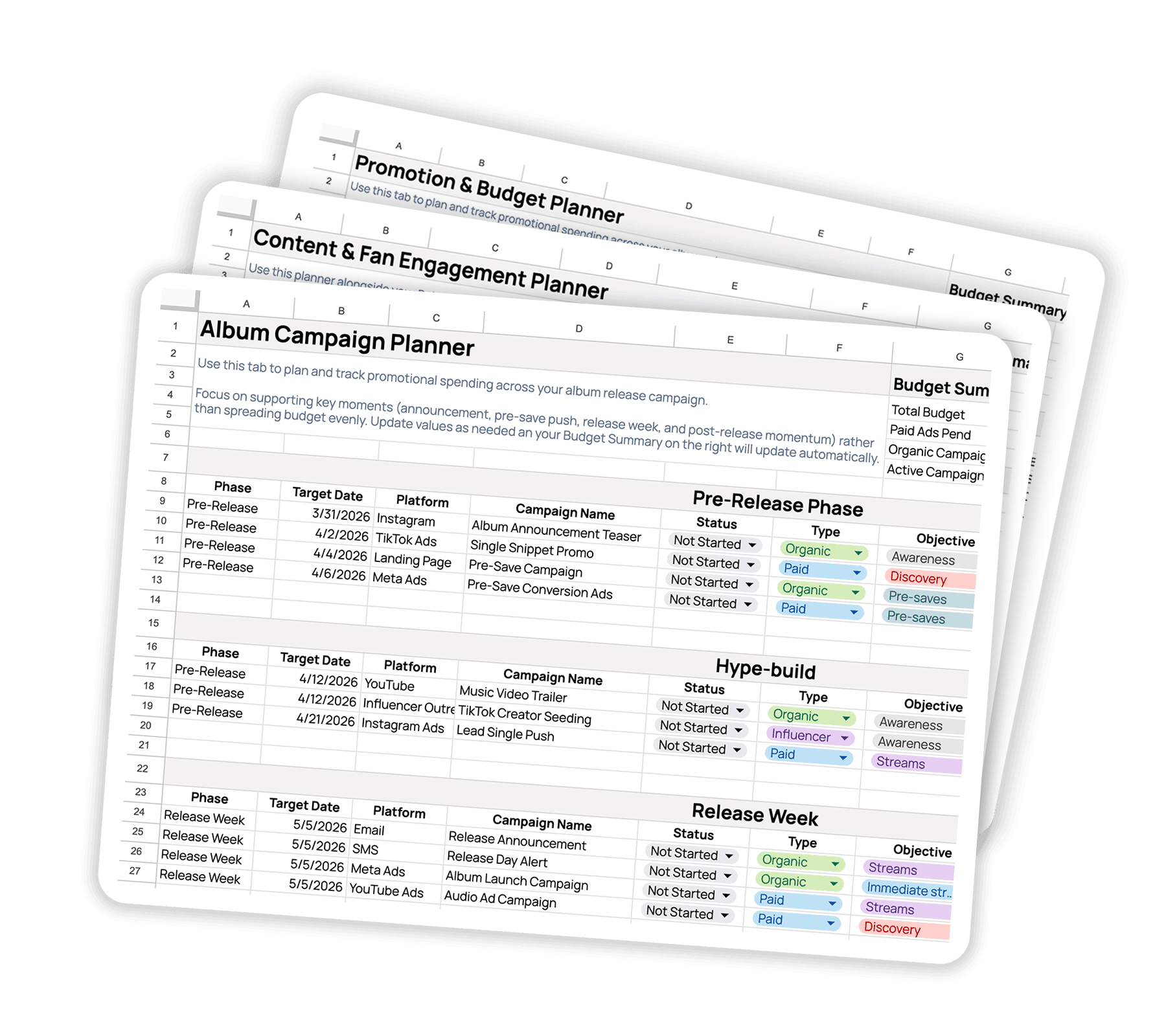
Pre-release phase
This is where intent is captured.
The goal is not just to generate pre-saves, but to establish connections that persist beyond release day.
Release phase
This is where engagement is activated.
Fans who have already taken action are guided into listening, saving, and sharing behavior.
Post-release phase
This is where continuity is maintained.
Fans are re-engaged with additional content, future releases, and ongoing communication.
When these phases are connected, each one reinforces the next.
Common Mistakes That Limit Conversion Potential
Even well-executed campaigns often fail to produce layered conversions because of structural decisions.
A few patterns tend to repeat:
- Treating the pre-save link as a final destination rather than a starting point
- Failing to capture fan data at high-intent moments
- Using channels independently instead of connecting them
- Measuring success based on single metrics rather than cumulative engagement
These are not tactical errors. They are design limitations.
Fixing them requires rethinking how actions relate to each other.
Building Systems Instead of Campaigns
The underlying shift here is from campaigns to systems.
Campaigns are time-bound. They start, execute, and end.
Systems persist. They accumulate value over time.
When you design for multiple conversions, you are not just improving a single release. You are building infrastructure that strengthens every future release.
This is where the distinction becomes clear.
A pre-save tool helps you collect pre-saves.
A system helps you turn those pre-saves into long-term audience growth.
Where This Fits in Modern Music Marketing
As music marketing becomes more competitive, the advantage is shifting away from who can drive the most initial attention and toward who can sustain engagement.
Attention is increasingly accessible. Conversion is not.
Artists who rely on single-action campaigns will continue to see diminishing returns as platforms become more saturated.
Artists who build systems that extend every action will see increasing returns because each interaction becomes more valuable over time.
Conversion layering is the mechanism that enables this.
It ensures that no fan action is wasted.
It ensures that every moment of intent is captured and extended.
It ensures that growth is not just achieved, but compounded.

Keep reading
All posts
How to Build a 3-Step Action Flow: SMS Sign-Up to Pre-Save and Follow

New Project or New Landing Page? How to Structure Sonikit for Multiple Releases, Artists, or Tours