Owned Audience vs Algorithm: Why First-Party Fan Data Wins in Music Marketing
For most artists, growth still feels like a negotiation with the algorithm.
You release a track, promote it, and hope it performs well enough to trigger distribution. If engagement is strong, reach expands. If it is not, visibility fades quickly.
This dynamic has shaped modern music marketing. It has also created a fragile foundation.
Algorithm-driven growth is powerful, but it is inherently unstable. It is controlled by platforms, influenced by opaque signals, and subject to constant change.
An owned audience operates differently.
It is not dependent on visibility.
It is not constrained by platform reach.
It is not reset between releases.
Understanding the difference between these two models is one of the most important strategic shifts an artist can make.
What “Owned Audience” Actually Means
An owned audience is a group of fans that an artist can reach directly, without relying on a third-party platform’s distribution system.
This typically includes:
- Email subscribers
- SMS contacts
- First-party fan profiles collected through campaigns
- Identifiable fan relationships tied to specific actions
The defining characteristic is control.
When you own the audience, you control when and how communication happens. You are not dependent on an algorithm to deliver your message.
This is fundamentally different from audiences on social or streaming platforms, where access is mediated and often limited.
The Nature of Algorithmic Growth
Algorithmic growth is driven by engagement signals.
Streaming platforms and social networks analyze behavior such as listens, saves, shares, and watch time to determine what content should be shown to more users.
This creates a feedback loop:
- Strong engagement leads to increased exposure
- Increased exposure leads to more potential engagement
- Weak engagement limits distribution
This system is highly effective at surfacing content, but it has structural limitations.
First, it is unpredictable.
Second, it is non-transferable.
Third, it does not inherently create a lasting connection between the artist and the fan.
A listener who discovers a track through an algorithm may never engage again. The platform owns the relationship.
Why Algorithm-Only Strategies Break Down
Relying entirely on algorithmic growth creates a cycle of dependency.
Each release must perform well enough to earn visibility. If it does not, there is no fallback mechanism to reach the audience.
This leads to a pattern many artists experience:
- A release performs well and reaches a wide audience
- The next release underperforms and struggles to gain traction
- Momentum is lost, despite previous success
The issue is not inconsistency in the music. It is the absence of a persistent connection layer.
Without an owned audience, growth resets with each campaign.
The Role of First-Party Data in Music Marketing
First-party data refers to information collected directly from fans through interactions with an artist’s campaigns and platforms.
This can include:
- Contact information such as phone numbers or email addresses
- Engagement history across releases
- Preferences and behavioral patterns
- Channel-specific activity such as SMS responses or link clicks
In music marketing, first-party data is what transforms anonymous listeners into identifiable fans.
This distinction matters because it enables continuity.
A listener is a moment.
A fan profile is a relationship.
When data is captured and retained, each interaction contributes to a growing system rather than disappearing after the campaign ends.
Where Pre-Saves Fit Into This Model
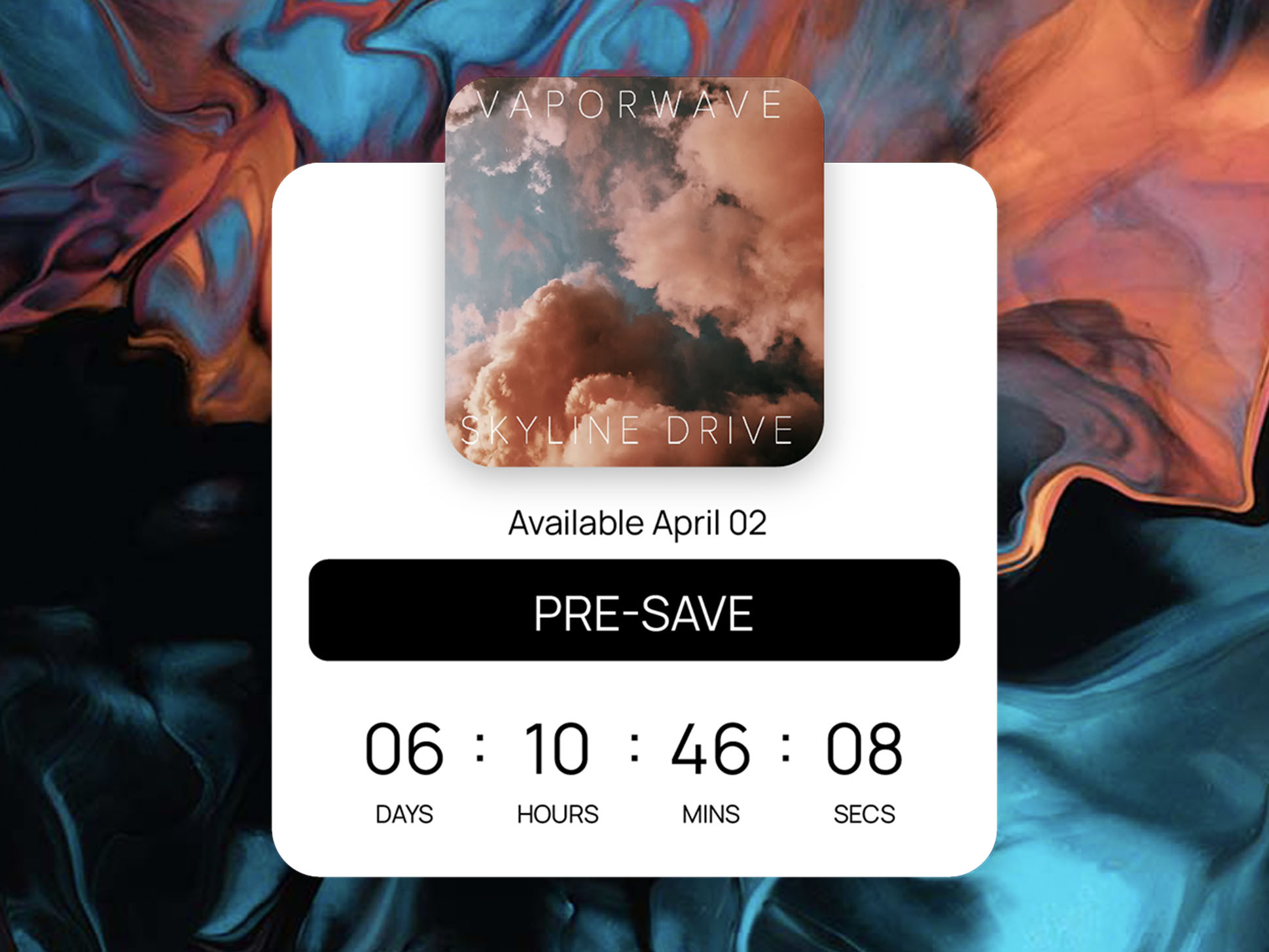
The pre-save has traditionally been positioned as an algorithmic signal.
More pre-saves can contribute to stronger release day performance, which may influence platform distribution.
This is true, but incomplete.
A pre-save also represents a moment of high intent. A fan is taking action before the music is even available. This is one of the strongest indicators of engagement.
In a system built around owned audience growth, the pre-save becomes a data capture point.
Instead of functioning solely as a streaming action, it becomes:
- A way to identify and connect with engaged fans
- An opportunity to extend the interaction into other channels
- A foundation for future engagement beyond the release
This reframes the role of the pre-save link within a broader release strategy.
It is not just a tool for boosting launch metrics. It is a mechanism for building a persistent audience.
Cross-Channel Growth Depends on Ownership
In earlier discussions of cross-channel growth and conversion layering, a consistent pattern emerges.
Every effective system relies on the ability to carry fan interactions across channels.
This is only possible when the relationship is owned.
If a fan exists only within a streaming platform, their behavior cannot easily influence other channels. If they exist only as a social follower, reach is limited by platform distribution.
Ownership creates continuity.
A fan who opts into SMS can be reached regardless of algorithmic changes. A fan who is part of an email list can be re-engaged at any time.
This is what allows growth flows to function:
- A pre-save can lead to an SMS opt-in
- An SMS message can drive a streaming action
- A streaming action can inform future messaging
Without ownership, these connections break.
The Compounding Advantage of Owned Audiences
The most important advantage of an owned audience is not immediate reach. It is cumulative leverage.
Each fan who enters the system becomes more valuable over time because they can be engaged repeatedly.
This creates a compounding effect:
- New releases reach existing fans instantly
- Engagement signals are stronger from the start
- Algorithms respond more favorably to early activity
- Growth becomes more consistent across releases
In contrast, an algorithm-only strategy must rebuild momentum each time.
This is why artists with smaller but highly connected audiences often outperform those with larger but passive followings.
Rethinking Album Release Promotion
Album release promotion is often structured around maximizing visibility during a short window.
Content is scheduled, ads are deployed, and engagement is concentrated around launch.
This approach can generate strong results, but it is inherently time-bound.
A more durable strategy integrates owned audience development into the release process.
Instead of treating promotion as a burst of activity, it becomes a process of building and activating a network.
During the pre-release phase, fans are identified and connected.
During the release phase, those connections are activated.
During the post-release phase, they are maintained and extended.
This transforms album release promotion from a campaign into a system.
Practical Shifts in Strategy
Moving toward an owned audience model does not require abandoning algorithmic growth. It requires balancing it.
A practical approach involves:
- Using algorithms for discovery
- Using owned channels for retention and engagement
- Designing flows that convert anonymous listeners into identifiable fans
- Ensuring every high-intent action leads to a persistent connection
This aligns with the broader shift from isolated tactics to growth infrastructure.
The Platform vs Infrastructure Distinction
Many tools in music marketing are designed to operate within platform constraints.
They help optimize performance within a specific channel, but they do not extend beyond it.
Infrastructure operates at a different level.
It connects channels, stores data, and enables actions to trigger other actions over time.
In this context:
- A pre-save link is a tool
- A connected fan profile is infrastructure
- A campaign is an execution
- A growth system is an environment
Understanding this distinction clarifies why ownership matters.
Without infrastructure, data is fragmented and actions are isolated. With infrastructure, interactions become part of a continuous system.
Why First-Party Data Wins Long-Term
First-party data wins not because it replaces algorithms, but because it stabilizes growth.
Algorithms are optimized for distribution.
Owned audiences are optimized for continuity.
When combined, they create a balanced system:
- Algorithms bring in new listeners
- Owned channels retain and engage them
- Data connects interactions across releases
- Growth compounds instead of resetting
This is the foundation of modern music marketing.
A More Durable Model for Growth
The future of music marketing is not defined by a single channel or tactic. It is defined by how well systems are designed to persist over time.
Artists who invest only in visibility will continue to experience volatility.
Artists who invest in ownership will build stability.
And those who combine both will create a system where:
Every pre-save contributes to a larger audience
Every release strengthens future performance
Every fan interaction increases long-term value
This is the shift from chasing attention to building infrastructure.
It is the difference between hoping the algorithm works and knowing your audience will.

Keep reading
All posts
How to Build a 3-Step Action Flow: SMS Sign-Up to Pre-Save and Follow

New Project or New Landing Page? How to Structure Sonikit for Multiple Releases, Artists, or Tours