The Fan Journey Map: How Fans Move Across Channels in Music Marketing
Most artists think in terms of campaigns. Fans do not.
A campaign has a start and an end. A fan relationship does not. It unfolds across moments, platforms, and interactions that rarely follow a straight line.
This mismatch is where many release strategies begin to break down.
You can build a high-performing pre-save campaign, drive strong album release promotion, and still struggle to sustain engagement. Not because the tactics failed, but because the system behind them was never designed to reflect how fans actually move.
The fan journey map is the missing perspective.
It reframes music marketing from a series of isolated actions into a connected path of interactions that span channels over time. It is not a visualization exercise. It is a strategic model that informs how growth flows are designed, how conversions are layered, and how owned audience systems are built.
What a Fan Journey Map Actually Represents
A fan journey map is a structured way of understanding how a fan progresses from initial discovery to sustained engagement across multiple channels.
It captures three essential dimensions:
- Where the interaction happens
- What action the fan takes
- What state of intent the fan is in
This is important because actions alone do not tell the full story.
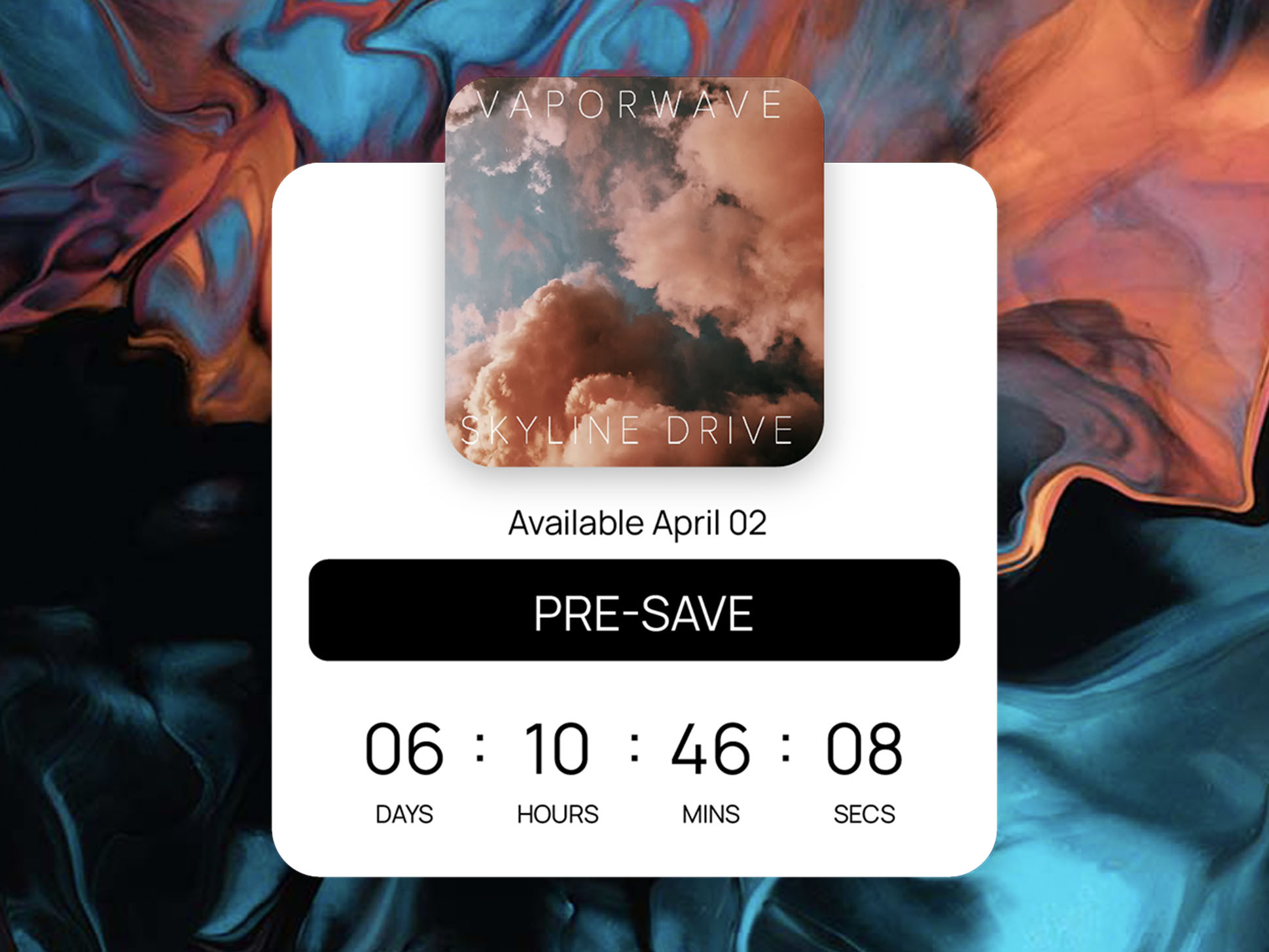
A pre-save, for example, is not just a streaming action. It is an expression of intent before release. That intent has a different strategic value than a casual stream or a passive follow.
The journey map contextualizes these actions, allowing you to design systems that respond appropriately at each stage.
Why Linear Funnels Fail in Music Marketing
Traditional marketing funnels assume a predictable, step-by-step progression.
Awareness leads to consideration.
Consideration leads to conversion.
Conversion completes the journey.
This model works in controlled environments, but it does not reflect how fans engage with music.
A fan might discover an artist on social media, ignore a pre-save link, encounter the same track on a playlist weeks later, and only then decide to engage. Another fan might pre-save immediately but never listen again.
The path is not linear. It is fluid and often cyclical.
This is why earlier concepts like cross-channel growth and conversion layering are so critical. They acknowledge that fans can enter and re-enter the system at multiple points.
A fan journey map embraces this complexity instead of trying to simplify it.
The Core Stages of the Fan Journey
While the journey is not linear, it can still be understood through a set of recurring stages.
These stages represent shifts in intent rather than fixed steps.
1. Discovery
This is the first point of contact.
It typically occurs through algorithmic channels such as social media feeds, streaming recommendations, or shared content.
At this stage, attention is low and fleeting. The fan has no established relationship with the artist.
The goal is not conversion. It is movement.
You are guiding the fan toward a more intentional interaction.
2. Initial Engagement
This is where the first meaningful action occurs.
It might be a click on a pre-save link, a visit to a landing page, or interaction with a piece of content.
The key characteristic of this stage is intent.
The fan is choosing to engage rather than passively consuming.
This is the moment where conversion layering becomes relevant. The system should be designed to extend this action into additional connections.
3. Connection
This is where the relationship becomes persistent.
The fan opts into a channel that allows direct communication, such as SMS or email, or completes an action that ties them to a fan profile.
This is the transition from algorithm-dependent interaction to owned audience.
Without this stage, the journey resets after each interaction.
With it, continuity becomes possible.
4. Activation
This stage is tied to the release itself.
The fan is prompted to take meaningful actions such as listening, saving, or sharing the music.
Because the connection has already been established, activation can happen reliably across channels.
This is where earlier efforts begin to compound.
5. Continuity
This is the stage most campaigns ignore.
After the release, the system either maintains engagement or allows it to fade.
Continuity involves re-engaging fans, introducing new actions, and preparing them for future releases.
This is where growth systems are built.
Mapping Actions Across Channels
Once these stages are defined, the next step is to map how actions move between channels.
A fan journey is not just a sequence of actions. It is a sequence of transitions.
For example:
- Social discovery leads to a pre-save link
- The pre-save leads to an SMS opt-in
- The SMS message drives a release day stream
- The stream leads to a follow or library save
- The follow enables future re-engagement
Each transition is where value is created.
Without these transitions, actions remain isolated. With them, actions become connected and compounding.
The Role of the Pre-Save in the Journey
Within the fan journey map, the pre-save sits at a critical intersection between engagement and connection.
It is often the first intentional action a fan takes, and it occurs at a moment of high interest.
This makes it uniquely suited to function as a bridge.
In a disconnected system, the pre-save ends once the action is completed.
In a connected system, it becomes a pivot point.
It can lead into:
- Data capture and fan identification
- Channel connection through SMS or email
- Additional streaming actions such as follows or saves
- Future engagement flows tied to upcoming releases
This is why the pre-save link should not be treated as a static destination. It is a dynamic entry point into the broader system.
Designing Growth Flows Around the Journey
A fan journey map is only useful if it informs action.
This is where growth flows come into play.
Growth flows are built by aligning system behavior with the natural progression of the fan journey.
Instead of designing campaigns in isolation, you design flows that correspond to each stage:
- Discovery flows focus on movement into engagement
- Engagement flows focus on conversion layering
- Connection flows focus on ownership and retention
- Activation flows focus on release-driven actions
- Continuity flows focus on long-term engagement
Each flow is connected. Each flow builds on the previous one.
This creates a system where fan movement is guided rather than left to chance.
How Owned Audience Data Shapes the Journey
Earlier, we established that owned audience is what enables continuity.
Within the fan journey map, owned data acts as the connective tissue.
It allows you to:
- Recognize returning fans across interactions
- Personalize messaging based on behavior
- Trigger actions based on past engagement
- Maintain relationships across releases
Without this layer, the journey cannot be tracked or extended.
Fans remain anonymous, and each interaction exists in isolation.
With it, the journey becomes visible and actionable.
Common Gaps in Fan Journey Design
Even sophisticated campaigns often overlook key parts of the journey.
A few gaps appear consistently:
- Strong discovery efforts without clear paths to engagement
- High-performing pre-save campaigns without connection layers
- Effective release activation without post-release continuity
- Disconnected channels that prevent transitions between stages
These gaps are not failures of execution. They are gaps in system design.
The fan journey map helps identify and resolve them.
From Touchpoints to Systems
It is easy to think of marketing as a collection of touchpoints.
A social post.
A pre-save link.
A message.
A release.
Individually, each of these can perform well.
But without connection, they do not create momentum.
The fan journey map shifts focus from touchpoints to systems.
It asks not just what happens, but what happens next.
This is the same shift that underpins cross-channel growth, conversion layering, and owned audience strategy.
A More Accurate Model of Growth
When you view music marketing through the lens of the fan journey, a clearer pattern emerges.
Growth is not driven by individual actions.
It is driven by movement between actions.
A fan who moves from discovery to engagement to connection is more valuable than a fan who completes a single action at any stage.
A system that supports these transitions will consistently outperform one that does not.
This is why mapping the journey matters.
It provides the structure needed to design flows that reflect real behavior rather than idealized funnels.
Designing for Movement, Not Moments
The most important shift is conceptual.
Instead of optimizing for moments, you optimize for movement.
A pre-save is not the goal. It is a transition.
A stream is not the outcome. It is part of a cycle.
A release is not an endpoint. It is a trigger for continued engagement.
When your strategy is built around movement, every part of the system becomes more effective.
Fans are guided through a coherent experience.
Channels reinforce each other.
Growth compounds over time.

Keep reading
All posts
How to Build a 3-Step Action Flow: SMS Sign-Up to Pre-Save and Follow

New Project or New Landing Page? How to Structure Sonikit for Multiple Releases, Artists, or Tours