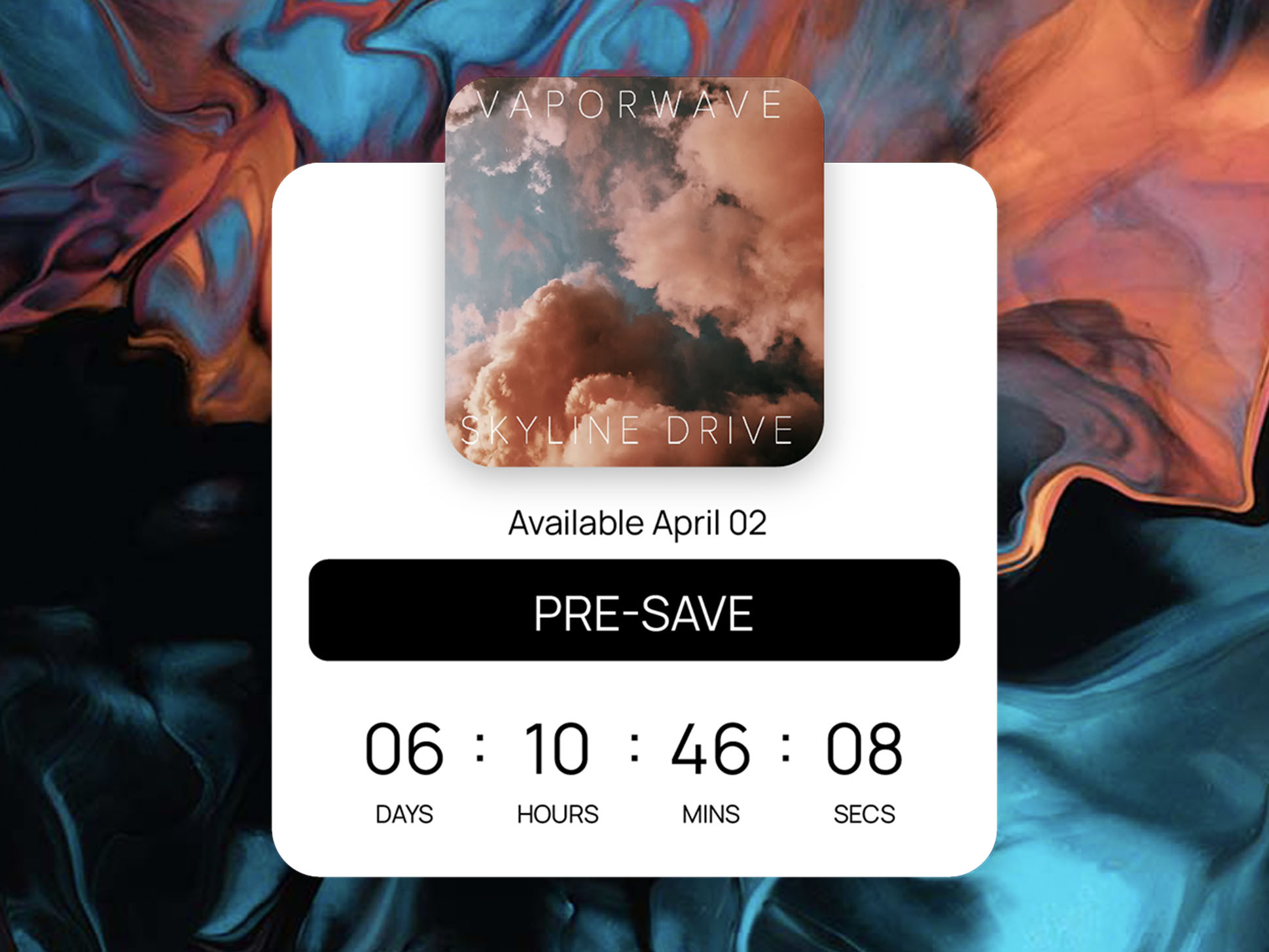
Why Streaming Growth Starts Outside Streaming Platforms
Streaming platforms are where music is consumed. They are not where growth begins.
This distinction is easy to overlook because streaming metrics are the most visible indicators of success. Plays, saves, followers, and playlist placements are all measured within the platform, so it is natural to assume that growth must originate there as well.
But when you examine how those metrics are actually created, a different pattern emerges.
Streaming growth is not initiated by the platform. It is triggered by behavior that happens before the listener ever presses play.
That behavior almost always occurs outside the platform itself.
Understanding this shift is critical because it reframes how release strategy, pre-save campaigns, and album release promotion should be designed. It moves the focus away from optimizing in-platform activity and toward building systems that generate intent before the platform is even involved.
The Illusion of Platform-Centric Growth
Streaming platforms are highly effective at distributing music, but they are reactive systems.
They respond to engagement signals. They do not create them.
When a track performs well, it is surfaced to more listeners. When it does not, its reach remains limited. The platform is amplifying behavior, not initiating it.
This creates the illusion that growth is happening inside the platform when, in reality, the platform is responding to external inputs.
A spike in streams is often the result of activity elsewhere:
- A fan discovering the artist on social media
- A listener clicking a pre-save link before release
- A message sent through SMS or email
- A coordinated release strategy driving attention at a specific moment
The platform registers the outcome, but it does not generate the initial action.
Where Intent Actually Begins
Streaming platforms are optimized for consumption, not intention.
A listener who encounters a track within a playlist or recommendation feed may engage passively. They listen, they move on, and the interaction ends there.
In contrast, actions that occur outside the platform are typically intentional.
A fan who clicks a pre-save link is choosing to engage before the music is available.
A fan who opts into SMS is choosing to stay connected.
A fan who responds to a message is actively participating.
These actions represent higher levels of intent.
Intent is what drives meaningful engagement. And intent is most often created in environments where the artist can guide the interaction.
The Role of Pre-Saves in External Growth
The pre-save is one of the clearest examples of how growth begins outside streaming platforms.
At a surface level, a pre-save appears to be a streaming action. It results in a track being added to a fan’s library on release day.
But structurally, it exists outside the platform.
The fan encounters a pre-save link through a different channel. They click through, complete an action, and only then does the platform register the result.
This sequence matters because it reveals where control exists.
The artist controls the entry point.
The artist controls the experience leading up to the action.
The artist can extend the interaction beyond the pre-save itself.
This is why the pre-save link is not just a distribution tool. It is a control point in the fan journey.
Cross-Channel Growth as the Driver of Streaming Performance
Earlier, we defined cross-channel growth as the process of connecting fan actions across platforms into continuous flows.
Streaming growth is one of the outcomes of this system.
When channels are connected, actions in one environment can drive behavior in another.
For example:
- Social discovery leads to a pre-save link
- The pre-save leads to an SMS connection
- The SMS message drives a release day stream
- The stream reinforces algorithmic distribution
This is not a linear funnel. It is a loop of interactions that reinforce each other.
Streaming platforms sit within this system, but they do not define it.
They respond to the momentum generated by cross-channel flows.
Why Platform-Only Strategies Plateau
Artists who focus exclusively on in-platform tactics often encounter a ceiling.
They optimize for playlist placement, algorithmic triggers, and in-app engagement, but growth remains inconsistent.
This happens because the system lacks an external source of intent.
Without external inputs:
- Engagement signals are weaker
- Initial activity is lower
- Algorithmic amplification is limited
- Each release starts from a similar baseline
The platform can only amplify what already exists.
If the starting signal is weak, the outcome will be as well.
Owned Audience as the Missing Input Layer
Owned audience provides the external input that streaming platforms depend on.
As discussed previously, an owned audience consists of fans that an artist can reach directly through channels like SMS, email, or first-party data systems.
This audience is not subject to algorithmic filtering.
When a release occurs, these fans can be activated immediately.
This creates a reliable source of engagement at the moment it matters most.
From the platform’s perspective, this looks like strong early activity:
- Streams increase quickly
- Saves and follows occur in a concentrated window
- Engagement signals are consistent
These are the exact signals that platforms use to determine distribution.
In this way, owned audience acts as the engine behind streaming growth.
The Pre-Release Strategy as a System, Not a Phase
The pre-release phase is often treated as a preparation period.
Content is scheduled, links are shared, and anticipation is built.
But within a cross-channel model, the pre-release strategy becomes something more important.
It becomes the system that generates the initial conditions for streaming success.
Instead of focusing solely on awareness, the pre-release phase is used to:
- Capture high-intent fan actions through pre-saves
- Convert those actions into owned audience connections
- Structure flows that can be activated on release day
This shifts the role of the pre-save from a metric to a mechanism.
It is no longer just about how many fans save the track. It is about how those fans are connected and how they can be re-engaged.
Conversion Layering and Streaming Outcomes
Conversion layering, introduced earlier in this cluster, plays a critical role here.
When a fan takes a single action, such as a pre-save, that moment can be extended into multiple conversions:
- A streaming save
- A follow
- An SMS opt-in
- A future engagement trigger
Each additional conversion increases the likelihood of future streaming activity.
This creates a compounding effect.
A fan who has completed multiple actions is significantly more likely to engage with new releases than a fan who has completed only one.
Streaming growth, in this context, is not just the result of individual listens. It is the result of accumulated connections.
Rethinking Album Release Promotion
Album release promotion often emphasizes visibility within a short time window.
Ads are launched, content is distributed, and attention is concentrated around release day.
While this can generate strong spikes in activity, it does not inherently create sustained growth.
A more effective approach integrates external systems into the promotion strategy.
Instead of asking how to drive streams directly, the focus shifts to:
- How to build intent before the release
- How to connect fans across channels
- How to activate those connections at scale
Streaming becomes the outcome of a broader system rather than the sole objective.
From Distribution to Orchestration
Streaming platforms excel at distribution. They deliver music to listeners at scale.
But growth requires orchestration.
Orchestration is the process of coordinating actions across channels, timing interactions, and guiding fans through a structured experience.
This is where marketing infrastructure becomes essential.
Infrastructure allows you to:
- Track fan behavior across interactions
- Trigger actions based on previous engagement
- Maintain continuity between releases
- Build systems that persist over time
Without this layer, distribution remains disconnected from strategy.
A More Accurate Model of Streaming Growth
When you step back, a clearer model emerges.
Streaming growth is not a platform-driven process. It is a system-driven outcome.
External channels create intent.
Cross-channel flows connect actions.
Owned audience provides continuity.
Streaming platforms amplify the result.
Each component plays a role, but the starting point is always outside the platform.
Designing for External Momentum
The most effective release strategies are designed to generate momentum before the music is available.
This involves:
- Creating entry points that capture attention and intent
- Structuring flows that convert initial actions into connections
- Building systems that can activate fans at the right moment
When this is done effectively, streaming platforms become accelerators rather than dependencies.
The Strategic Shift
The shift is subtle but significant.
Instead of asking how to grow within streaming platforms, you ask how to build systems that feed into them.
Instead of optimizing for isolated metrics, you design for connected outcomes.
Instead of relying on distribution, you create momentum.
This is the same pattern we have seen across this cluster:
Cross-channel growth connects actions.
Conversion layering multiplies value.
Owned audience creates continuity.
The fan journey map defines movement.
Streaming growth is simply where these systems converge.

Keep reading
All posts
How to Build a 3-Step Action Flow: SMS Sign-Up to Pre-Save and Follow

New Project or New Landing Page? How to Structure Sonikit for Multiple Releases, Artists, or Tours