90-Day Album Rollout Strategy: How to Build Momentum Before and After an Album Release
Albums no longer succeed because of a single release moment. They succeed because of sustained attention.
In the streaming era, listeners rarely experience an album all at once. Discovery happens gradually through algorithms, playlists, social exposure, and repeated encounters over time. This shift has fundamentally changed how albums should be marketed. A traditional launch-week mindset concentrates effort into a short window, while modern platforms reward consistency, engagement signals, and ongoing audience participation.
A successful album rollout is therefore not an announcement schedule. It is a momentum system.
The most effective artists treat an album as a multi-phase campaign that unfolds over roughly ninety days, allowing anticipation, commitment, and discovery to build progressively. Instead of asking audiences to care about twelve songs at once, the rollout trains listeners to follow a narrative that evolves long before release day and continues well afterward.
This guide outlines a strategic 90-day album rollout framework built around the same campaign principles introduced in modern single releases: awareness, commitment, and activation. The difference is scale. Albums require deeper audience conditioning and longer momentum cycles.
Why Album Campaigns Require More Time Than Singles
A single asks for attention. An album asks for investment.
Listeners must understand the artistic identity, emotional direction, and cultural context of a full project before they commit meaningful attention. Algorithms behave similarly. Streaming platforms evaluate sustained engagement patterns across multiple tracks, not just early performance spikes.
A longer pre-release strategy allows artists to accomplish three critical objectives:
- Establish a clear project narrative.
- Convert casual listeners into returning followers.
- Generate repeated engagement signals across multiple releases.
Album campaigns work best when anticipation compounds gradually. Each interaction with the audience reinforces familiarity, which lowers resistance to deeper listening later. By the time the album arrives, listeners feel they have already participated in the journey.
In practical terms, the rollout period becomes part of the artistic experience itself.
The Album Campaign Framework: Expanding the Momentum Model
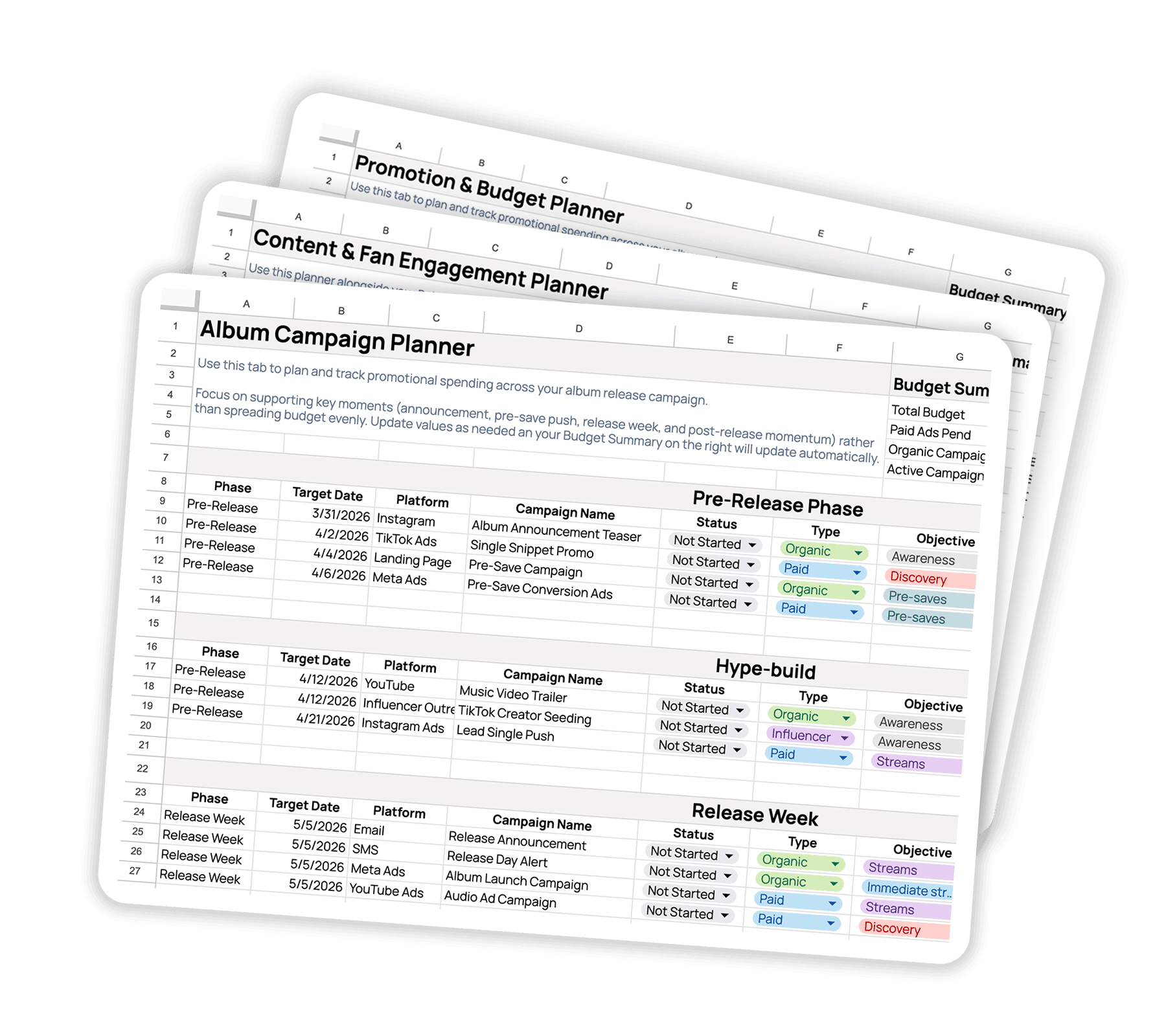
The same campaign engine used in single releases applies to albums, but across a longer timeline and with additional layers of escalation.
| Phase | Strategic Goal | Audience Experience |
|---|---|---|
| Foundation | Introduce the project identity | Curiosity |
| Expansion | Release singles and drive pre-saves | Anticipation |
| Convergence | Focus attention toward album launch | Commitment |
| Activation | Release and amplify listening behavior | Participation |
| Sustainment | Extend discovery and lifecycle | Reinforcement |
Rather than promoting an album all at once, each phase builds psychological and algorithmic momentum toward a unified release moment.
Days 90–60: Establishing the Foundation
The earliest phase of an album rollout is often invisible to audiences who only notice promotion when singles begin appearing. Yet this period determines how effective later marketing will be.
During this stage, artists introduce the world around the album rather than the album itself.
Audiences begin forming expectations based on visual identity, tone, and thematic direction. Subtle signals such as aesthetic changes, studio content, or creative storytelling help establish continuity between upcoming releases.
This phase works because familiarity precedes engagement. When listeners repeatedly encounter an evolving artistic identity, the eventual announcement feels like confirmation rather than interruption.
Key priorities during the foundation phase include:
- Defining visual and narrative consistency across platforms
- Updating branding elements that reflect the project era
- Introducing creative context without revealing full details
- Preparing campaign infrastructure such as landing hubs and audience capture systems
Infrastructure matters early because album campaigns generate sustained traffic over months. A centralized campaign destination allows listeners to return repeatedly as new releases appear, reinforcing continuity across the rollout.
Days 60–30: Singles as Momentum Builders
Modern album rollouts rely heavily on strategic singles. These are not isolated releases but momentum engines designed to expand audience reach before the full project arrives.
Each single serves a different role within the campaign. One may introduce sonic direction, another may appeal to broader discovery audiences, while a later single deepens emotional investment among existing fans.
From a marketing perspective, singles train algorithms to associate increasing listener activity with the artist. Every release generates new engagement signals, allowing discovery systems to gradually expand exposure.
This period is where pre-save strategy becomes essential.
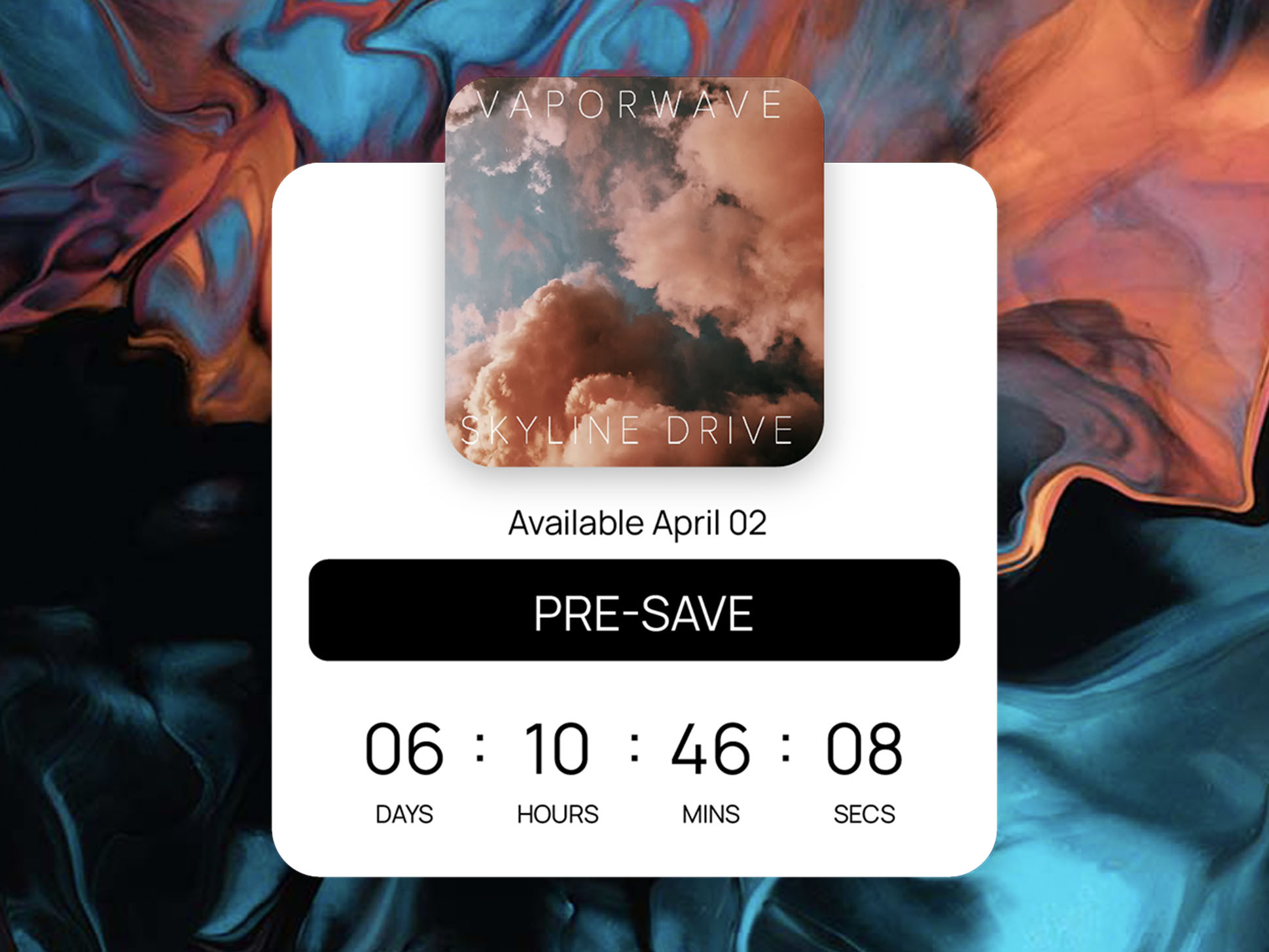
A pre-save link for the album should be introduced alongside or shortly after the first single announcement. Unlike single campaigns, album pre-saves function as long-term commitment signals. Fans who opt in early effectively join the campaign months before release.
A strong expansion phase typically focuses on:
- Releasing one or two singles spaced strategically.
- Reinforcing the album narrative through storytelling content.
- Driving album-level pre-saves rather than song-only actions.
- Encouraging repeat listener engagement across releases.
Importantly, repetition becomes beneficial here. Audiences encountering multiple connected releases begin recognizing a cohesive era rather than disconnected songs.
Days 30–14: Convergence and Audience Commitment
As the album approaches, marketing transitions from discovery toward concentration.
The objective shifts from attracting new listeners to aligning existing attention around the upcoming release date. This phase resembles the commitment stage discussed in single release campaigns but operates at a larger scale.
Listeners should now clearly understand what the album represents and why it matters. Content becomes more revealing, emotionally focused, and participatory.
Typical campaign evolution during this stage includes:
- Tracklist announcements or visual reveals
- Behind-the-project storytelling
- Fan participation moments such as Q&A sessions
- Countdown-oriented messaging
This phase strengthens emotional investment. When audiences feel included in the rollout process, they are more likely to listen immediately upon release.
Direct communication channels become particularly powerful here. SMS or email outreach consistently outperform algorithm-dependent platforms because they reach listeners who have already demonstrated intent through earlier engagement.
The campaign begins shifting from rented attention toward owned audience relationships.
Days 14–1: Aligning Momentum for Release
The final two weeks function as synchronization.
Every campaign element should now guide audience behavior toward a shared launch moment. Messaging becomes clearer, calls to action become simpler, and repetition increases intentionally.
The goal is not discovery. It is readiness.
Listeners who pre-saved should receive reminders about release timing. Social content reinforces anticipation through countdown dynamics. Social proof begins appearing naturally as engagement accumulates.
This alignment matters because streaming platforms measure early listening density. Concentrated activity immediately after release signals cultural relevance, increasing the likelihood of algorithmic expansion.
Momentum, in this context, is coordinated audience behavior rather than raw promotional volume.
Release Week: Activation Across the Entire Project
Album release week differs from single launches because listener behavior diversifies. Some fans listen front-to-back immediately, while others discover individual tracks through playlists or recommendations.
Marketing should therefore support multiple entry points into the project.
Effective activation strategies include:
- Guiding listeners toward a full-album experience
- Highlighting different tracks across multiple days
- Sharing contextual stories behind individual songs
- Encouraging playlist additions and sharing behavior
A well-executed pre-release strategy ensures that many listeners already anticipate the album, turning release day into participation rather than discovery.
The campaign’s earlier phases now convert anticipation into measurable engagement signals across the entire project.
Days +7 to +30: Sustainment and Long-Tail Discovery
Many album campaigns end too early.
Streaming platforms continue evaluating listener behavior weeks after release, meaning post-launch activity significantly influences long-term performance. The sustainment phase extends the album’s lifecycle and allows discovery to compound.
Content during this period often shifts toward reinterpretation and expansion:
- Live performances or acoustic versions
- Visualizers or secondary videos
- Fan reactions and community moments
- Spotlighting individual tracks over time
Rather than promoting the album generically, marketing narrows focus onto different songs sequentially. Each spotlight effectively creates a mini-campaign inside the larger rollout.
This approach mirrors how audiences actually discover albums today: gradually, track by track.
Why Album Rollouts Depend on Marketing Infrastructure
Album campaigns reveal the limitations of one-off promotional tools.
Over ninety days, artists accumulate audience data, engagement history, and communication opportunities. Without connected infrastructure, each phase operates independently, forcing artists to rebuild momentum repeatedly.
Marketing infrastructure transforms album rollouts into cumulative systems. Audience actions during early singles inform later messaging. Pre-save participants become reachable fans. Engagement analytics guide promotion decisions in real time.
Instead of treating marketing as promotion layered onto music, infrastructure integrates audience relationships directly into the campaign engine.
This shift explains why modern release strategies increasingly center on platforms capable of managing audience growth, communication, and analytics together rather than separately.
Albums benefit disproportionately from this approach because their timelines are long enough for compounding effects to emerge.
The Strategic Purpose of a 90-Day Rollout
The real goal of a 90-day album rollout is not maximizing launch-week numbers.
It is shaping listener behavior over time.
When audiences experience repeated exposure, gradual storytelling, and structured participation, they develop habits around an artist’s releases. Future campaigns begin with existing momentum rather than starting from zero.
In this way, an album rollout becomes both a marketing campaign and a relationship-building process.
Artists who succeed consistently are rarely those who chase viral moments. They are those who design repeatable systems that align audience psychology, platform algorithms, and creative storytelling into a single coordinated release strategy.
A ninety-day rollout provides enough time for that alignment to happen.
And when it does, an album stops being a single event and becomes an era audiences remember participating in.

Keep reading
All posts
How to Build a 3-Step Action Flow: SMS Sign-Up to Pre-Save and Follow

New Project or New Landing Page? How to Structure Sonikit for Multiple Releases, Artists, or Tours