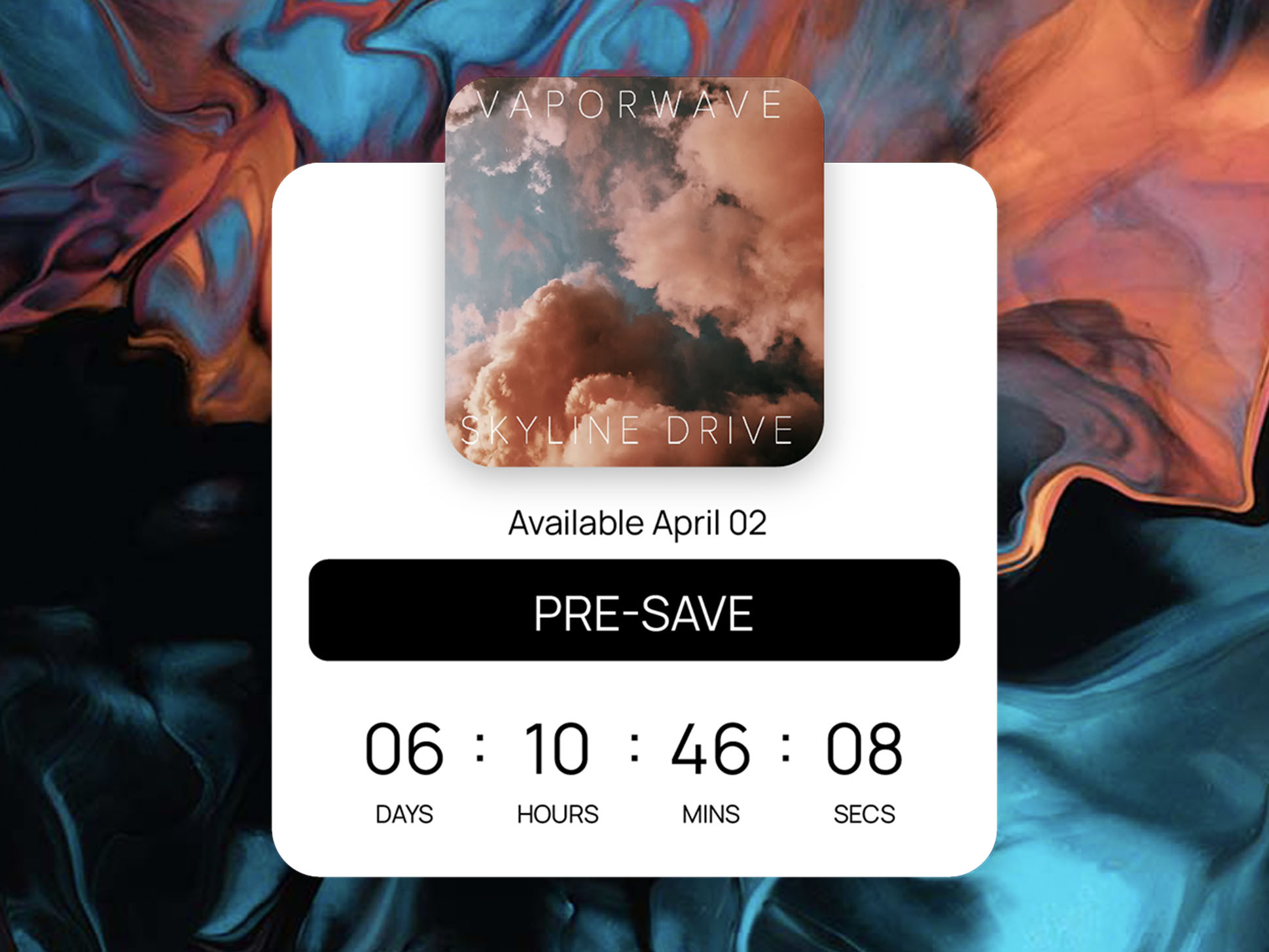
SMS Countdown Campaign Template: How to Drive Release-Day Momentum With Fan Messaging
Most music marketing struggles with timing.
Artists spend weeks building awareness, promoting pre-saves, and generating anticipation, only to rely on social media posts when release day finally arrives. The result is predictable: only a fraction of fans actually see the announcement, engagement becomes fragmented, and early listening momentum weakens.
The problem is not audience interest. It is communication reliability.
Social platforms distribute content unpredictably. Direct messaging does not. An SMS countdown campaign solves this gap by aligning audience behavior during the most critical phase of a release: the transition from anticipation to activation.
Within a modern release strategy, SMS functions as the bridge between commitment and participation. Fans who have already expressed interest through pre-saves or campaign engagement receive structured reminders that guide them toward listening at the right moment.
This article outlines a strategic SMS countdown framework that integrates directly into the campaign engine discussed throughout this release playbook.
Why SMS Works Differently Than Social Promotion
SMS marketing succeeds because it changes the communication environment.
Unlike social media, where algorithms decide visibility, text messages arrive directly to the audience. Open rates are consistently higher because messages appear alongside personal conversations rather than competing with endless content feeds.
More importantly, SMS reaches listeners who have already demonstrated intent.
A fan who opts into messaging has moved beyond awareness. They have entered the commitment stage of the release campaign. Messaging during this phase does not introduce the release. It reinforces participation.
This distinction explains why SMS performs best late in the pre-release timeline. Early hype builds curiosity publicly. SMS converts that curiosity into coordinated action privately.
In strategic terms, SMS transforms rented attention into owned communication.
The Role of a Countdown Campaign in Release Strategy
A countdown campaign is not simply a series of reminders.
Its purpose is synchronization.
Streaming platforms respond strongly to concentrated listening behavior within the first 24 to 48 hours after release. When many listeners engage simultaneously, algorithms interpret the release as culturally relevant and expand exposure.
SMS messaging helps align listener behavior by reducing uncertainty. Fans know exactly when the release arrives and feel personally invited to participate.
The countdown therefore acts as the activation mechanism for momentum built through earlier campaign phases such as pre-save funnels, hype-building content, and release storytelling.
Without synchronization, anticipation disperses. With synchronization, anticipation converts into measurable engagement.
When to Start an SMS Countdown
Timing determines effectiveness.
Starting too early creates fatigue. Starting too late misses the opportunity to build anticipation gradually. Most campaigns benefit from beginning SMS messaging roughly seven days before release, when audiences already recognize the upcoming project.
At this point, messaging shifts from discovery to preparation.
Listeners should feel that they are part of an unfolding moment rather than receiving promotional alerts.
A well-paced countdown typically follows a simple rhythm:
- Early reminder establishing context
- Midweek escalation increasing anticipation
- Final reminders aligning release-day behavior
Each message builds upon the previous one, reinforcing narrative continuity rather than repeating identical announcements.
The SMS Countdown Campaign Template
Below is a strategic template designed to mirror audience psychology throughout release week. Messaging examples illustrate tone and structure rather than exact wording.
Day -7: The Commitment Reminder
The first message reconnects with fans who opted in earlier during the campaign.
Its goal is recognition. Listeners should immediately understand what release this refers to and why they signed up.
Purpose: Reinforce anticipation and confirm release timing.
Message direction: Personal, appreciative, and contextual.
Example structure:
- Acknowledge fan participation
- Mention the upcoming release
- Reinforce excitement without urgency
At this stage, the message reminds fans they are insiders rather than targets of promotion.
Day -3: Escalation and Emotional Context
The second message deepens anticipation by revealing something new.
This might include a lyric fragment, short preview clip, or insight into the story behind the track. Escalation keeps momentum moving forward rather than stagnating between reminders.
Purpose: Increase emotional investment.
Message direction: Story-driven and experiential.
Listeners should feel closer to the music after this message than before.
Day -1: The Anticipation Trigger
The final pre-release message prepares audiences for immediate participation.
Clarity becomes more important than creativity here. Fans should know exactly when the music drops and what to expect.
Purpose: Align listener behavior ahead of release.
Message direction: Clear, energetic, and focused.
Including the pre-save link again can reinforce commitment for fans who have not yet acted.
Release Day: Activation Message
Release day messaging is the most important communication in the sequence.
Because SMS reaches highly engaged fans, messaging should guide action directly rather than simply celebrating the launch.
Purpose: Convert anticipation into listening behavior.
Message direction: Direct and participatory.
Effective release-day messages often:
- Provide a single listening link
- Encourage immediate streaming
- Thank fans for being part of the journey
This message activates momentum accumulated throughout the campaign.
Day +2 or +3: Reinforcement and Social Proof
A final message extends engagement beyond launch day.
By this point, early reactions, milestones, or fan responses can be incorporated naturally. Social proof reassures listeners that participation is ongoing and encourages repeat listening.
Purpose: Sustain momentum and extend lifecycle engagement.
Message direction: Observational rather than promotional.
This message helps prevent the common post-release drop in attention.
Messaging Principles That Improve Performance
Successful SMS campaigns follow consistent behavioral principles rather than aggressive promotion.
Messages perform best when they feel conversational and intentional. Overly frequent or sales-driven messaging reduces trust and increases opt-outs.
Strong campaigns typically maintain:
- One clear purpose per message
- Natural, human tone
- Consistent campaign identity
- Respect for audience attention
SMS works because it feels personal. Maintaining that feeling is essential for long-term effectiveness.
Integrating SMS Into Marketing Infrastructure
An SMS countdown campaign becomes significantly more powerful when connected to broader campaign infrastructure.
Fans entering through pre-save funnels or campaign hubs can seamlessly transition into messaging audiences. Engagement data informs timing decisions. Future releases benefit from accumulated audience relationships.
Instead of functioning as a one-time promotional tool, SMS becomes part of an ongoing fan relationship system.
This integration reflects a broader evolution in music marketing. Successful campaigns increasingly resemble lifecycle marketing systems, where each release strengthens communication channels for the next.
Momentum compounds because audiences remain connected between releases.
The Strategic Advantage of Direct Fan Communication
The deeper value of SMS is not higher open rates. It is predictability.
Artists gain the ability to communicate at critical campaign moments without relying on platform algorithms. This reliability allows release strategies to be executed with precision rather than hope.
When countdown messaging aligns with pre-save campaigns, ad funnels, and release-week activation, marketing shifts from reactive posting to coordinated orchestration.
Fans experience the release as a shared event rather than random promotion appearing in their feeds.
The Real Goal of an SMS Countdown Campaign
An SMS countdown is not about sending more messages.
It is about guiding listener behavior at the exact moment momentum matters most.
When anticipation has been built through structured pre-release strategy, SMS provides the final alignment that converts excitement into action. Fans listen sooner, engagement concentrates, and discovery systems respond more strongly.
Over time, these campaigns teach audiences to expect participation in every release cycle. Each rollout becomes easier because fans already understand how to engage.
In modern music marketing, communication consistency creates momentum.
And SMS countdown campaigns are one of the clearest ways to turn anticipation into measurable participation.

Keep reading
All posts
How to Build a 3-Step Action Flow: SMS Sign-Up to Pre-Save and Follow

New Project or New Landing Page? How to Structure Sonikit for Multiple Releases, Artists, or Tours