Do Spotify Pre-Saves Actually Help Algorithmically? (Data-Driven 2026 Guide)
Few topics in music marketing generate more confident claims and less precise understanding than Spotify pre-saves.
Artists are frequently told that pre-saves “boost the algorithm,” guarantee playlist placement, or directly increase reach inside Spotify’s recommendation system. At the same time, skeptics argue that pre-saves are merely promotional vanity metrics with little real impact.
Both interpretations miss what is actually happening.
Pre-saves do not function as a direct ranking factor inside Spotify’s algorithmic systems. Spotify has never indicated that a high pre-save count alone increases distribution. Yet dismissing pre-saves as meaningless ignores how modern recommendation systems evaluate listener behavior.
The real answer lies between those extremes. Pre-saves matter not because algorithms count them explicitly, but because they shape the conditions under which algorithms make decisions during a release’s most important window.
Understanding that distinction changes how artists should approach pre-release strategy entirely.
How Spotify’s Algorithmic Discovery Actually Works
Spotify’s discovery ecosystem is built around predicting listener satisfaction. Rather than promoting music simply because it exists, the platform evaluates how audiences respond when exposed to a track.
Algorithmic surfaces such as Release Radar, Radio, Autoplay, and personalized recommendations rely heavily on early behavioral signals, including:
- Saves relative to streams
- Completion rate and skips
- Repeat listening
- Listener engagement velocity
- Artist-listener relationship strength
These signals help Spotify answer a single question: If more listeners hear this track, will they enjoy it?
The system does not reward promotion itself. It rewards evidence of listener satisfaction.
This is why release timing matters so much. The first wave of listener behavior establishes an early performance profile that influences how widely Spotify continues testing a track with new audiences.
Where Pre-Saves Fit Into This System
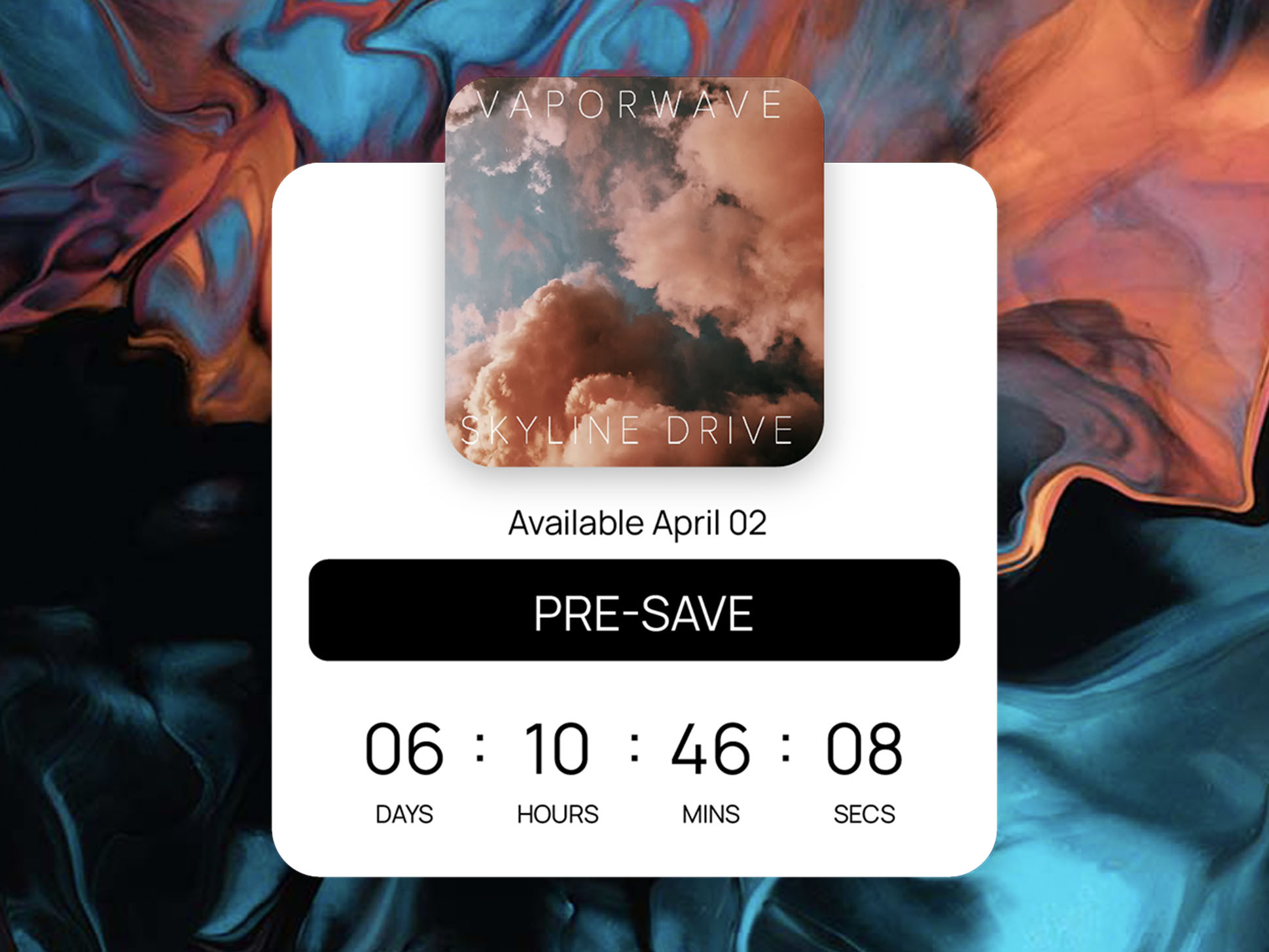
A pre-save is best understood as a mechanism that concentrates engagement rather than a signal the algorithm directly evaluates.
When fans pre-save a release, several downstream effects occur on launch day:
- The track is automatically added to listeners’ libraries.
- Many listeners receive notifications or see the release surfaced prominently.
- Streaming activity begins immediately after release.
- Early saves and plays arrive in a compressed timeframe.
This compression is the key.
Algorithms evaluate momentum as much as volume. A song receiving steady engagement over weeks sends a different signal than one generating strong listener interaction within hours of release.
Pre-saves increase the likelihood that engaged listeners show up simultaneously, creating a measurable spike in early activity.
In practical terms, pre-saves help ensure that your most interested audience participates during the exact moment Spotify is watching most closely.
Why Early Engagement Velocity Matters
In previous eras of streaming, total plays were often viewed as the primary indicator of success. Modern recommendation systems place greater emphasis on engagement velocity, meaning how quickly listeners respond after exposure.
Early listener reactions help Spotify decide whether to expand distribution beyond an artist’s existing audience.
If a release shows strong immediate engagement, Spotify may test it with adjacent listener groups through algorithmic recommendations. If early listeners skip or disengage, expansion slows regardless of marketing effort.
Pre-saves indirectly influence this process by aligning listener intent with release timing.
Fans who pre-save have already expressed interest. As a result, they are statistically more likely to stream fully, save organically, or replay the track. These behaviors strengthen early performance metrics that algorithms interpret positively.
The algorithm is not reacting to the pre-save itself. It is reacting to the behavior pre-saves make more likely.
Release Radar: The Most Misunderstood Connection
Release Radar is often cited as proof that pre-saves influence Spotify algorithmically, but the relationship is more nuanced.
Release Radar primarily distributes new music to listeners who already follow an artist or demonstrate listening affinity. Pre-saves do not directly increase eligibility for Release Radar placement.
However, pre-saves can amplify performance within Release Radar once a track appears there.
When followers encounter a new release and immediately stream or save it, Spotify receives confirmation that the recommendation was successful. Strong engagement inside Release Radar can contribute to broader algorithmic testing across other discovery surfaces.
This creates a cascading effect:
Pre-save intent → strong Release Radar engagement → expanded algorithmic testing.
Again, the mechanism is behavioral, not mechanical.
The Difference Between Correlation and Causation
One reason confusion persists is that successful releases often have large pre-save counts. It becomes easy to assume one causes the other.
In reality, both outcomes usually stem from the same underlying factor: audience strength.
Artists with engaged fanbases generate more pre-saves and stronger release-day engagement. Pre-saves correlate with algorithmic success because they measure fan intent, not because Spotify rewards the metric itself.
This distinction is important strategically.
Chasing pre-save numbers without building audience motivation rarely improves outcomes. A smaller number of highly engaged listeners is often more valuable than a large volume of passive pre-saves.
Algorithms reward engagement quality, not promotional reach.
When Pre-Saves Actually Make the Biggest Difference
Pre-saves are most impactful under specific conditions, particularly when they help synchronize listener behavior.
They tend to matter most when:
- An artist has an existing but fragmented audience
- Marketing activity builds anticipation leading into release
- Fans are given a clear reason to participate early
- Engagement channels such as messaging or community platforms reinforce the launch moment
In these scenarios, pre-saves function as coordination infrastructure. They align audience attention around a single moment, transforming dispersed listeners into a concentrated engagement event.
This alignment can significantly influence how early performance signals appear to Spotify’s recommendation systems.
Why Some High Pre-Save Campaigns Still Underperform
Artists sometimes run aggressive pre-save campaigns only to see limited algorithmic traction after release. This usually happens when intent does not translate into listening behavior.
Common causes include:
- Fans pre-saving but not streaming immediately
- Weak song-listener fit leading to skips
- Marketing attracting casual curiosity rather than committed listeners
- Long delays between pre-save action and release reducing anticipation
Pre-saves create opportunity, not guarantees. The music itself and the surrounding campaign must still deliver engagement that listeners sustain.
Algorithms ultimately measure listening satisfaction, not promotional participation.
Pre-Saves Within a Modern Release Strategy Framework
As discussed throughout the Pre-Save Strategy Authority Hub, pre-saves are most effective when positioned within a broader campaign engine rather than treated as isolated tactics.
A modern release system connects three layers:
- Intent Capture
Pre-saves convert awareness into measurable commitment. - Audience Activation
Messaging and content bring listeners back at launch. - Behavioral Reinforcement
Early engagement strengthens algorithmic confidence.
Seen this way, pre-saves are not designed to manipulate algorithms. They are designed to prepare audiences to behave in ways algorithms naturally reward.
This framing shifts focus away from platform gaming and toward audience alignment.
The Strategic Value Beyond Algorithms
Ironically, the greatest long-term value of pre-saves may have little to do with algorithms at all.
Pre-save campaigns identify listeners willing to act before hearing new music. That behavior signals deeper fan investment. When captured within a broader marketing infrastructure, these moments become opportunities to build ongoing relationships rather than one-time promotional wins.
Artists who treat pre-saves as relationship signals can refine targeting, personalize future campaigns, and compound audience engagement across releases.
Over time, this creates consistency, which algorithms tend to favor more than isolated spikes in attention.
So, Do Pre-Saves Help Algorithmically?
Yes, but indirectly.
Pre-saves do not act as an algorithmic ranking factor. Spotify does not boost tracks simply because many users clicked a pre-save link.
What pre-saves do is far more strategic: they increase the probability that engaged listeners show up early, listen fully, and interact immediately. Those behaviors generate the engagement signals recommendation systems rely on when deciding whether to expand distribution.
In short, pre-saves do not influence algorithms themselves. They influence listener behavior, and listener behavior is what algorithms measure.
Understanding this difference is what separates tactical promotion from modern release strategy.

Keep reading
All posts
How to Build a 3-Step Action Flow: SMS Sign-Up to Pre-Save and Follow

New Project or New Landing Page? How to Structure Sonikit for Multiple Releases, Artists, or Tours