How Artists Actually Build a Fanbase in 2026 (Beyond Streaming Algorithms)
For the past decade, artists have been told that growth comes from algorithms.
Get playlisted. Trigger recommendation systems. Increase streams. Feed the machine.
Streaming platforms undeniably changed music discovery. An unknown artist can now reach listeners worldwide overnight. Yet discovery has quietly become confused with fanbase development. Streams are often interpreted as proof of audience growth, even when they fail to translate into sustained engagement.
By 2026, a clearer reality has emerged across the independent music landscape: algorithms create exposure, but systems create fans.
Artists who consistently grow are no longer relying solely on platform momentum. They are building structured pathways that transform casual listeners into reachable audiences. Understanding how this transition works is now central to modern music marketing and release strategy.
The Difference Between Listening and Following
A stream measures consumption. A fanbase measures relationship.
Streaming platforms optimize for listening behavior at scale. Their goal is to keep users engaged with music broadly, not necessarily with a specific artist. Recommendation engines introduce songs based on similarity, mood, and user behavior patterns rather than loyalty.
As a result, many listeners encounter artists passively. They enjoy a song but never develop an ongoing connection with the creator behind it.
This distinction explains a common industry pattern: artists accumulate millions of streams while struggling to mobilize listeners during album release promotion. Exposure occurred, but relationship formation did not.
A fanbase begins forming only when listeners move from passive discovery into intentional engagement. That transition rarely happens automatically inside streaming environments.
Why Algorithms Cannot Build Fan Loyalty Alone
Algorithms are powerful discovery accelerators, but they are structurally limited as relationship tools.
Recommendation systems prioritize novelty and engagement diversity. Listeners are continually introduced to new music to maintain platform engagement. Even successful artists compete against constant rotation within personalized feeds.
This produces short attention cycles. A listener may discover a song today and never encounter the artist again unless an external connection exists.
From a marketing perspective, algorithms function as acquisition channels rather than retention systems.
Retention requires continuity. Continuity requires direct access.
Without a mechanism to reconnect with listeners outside the platform, each release effectively starts from zero, regardless of past streaming success.
The Modern Fanbase Model
Across independent music, fanbase growth increasingly follows a predictable structure. Artists who grow sustainably tend to operate within a three-layer audience model:
| Audience Layer | Role | Stability |
|---|---|---|
| Discovery Audience | Algorithmic listeners and casual viewers | Volatile |
| Engaged Audience | Followers and repeat listeners | Semi-stable |
| Owned Audience | Directly reachable fans | Durable |
The mistake many artists make is optimizing exclusively for the top layer. Discovery is necessary, but it is inherently unstable. Algorithms change, trends shift, and attention moves quickly.
Durable growth occurs when listeners gradually move downward through these layers toward ownership.
This framework builds on the core concept introduced earlier in this cluster: followers represent potential attention, while fans represent accessible relationships.
How Fans Are Actually Created
Fan formation is not a single moment. It is a sequence of small commitments.
Listeners become fans when they take intentional actions that signal identity alignment with an artist. These actions often occur outside streaming platforms.
Examples include:
- Joining a pre-save campaign
- Signing up for SMS or email updates
- Returning to multiple releases
- Participating in exclusive campaign experiences
Each action increases psychological investment. Marketing research consistently shows that participation strengthens perceived connection. When listeners actively choose involvement, they begin to view themselves as part of an artist’s audience rather than passive consumers.
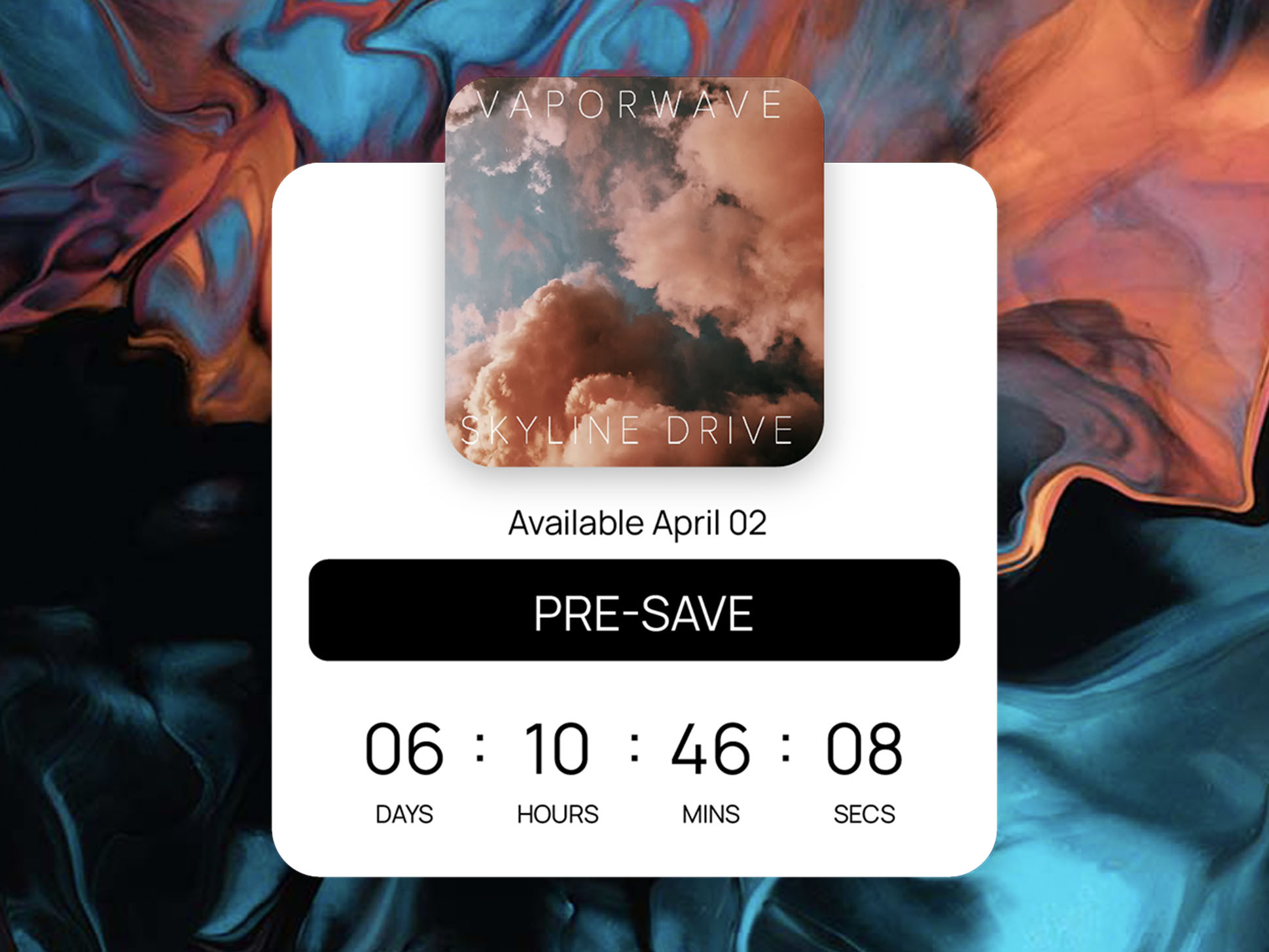
A pre-save link plays an important role here because it asks listeners to commit before release. That early commitment signals anticipation and strengthens future engagement behavior.
The Shift From Viral Moments to Repeatable Systems
In earlier eras of social media growth, artists often relied on breakout moments. A viral post or playlist placement could dramatically expand reach overnight.
Today, virality remains possible but far less predictable. Content volume has increased dramatically, and algorithms increasingly reward consistency rather than isolated spikes.
As a result, successful artists are shifting toward repeatable systems rather than hoping for unpredictable breakthroughs.
A modern release strategy focuses on building a structured marketing cycle:
- Discovery content attracts new listeners.
- Campaign destinations convert interest into participation.
- Pre-release engagement builds anticipation.
- Release-day activation concentrates listening activity.
- Post-release communication retains new fans.
Each cycle strengthens the next. Growth becomes cumulative rather than episodic.
Why Pre-Release Strategy Defines Growth in 2026
One of the most important developments in music marketing is the growing importance of the pre-release window.
Artists increasingly realize that fanbase growth happens before music launches, not after.
Pre-release campaigns allow artists to identify their most engaged listeners early. When fans pre-save a release or join a campaign experience, they effectively raise their hand and signal future listening intent.
This has two critical outcomes.
First, artists gain direct insight into who their core audience actually is. Second, concentrated early listening improves algorithmic signals once the release becomes available.
The relationship between direct fan engagement and streaming performance is no longer indirect. Pre-release strategy bridges audience ownership and algorithmic discovery.
Social Platforms as Entry Points, Not Destinations
A defining mindset shift among growing artists is redefining the purpose of social media.
Instead of treating platforms as the final destination for fan interaction, artists increasingly treat them as entry points into deeper ecosystems.
Content introduces personality and music. Campaign infrastructure captures connection.
This distinction changes creative decision-making. Content becomes less about maximizing engagement metrics and more about guiding audience movement toward meaningful actions.
The most valuable post is often not the one with the most views. It is the one that converts listeners into participants.
Over time, this approach stabilizes growth because audience relationships no longer depend entirely on feed visibility.
The Role of Marketing Infrastructure
Marketing infrastructure refers to the systems that persist between releases and allow artists to maintain continuity with listeners.
This includes landing pages, campaign engines, messaging channels, and analytics frameworks that track engagement over time.
Infrastructure transforms marketing from reactive promotion into operational strategy.
Instead of asking how to promote each new single, artists begin asking how each release expands their audience ecosystem. Every campaign becomes both a promotional event and a data-building opportunity.
This concept mirrors how modern digital businesses grow. Sustainable expansion comes from improving systems rather than increasing effort each cycle.
In music marketing, infrastructure enables artists to scale relationships, not just exposure.
What Changes for Artists Who Adopt This Model
When artists shift beyond algorithm dependence, several changes typically occur.
Release performance becomes more predictable because communication channels remain stable across campaigns. Marketing costs often decrease because direct activation reduces reliance on paid reach. Most importantly, audience loyalty deepens because fans experience ongoing interaction rather than intermittent promotion.
Growth begins to feel less chaotic.
Instead of chasing visibility, artists cultivate continuity. Instead of restarting momentum every release, they extend it.
The result is not necessarily faster growth in the short term, but significantly stronger growth over time.
The Future of Fanbase Building
The music industry in 2026 increasingly resembles other digital creator economies. Success depends on retention, relationship depth, and audience understanding rather than raw exposure alone.
Streaming algorithms will remain essential discovery engines. They introduce artists to new listeners at unprecedented scale. But discovery without relationship produces fragile growth.
The artists building lasting careers today are those who combine algorithmic reach with direct-to-fan systems that convert attention into ownership.
Fanbases are no longer built by being heard once.
They are built by being reachable repeatedly.
And in an industry defined by constant change, repeatability is what turns listeners into communities and releases into long-term careers.

Keep reading
All posts
How to Build a 3-Step Action Flow: SMS Sign-Up to Pre-Save and Follow

New Project or New Landing Page? How to Structure Sonikit for Multiple Releases, Artists, or Tours