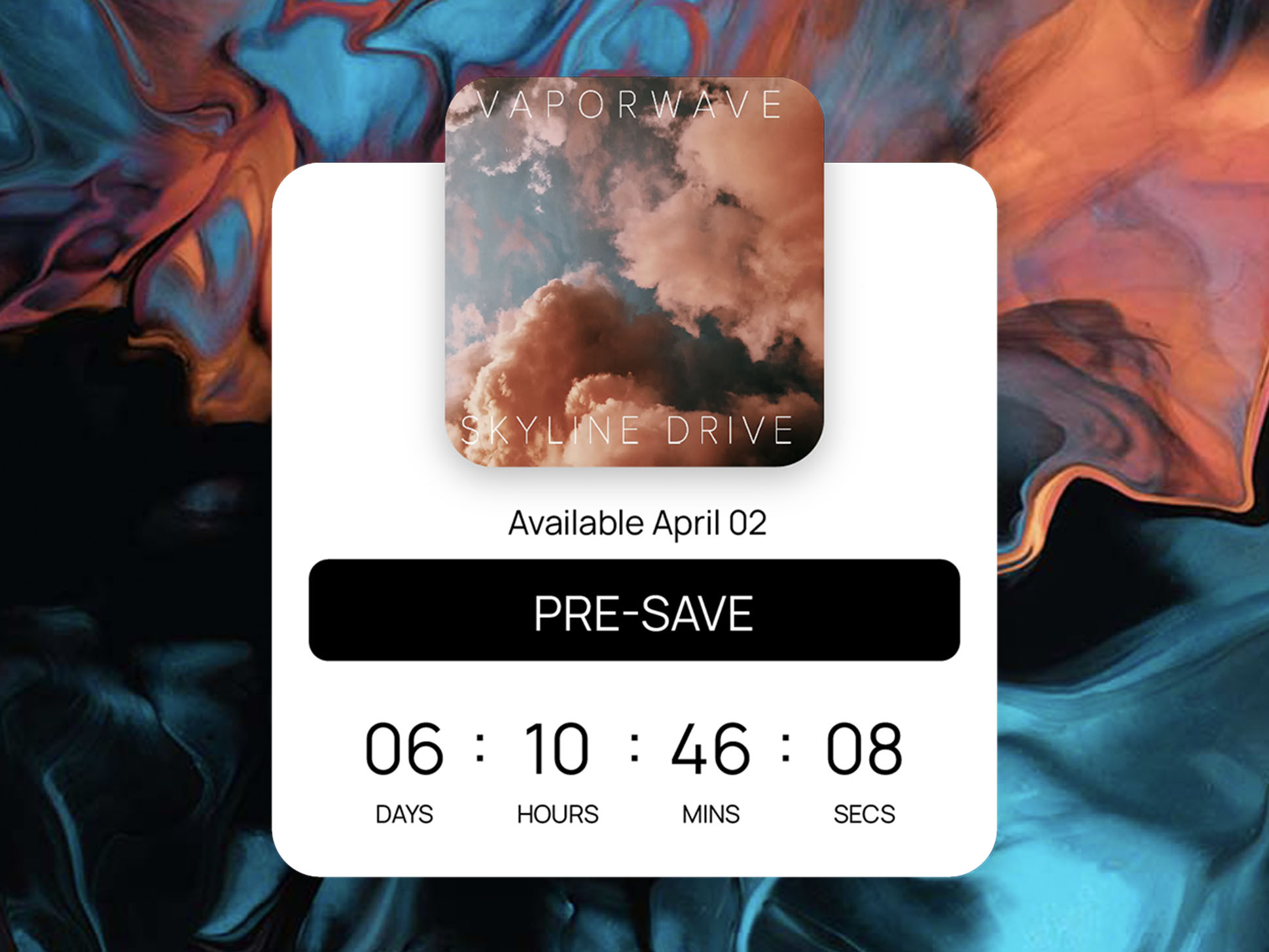
How Many Pre-Saves Do You Need for Release Radar? (Real Numbers & Strategy for 2026)
One of the most persistent myths in music marketing is that Release Radar unlocks once you reach a certain number of pre-saves.
Artists frequently search for a threshold. Is it 500? 1,000? 10,000? Somewhere online, someone claims to know the number that triggers algorithmic visibility.
The reality is both simpler and more strategic.
There is no pre-save count that guarantees Release Radar placement. Spotify does not operate on fixed promotional milestones, and pre-saves themselves are not a qualification metric for algorithmic distribution.
Yet pre-saves still matter deeply to how Release Radar performs and how a release expands beyond an artist’s existing audience.
To understand why, it helps to first clarify what Release Radar actually is and what problem it is designed to solve inside Spotify’s ecosystem.
What Release Radar Is Designed to Do
Release Radar is not a discovery playlist in the traditional sense. It is a personalization system.
Every Friday, Spotify generates a customized playlist for each listener featuring new music from artists they follow or regularly engage with, along with select recommendations based on listening behavior. Its primary purpose is retention. Spotify wants listeners to return weekly and immediately find new music they are likely to enjoy.
Because of this, Release Radar is fundamentally audience-driven rather than performance-driven.
If a listener follows an artist, that artist’s new release is very likely to appear in that listener’s Release Radar regardless of pre-save activity. Eligibility is tied primarily to artist-listener relationships, not campaign metrics.
This is the first major misconception: pre-saves do not unlock Release Radar access. Followers do.
Why Pre-Saves Still Matter for Release Radar
Although pre-saves do not determine whether a song appears in Release Radar, they strongly influence what happens next.
When a release lands inside Release Radar, Spotify observes how listeners respond. The platform evaluates engagement signals such as:
- Whether listeners play the track immediately
- Skip behavior
- Saves relative to streams
- Repeat listening patterns
- Session continuation after playback
These early reactions help Spotify decide whether the track should remain confined to existing fans or be tested with broader audiences through algorithmic recommendations.
This is where pre-saves become strategically important.
Pre-saves increase the probability that your most engaged listeners interact with the track immediately after release. That concentrated activity strengthens early engagement signals within Release Radar, which can influence downstream algorithmic expansion.
The algorithm is not counting pre-saves. It is measuring what pre-saves cause listeners to do.
The Question Artists Are Really Asking
When artists ask, “How many pre-saves do I need?”, they are usually trying to solve a different problem:
“How much audience momentum do I need for my release to perform well algorithmically?”
Pre-save counts feel like a measurable proxy for readiness. But numbers alone rarely tell the full story.
A release supported by 200 highly engaged fans can outperform one backed by 5,000 passive listeners. Engagement density often matters more than scale.
Spotify’s systems evaluate listener satisfaction, not promotional effort. A smaller audience that listens fully and saves consistently sends a stronger signal than a larger audience that samples briefly and moves on.
This is why chasing arbitrary pre-save targets often leads to disappointment. The metric is descriptive, not causal.
Followers vs Pre-Saves: Understanding the Relationship
Release Radar exposure primarily depends on followers, but pre-saves can strengthen the relationship between followers and release-day engagement.
The distinction looks like this:
| Metric | What It Represents | Algorithmic Role |
|---|---|---|
| Followers | Established artist-listener relationship | Determines Release Radar eligibility |
| Pre-Saves | Intent before release | Influences early engagement behavior |
| Streams & Saves | Listener satisfaction | Drives algorithmic expansion |
Followers determine reach within Release Radar. Pre-saves help ensure that reach converts into meaningful engagement.
In practical terms, pre-saves help activate followers at the exact moment Spotify evaluates performance most closely.
Why Engagement Timing Matters More Than Volume
Modern recommendation systems prioritize engagement velocity, meaning how quickly listeners respond after release.
A track that receives strong interaction within the first 24 to 72 hours signals immediate relevance. Spotify interprets this as evidence that listeners are excited about the release rather than discovering it passively.
Pre-saves help synchronize audience behavior around launch day. Instead of listeners discovering music gradually across weeks, engagement arrives concentrated within a narrow timeframe.
This concentration can improve how a release performs within Release Radar and influence whether Spotify expands testing through Radio, Autoplay, or personalized recommendations.
Timing, not just audience size, becomes the advantage.
What a “Healthy” Pre-Save Benchmark Actually Looks Like
Rather than aiming for a universal number, artists benefit more from evaluating ratios relative to their audience.
Healthy campaigns often show patterns such as:
- Pre-saves representing a meaningful percentage of active listeners
- Strong overlap between pre-savers and returning fans
- Immediate streaming activity following release
- Organic saves occurring alongside automatic pre-save additions
For many independent artists, a pre-save rate between 5 and 15 percent of actively engaged fans indicates strong intent. Larger artists may see lower percentages but higher absolute volume.
The key insight is that pre-saves function best as an engagement indicator rather than a performance target.
Why Some Artists Reach Release Radar but See No Growth
Many releases appear in Release Radar yet fail to expand beyond existing listeners. This often leads artists to assume pre-save numbers were too low.
In reality, the issue is usually post-release behavior.
If listeners skip quickly, fail to save the track, or do not continue listening sessions afterward, Spotify receives a signal that broader audiences may not respond positively. Expansion slows regardless of promotional effort.
Pre-saves cannot compensate for weak listener response. They only create the opportunity for strong early engagement to occur.
This reinforces a central principle of modern release strategy: marketing prepares momentum, but listener satisfaction sustains it.
Pre-Saves Within the Campaign Engine Framework
Across this strategy cluster, pre-saves are positioned as part of a larger campaign engine rather than a standalone tactic.
Within that framework, their role is clear:
- Intent Capture
Convert awareness into measurable fan commitment. - Audience Coordination
Align listener attention around release timing. - Behavioral Acceleration
Increase the likelihood of strong early engagement signals.
Seen this way, asking for a specific pre-save number becomes less useful than asking whether a campaign successfully prepared audiences to show up together.
Release success is rarely accidental. It is coordinated.
The Real Metric to Watch Instead
Instead of focusing solely on pre-save totals, artists benefit from monitoring how pre-savers behave after release.
More meaningful questions include:
- Do pre-savers stream within the first day?
- Are they saving the track again organically?
- Do they return for repeat listens?
- Does engagement extend beyond core fans?
These behaviors reveal whether pre-release marketing created genuine anticipation or merely temporary curiosity.
Algorithms ultimately respond to listener satisfaction over time, not pre-release hype alone.
So, How Many Pre-Saves Do You Need?
The honest answer is none and as many as possible at the same time.
You do not need a specific number to appear in Release Radar. Eligibility is primarily determined by follower relationships.
But you do need enough engaged listeners ready to act immediately if you want Release Radar exposure to translate into algorithmic momentum.
Pre-saves are valuable because they help orchestrate that moment. They transform passive followers into active participants in a release event.
And in modern streaming ecosystems, coordinated audience behavior often matters more than promotional scale.

Keep reading
All posts
How to Build a 3-Step Action Flow: SMS Sign-Up to Pre-Save and Follow

New Project or New Landing Page? How to Structure Sonikit for Multiple Releases, Artists, or Tours