How to Sell Merch From a Music Landing Page
For years, artists have been taught to think about music and merchandise as separate destinations.
A social post promotes a new single. The link in bio points to a landing page. Somewhere else, another link leads to a Shopify store. Fans who want a shirt, vinyl record, or signed CD have to leave the campaign entirely and navigate a different experience.
That approach reflects how marketing tools evolved, not how fans make decisions.
Fans rarely separate music from merchandise in their minds. A great song creates emotional momentum. Merchandise allows someone to express that connection. When those experiences happen together, the path from discovery to purchase becomes significantly shorter.
This is why the modern music landing page has evolved beyond being a collection of links. It has become the central destination where an artist's release campaign comes together.
The Best Campaigns Keep Fans in Context
Every marketing campaign asks a fan to make a series of decisions.
Should I listen to this song?
Should I follow this artist?
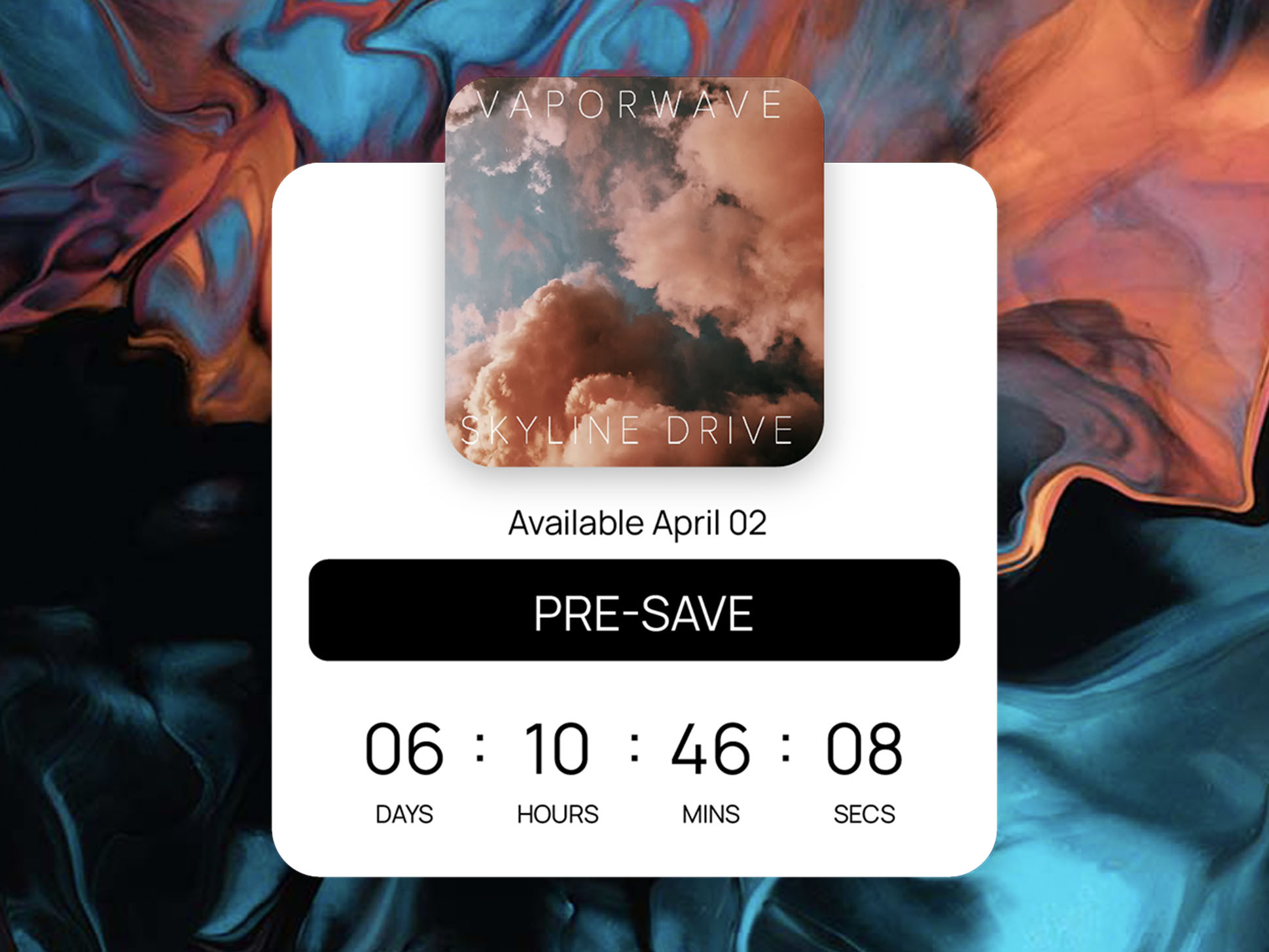
Should I pre-save the album?
Should I join the mailing list?
Should I buy the vinyl?
Each additional click creates an opportunity for attention to disappear.
This does not mean every action should happen on a single screen. Rather, every next step should feel like a natural continuation of the previous one. When fans encounter music, merchandise, videos, tour information, and community invitations within the same campaign, they can choose what interests them without feeling like they are constantly starting over.
That continuity is one of the defining characteristics of modern music marketing infrastructure. Instead of sending audiences between disconnected tools, each campaign becomes a unified experience that adapts to different fan interests.
Why a Product Section Outperforms a Store Link
Many artists still add a simple "Shop Merch" button to their landing page.
While functional, a standalone link asks fans to leave the campaign before they have seen what is actually available.
A product section changes that experience.
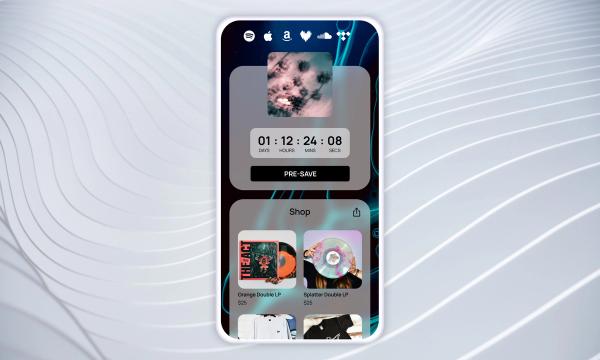
Instead of presenting an abstract destination, it introduces real products directly within the campaign alongside the music that inspired them. Fans can immediately see what is available before deciding whether to continue to checkout.
This subtle shift matters because people respond to products they can see, not stores they have to imagine.
A dedicated product section also provides important operational advantages:
- Product images, titles, and pricing stay synchronized with Shopify.
- Artists do not need to recreate products manually for every campaign.
- Product information remains consistent across marketing channels.
- Updates made in Shopify automatically appear on connected campaign pages.
The result is less administrative work and a more accurate experience for fans.
Merchandise Works Best Beside Music
Music creates context for merchandise.
A hoodie attached to an album release tells a different story than the same hoodie appearing in a generic storefront months later. Likewise, a signed vinyl becomes more meaningful when presented beside the single it contains, the video announcing the release, or the countdown leading to launch day.
This is why campaign-oriented landing pages consistently create stronger engagement than pages built around only one objective.
Instead of forcing artists to choose between promoting streaming or merchandise, they allow both to reinforce one another.
A single campaign page might include:
- A pre-save or streaming section.
- Featured merchandise.
- The official music video.
- Tour dates.
- A fan signup form.
- Social links.
Each element supports the others because they all relate to the same campaign rather than competing for attention.
This reflects a broader principle introduced throughout this content series: successful campaigns connect fan behaviors instead of treating every marketing channel as an isolated destination.
Campaign-specific Merch Creates More Relevant Experiences
One of the limitations of a traditional online store is that every visitor typically sees the same catalog.
Marketing campaigns rarely work that way.
Someone arriving from an album announcement may be looking for vinyl bundles. Someone clicking through after a tour announcement is probably interested in event-specific merchandise. Fans discovering an artist through a new single may be most interested in introductory products.
A campaign landing page allows merchandise to match the intent that brought someone there in the first place.
Rather than promoting an entire store, artists can feature products that support a specific objective.
For example:
| Campaign | Featured Products |
|---|---|
| Album pre-save | Vinyl, CDs, signed editions, album bundles |
| Single release | Limited apparel, collectible items |
| Tour announcement | City-specific merchandise, posters, tour apparel |
| Holiday promotion | Gift bundles, seasonal collections |
| Anniversary release | Collector editions, exclusive reissues |
The underlying Shopify catalog remains the source of truth, while individual campaign pages determine which products deserve attention for that audience.
This approach improves relevance without requiring duplicate stores or duplicate product management.
Accurate Product Information Builds Trust
One overlooked advantage of Shopify synchronization is consistency.
Fans become frustrated when marketing pages display outdated pricing, unavailable products, or old product images. Every inconsistency introduces uncertainty into the buying experience.
When product information stays synchronized with Shopify, artists avoid maintaining multiple copies of the same catalog across different marketing assets.
That means:
- Product titles remain consistent.
- Pricing stays current.
- Product imagery reflects the latest version.
- Changes only need to be made once.
Operational efficiency may not sound exciting, but it contributes directly to a more reliable customer experience.
Discovery Matters Before Checkout
Not every visitor arrives at a campaign page intending to buy merchandise.
Many arrive to hear a new song, watch a video, or save an upcoming release.
That makes product discovery particularly important.
Displaying merchandise within the campaign allows fans to encounter products naturally while they are already engaging with the artist's latest release. If something catches their attention, the path to purchase is immediate and obvious.
Importantly, discovery is different from checkout.
A campaign page introduces products, presents accurate information, and creates a direct path to purchase. When a fan decides to buy, they continue through Shopify's normal purchasing experience. This preserves the reliability of Shopify's ecommerce workflow while removing unnecessary friction before that decision is made.
The result is a shorter journey between interest and purchase without requiring artists to manage a separate commerce experience.
A Landing Page Should Be a Campaign, Not a Link List
The phrase link in bio has shaped music marketing for years, but it also encouraged a narrow way of thinking.
Many landing pages became collections of unrelated buttons.
Modern campaign pages serve a different purpose.
They tell the story of a release.
Music, merchandise, videos, tour dates, fan signup forms, and streaming links all contribute to a single narrative. Every section helps fans deepen their relationship with the artist according to their level of interest.
Some listeners simply want to hear the song.
Others want to buy a record.
Some want concert tickets.
Others want to join a mailing list.
A well-designed campaign page supports all of those outcomes without forcing artists to create separate destinations for each one.
The Future of Merch Marketing Is Connected Experiences
Platforms across the music industry increasingly recognize that merchandise performs best when it appears alongside music rather than apart from it. The important question is no longer whether music and merch should be connected, but where that connection should happen.
Artist profiles on streaming platforms can introduce merchandise to listeners already consuming music. Campaign landing pages extend that idea by giving artists control over the complete experience. Instead of presenting products within the constraints of a streaming profile, they allow merchandise to exist alongside pre-saves, streaming links, videos, fan signup forms, tour dates, and other campaign elements in whatever combination best supports the release.
That flexibility reflects a broader shift in music marketing. Successful campaigns are increasingly built around connected experiences rather than isolated tools.
Throughout this content series, one theme has remained consistent: artists create stronger marketing systems when streaming, ecommerce, audience growth, and fan communication reinforce one another instead of operating independently.
A music landing page is where those systems become visible.
It is no longer just a place to collect links. It is the campaign engine that brings every part of a release together while giving fans the shortest, clearest path from discovery to deeper engagement.