How to Use Merch in an Album or Single Release Campaign
One of the most common mistakes in music marketing is treating merchandise as a separate campaign from the music itself.
The release plan lives in one document. The Shopify store receives a few promotional posts. Weeks later, someone remembers to send another email about vinyl or apparel.
Nothing is technically wrong with that approach.
It simply leaves a tremendous amount of opportunity untapped.
Every release creates momentum. Fans discover new music, revisit older releases, join mailing lists, follow streaming profiles, watch videos, and share content with friends. Merchandise should not sit outside that momentum. It should participate in it.
Throughout this content series, we have introduced a recurring idea: the strongest campaigns are built from connected experiences rather than isolated marketing activities. Streaming, ecommerce, audience growth, messaging, and fan intelligence reinforce one another when they operate as parts of the same campaign engine.
Merchandise is one of the clearest examples of this principle.
Instead of asking, "When should we promote merch?" a more useful question is, "How should merchandise support every stage of the release?"
Think in Campaign Phases, Not Product Launches
Many artists launch merchandise as if it were an independent event.
In reality, merchandise gains meaning from the release it represents.
A vinyl pressing tells the story of an album.
A tour shirt represents a live experience.
A signed CD commemorates a specific moment in an artist's career.
The most effective release strategies recognize that fans experience all of these together. Rather than separating marketing into disconnected initiatives, they build a timeline in which each phase prepares fans for what comes next.
Before the Announcement: Build the Foundation
Long before fans hear the first teaser, most of the important work should already be finished.
Preparation determines how smoothly every later stage unfolds.
Before announcing a release, artists should ensure that the supporting marketing infrastructure is ready.
This typically includes:
- Publishing products in Shopify.
- Preparing campaign-specific landing pages.
- Connecting streaming, ecommerce, and audience tracking.
- Organizing audience segments.
- Creating email and SMS journeys.
- Confirming campaign analytics and attribution.
This phase is often overlooked because nothing is visible to fans yet.
However, connected marketing systems are most effective when they are assembled before the campaign begins rather than during launch week.
As discussed in our guide to connected fan data, campaigns become more valuable when every interaction contributes to a growing understanding of the audience instead of producing isolated metrics.
Announcement: Introduce the Release and the Merchandise Together
The announcement establishes the story of the campaign.
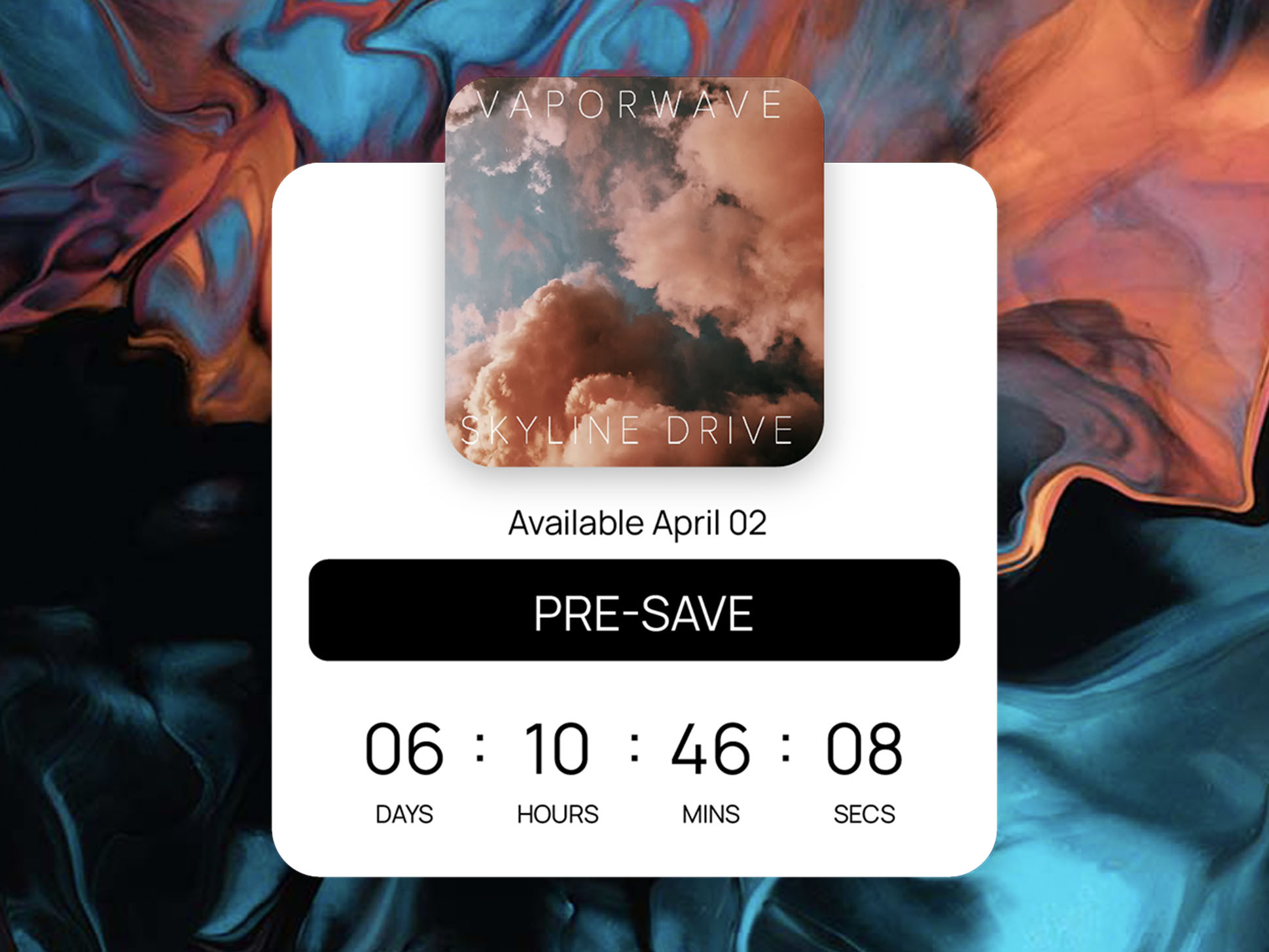
For many artists, that story begins with a pre-save.
Traditionally, the objective has been straightforward: encourage fans to save the upcoming release before launch day.
Modern campaign pages can accomplish much more.
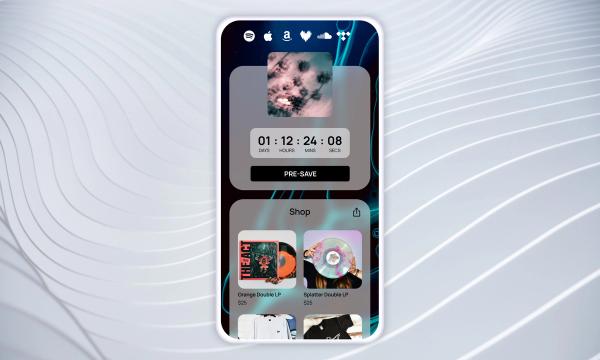
Alongside the pre-save experience, fans can also discover merchandise connected to the release. Limited vinyl editions, signed CDs, apparel, and bundles provide additional ways for supporters to participate without distracting from the primary campaign objective.
Importantly, discovery does not require aggressive selling.
Fans who arrive to learn about the release naturally encounter merchandise that belongs to the same campaign. The experience feels cohesive because every element supports the same announcement rather than competing for attention.
This is one reason campaign-oriented landing pages consistently outperform simple collections of links. They bring together music, merchandise, videos, tour dates, and audience growth into a single destination built around the release.
Pre-release: Focus on Intent, Not Volume
The weeks between announcement and release are often dominated by repeated promotional posts.
That approach assumes every fan needs the same message.
In reality, the audience is already beginning to separate into distinct groups.
Some have pre-saved.
Some joined the mailing list.
Some purchased previous merchandise.
Others are following along but have not yet taken meaningful action.
This is where audience segmentation becomes significantly more valuable than broad broadcasting.
Rather than sending identical promotions to everyone, marketers can focus on fans who have demonstrated intent but have not yet purchased campaign merchandise.
Examples include fans who:
- Completed a pre-save but have not purchased the featured vinyl.
- Follow the artist on streaming platforms but have not joined email or SMS.
- Purchased merchandise during the previous album cycle.
- Frequently engage with recent campaigns.
Each audience represents a different stage of the fan relationship and therefore benefits from different messaging.
This reflects another recurring principle throughout this content cluster: connected fan intelligence creates more relevant marketing than isolated campaign metrics.
Release Day: Let Streaming and Merch Reinforce One Another
Release day often generates the highest concentration of fan attention the campaign will receive.
Too often, however, marketing channels compete for that attention.
One post asks fans to stream the album.
Another promotes merchandise.
A third advertises tour dates.
A fourth encourages email signups.
Instead of treating those objectives as competitors, release day should present them as complementary ways to engage with the same release.
Fans who stream the album may decide to explore limited edition merchandise.
Fans purchasing merchandise may discover the official video.
New listeners may subscribe to receive future updates.
Every interaction should make the next one easier.
This is where connected marketing infrastructure becomes especially powerful. Rather than building separate experiences for streaming, ecommerce, and audience growth, each interaction becomes part of a larger campaign journey.
Post-release: Respond to Fan Behavior
Many campaigns begin winding down immediately after release week.
From a relationship perspective, this is often when the most valuable marketing opportunities begin.
By now, fans have revealed meaningful information about themselves.
Some purchased merchandise.
Some streamed repeatedly.
Some opened every campaign email.
Some ignored the launch entirely.
These behaviors create opportunities for thoughtful follow-up rather than repetitive promotion.
For example:
| Fan Behavior | Appropriate Follow-up |
|---|---|
| Purchased campaign merchandise | Share exclusive content, shipping updates, or behind-the-scenes material |
| Streamed heavily but did not purchase | Introduce products connected to the release |
| Purchased previously but skipped this release | Reintroduce the collection with fresh context |
| Joined email or SMS during the campaign | Begin a longer-term audience nurture sequence |
The objective is not simply to extend the campaign.
It is to acknowledge what each fan actually did during it.
The Catalog Phase Is Still Marketing
One of the biggest differences between traditional campaigns and modern marketing systems is what happens after the excitement fades.
Older releases continue attracting listeners.
Catalog merchandise continues selling.
New fans continue discovering artists months or years after release day.
The campaign is no longer active.
The relationship still is.
This creates opportunities to reconnect fans through moments that feel timely rather than arbitrary.
Examples include:
- Album anniversaries.
- Deluxe editions.
- Vinyl repressings.
- Collector bundles.
- Related merchandise launches.
- Tour announcements connected to the same release.
Each event creates new reasons to revisit products that already exist without pretending every campaign must start from zero.
This long-term perspective reflects the broader philosophy behind marketing infrastructure. Every release contributes to a continuously expanding fan relationship system that becomes more valuable over time.
Merchandise Is Strongest When It Supports the Story
Throughout this content cluster, we have argued that merchandise should not be viewed as an isolated ecommerce activity.
It is one expression of fan commitment alongside streaming, pre-saves, follows, SMS subscriptions, email opt-ins, and live attendance.
That perspective changes how campaigns are designed.
Instead of asking how to sell more products, artists begin asking how merchandise fits into the larger story they are telling.
Sometimes that story begins with a pre-save.
Sometimes it begins with a music video.
Sometimes it begins with a tour announcement.
In every case, merchandise becomes more meaningful because it is connected to the campaign rather than separated from it.
Campaigns End. Fan Relationships Continue.
The strongest release campaigns are not measured only by first-week streams or launch-day revenue.
They are measured by what remains after the campaign is over.
How many new fans joined the mailing list?
How many became SMS subscribers?
How many purchased merchandise?
How many returned for the next release?
How much richer is your understanding of the audience than it was six months ago?
Those questions reflect the transition from campaign thinking to relationship thinking.
Each release becomes another opportunity to strengthen the connected marketing system introduced throughout this series. Streaming, ecommerce, messaging, landing pages, audience segmentation, and fan intelligence stop functioning as separate tools and begin working together as a unified campaign engine.
That shift does more than improve merchandise sales.
It creates a marketing system that learns from every release, strengthens every fan relationship, and makes the next campaign more effective than the last.