Instagram Automation vs ManyChat for Music Marketing
As Instagram automation becomes increasingly common in music marketing, many artists eventually arrive at the same question:
Should I use ManyChat?
It is a reasonable question.
ManyChat has become one of the most recognizable automation platforms on Instagram. Thousands of creators, brands, and businesses use it to automate direct messages, respond to comments, and guide users through conversational workflows.
For musicians, however, the more important question is often slightly different.
Not "Can ManyChat automate Instagram?"
But rather:
"Is Instagram automation itself the goal?"
The answer to that question changes how artists should evaluate automation platforms entirely.
Because while Instagram automation tools may appear similar on the surface, they are often built around very different assumptions about what marketing is supposed to accomplish.
The Real Purpose of Instagram Automation
Most discussions about Instagram automation focus on efficiency.
Automation saves time.
Automation reduces manual work.
Automation allows artists to respond to more fans.
All of these benefits are real.
But they are not usually the primary reason automation improves release campaigns.
The real value comes from reducing friction between fan intent and fan action.
Throughout this article series, we have explored the concept of intent signals.
When a fan comments on a post, sends a direct message, responds to a story, or interacts with release content, they are demonstrating interest.
That interest has value.
The challenge is that interest fades quickly.
A fan who is excited about an unreleased song right now may not feel the same urgency ten minutes later.
This is why modern release strategy increasingly focuses on capturing intent while it exists.
Instagram automation is effective because it helps close the gap between engagement and action.
The question becomes what happens after that interaction occurs.
ManyChat Was Built for Conversations
ManyChat's roots are not in music marketing.
The platform was originally built around conversational marketing.
Businesses use ManyChat to automate customer support, qualify leads, answer questions, and guide users through messaging workflows.
In that context, the conversation itself is often the objective.
A customer receives information.
A lead is qualified.
A support request is resolved.
The interaction has served its purpose.
For musicians, conversations are usually not the end goal.
They are the beginning of a larger audience journey.
A fan comments on a teaser.
A direct message is sent.
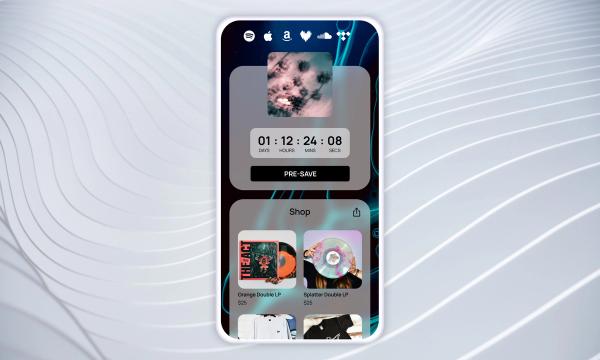
The fan receives a pre-save link.
The fan follows on Spotify.
The fan joins an SMS list.
The fan becomes part of future release campaigns.
The conversation matters.
But the relationship that follows matters more.
This distinction fundamentally changes how automation should be evaluated.
Music Marketing Is an Audience Development Problem
One of the biggest misconceptions in the music industry is that release marketing is primarily a promotion problem.
Artists often assume success comes from generating more reach.
More impressions.
More views.
More engagement.
While visibility certainly matters, sustainable growth usually comes from audience development rather than audience acquisition.
This is where the concept of fan relationship systems becomes important.
A fan relationship system is the infrastructure that transforms engagement into long-term audience value.
For example:
Instagram engagement → pre-save → Spotify follow → SMS subscriber → repeat listener
Each action builds on the previous one.
Each interaction strengthens the relationship.
Each release campaign contributes to future campaigns.
This process creates compounding growth.
Viewed through this lens, automation becomes less about messaging and more about audience infrastructure.
Comparing the Two Approaches
A useful way to think about the difference is to compare what each system is ultimately optimizing for.
| Objective | ManyChat | Music Marketing Platforms |
|---|---|---|
| Automate conversations | Strong | Strong |
| Comment-to-DM campaigns | Yes | Yes |
| Keyword-triggered messages | Yes | Yes |
| Pre-save campaign workflows | Limited | Core functionality |
| Spotify growth workflows | Limited | Core functionality |
| SMS audience growth | Requires external systems | Integrated |
| Fan relationship tracking | Limited | Designed for it |
| Release campaign infrastructure | Not primary focus | Primary focus |
| Audience ownership strategy | Indirect | Core objective |
This does not mean one platform is universally better.
It means they are solving different problems.
Why Pre-Save Campaigns Expose the Difference
Pre-save campaigns provide one of the clearest examples of where these philosophies diverge.
A traditional automation workflow might look like this:
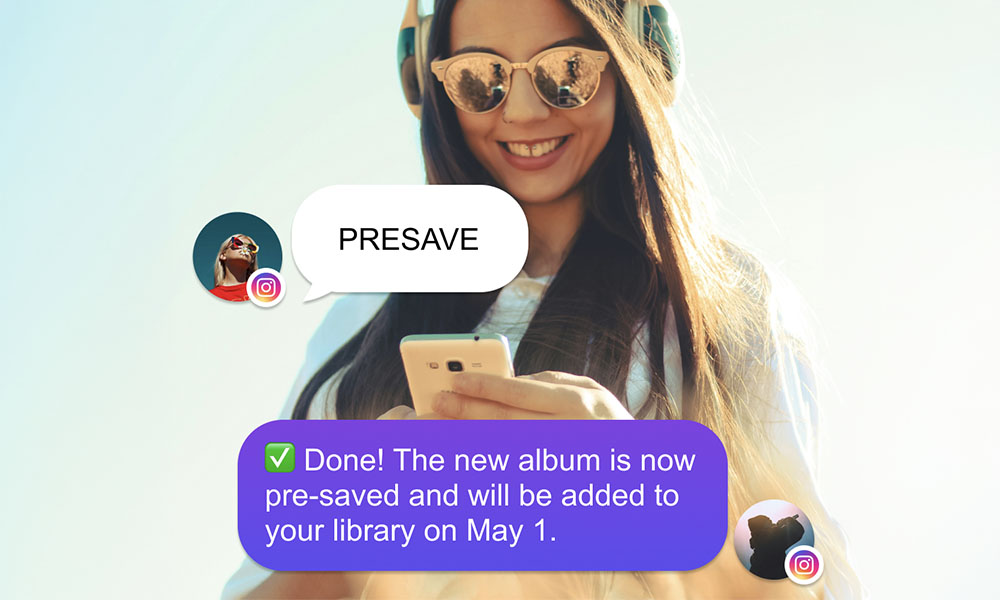
Comment → DM → Pre-save link
The campaign works.
The fan receives the link.
The objective is completed.
A release-focused workflow typically views the interaction differently.
Comment → DM → Pre-save → Audience profile → Future campaign eligibility
The pre-save is not the destination.
It is another signal.
That signal contributes to a broader understanding of the fan relationship.
This distinction may seem subtle, but it becomes increasingly important as artists release more music.
The value of a fan action extends beyond the current campaign.
It contributes to future opportunities as well.
The Hidden Cost of Fragmentation
Many artists gradually assemble marketing stacks over time.
One tool handles Instagram automation.
Another handles pre-saves.
Another manages email marketing.
Another manages SMS.
Another tracks analytics.
At first, this approach seems reasonable.
Each platform performs a specific task.
Over time, however, fragmentation begins to create challenges.
Audience data becomes scattered.
Campaign reporting becomes inconsistent.
Fan journeys become difficult to understand.
Relationships become disconnected from the actions that created them.
This is one reason the industry has increasingly shifted toward integrated marketing infrastructure.
The objective is not necessarily fewer tools.
The objective is a more complete understanding of audience behavior.
Audience Ownership Matters More Than Automation
Perhaps the most important lesson from modern music marketing is that engagement alone is not enough.
Social media audiences are valuable, but they are ultimately rented audiences.
Artists do not control platform algorithms.
They do not control reach.
They do not control visibility.
Audience ownership changes this dynamic.
Email subscribers, SMS subscribers, and direct fan relationships create stability that platform audiences cannot provide on their own.
Automation becomes valuable when it helps facilitate this transition.
A comment becomes an email subscriber.
A DM becomes an SMS subscriber.
A pre-save becomes a long-term listener.
The automation matters because of the audience asset it creates.
Not because a message was sent automatically.
Which Is Better for Music Marketing?
The answer depends entirely on the outcome an artist is trying to achieve.
If the primary objective is automating Instagram conversations, ManyChat is a capable and widely adopted platform.
If the objective is building release infrastructure, managing fan relationships, growing owned audiences, and connecting engagement to measurable music marketing outcomes, a music-focused platform may provide a stronger foundation.
The distinction is not really about features.
Most modern automation platforms can send messages.
The distinction is about strategy.
One approach treats Instagram automation as a messaging solution.
The other treats Instagram automation as a component within a larger audience development system.
The Future of Music Marketing Automation
The next generation of music marketing will likely become less focused on individual campaigns and more focused on connected audience systems.
Artists are beginning to recognize that every engagement signal has value.
Every comment.
Every DM.
Every pre-save.
Every subscription.
Each interaction contributes to a larger understanding of audience behavior.
Automation platforms that connect these signals into cohesive fan relationship systems will increasingly become more valuable than platforms focused solely on communication workflows.
Because ultimately, successful release marketing is not about automating messages.
It is about creating systems that turn engagement into growth.
Conclusion
ManyChat remains one of the most popular Instagram automation platforms available, and for many use cases it performs extremely well.
For musicians, however, the more important consideration is how automation fits into the broader release strategy.
The most successful artists increasingly view Instagram automation not as a messaging tool, but as audience infrastructure.
Comments become intent signals.
Intent signals become actions.
Actions become relationships.
Relationships become owned audiences.
And owned audiences become the foundation that supports every future release.
In that context, the most important question is not which platform sends the best automated message.
It is which platform helps build the strongest fan relationship system over time.