How to Segment Music Fans by Purchases and Streaming Behavior
Music fan segmentation is the process of grouping fans based on shared characteristics or behavior, such as products purchased, streaming actions, location, engagement history, and communication preferences.
Instead of sending the same campaign to every subscriber, artists and labels can create audiences that reflect where fans are in their relationship with the music.
For example, an artist might want to reach:
- Fans who pre-saved an album but did not purchase its vinyl edition
- Shopify customers who have not followed the artist on streaming
- Repeat buyers who also engage with new releases
- Fans in a specific city who purchased merch
- Listeners who completed several streaming actions but have never purchased
- Previous customers who have not joined the latest campaign
These segments combine ecommerce and music engagement to create more useful audience context.
The objective is not to divide fans into as many groups as possible. It is to identify meaningful differences that should change the message, offer, timing, or channel used in a campaign.
What is music fan segmentation?
Music fan segmentation organizes an artist’s known audience into groups based on selected conditions.
Those conditions might include:
Purchase behavior
- Purchased any product
- Purchased a specific product
- Did not purchase a specific product
- Total order value
- Number of purchases
- Most recent purchase
- Customer location
Streaming behavior
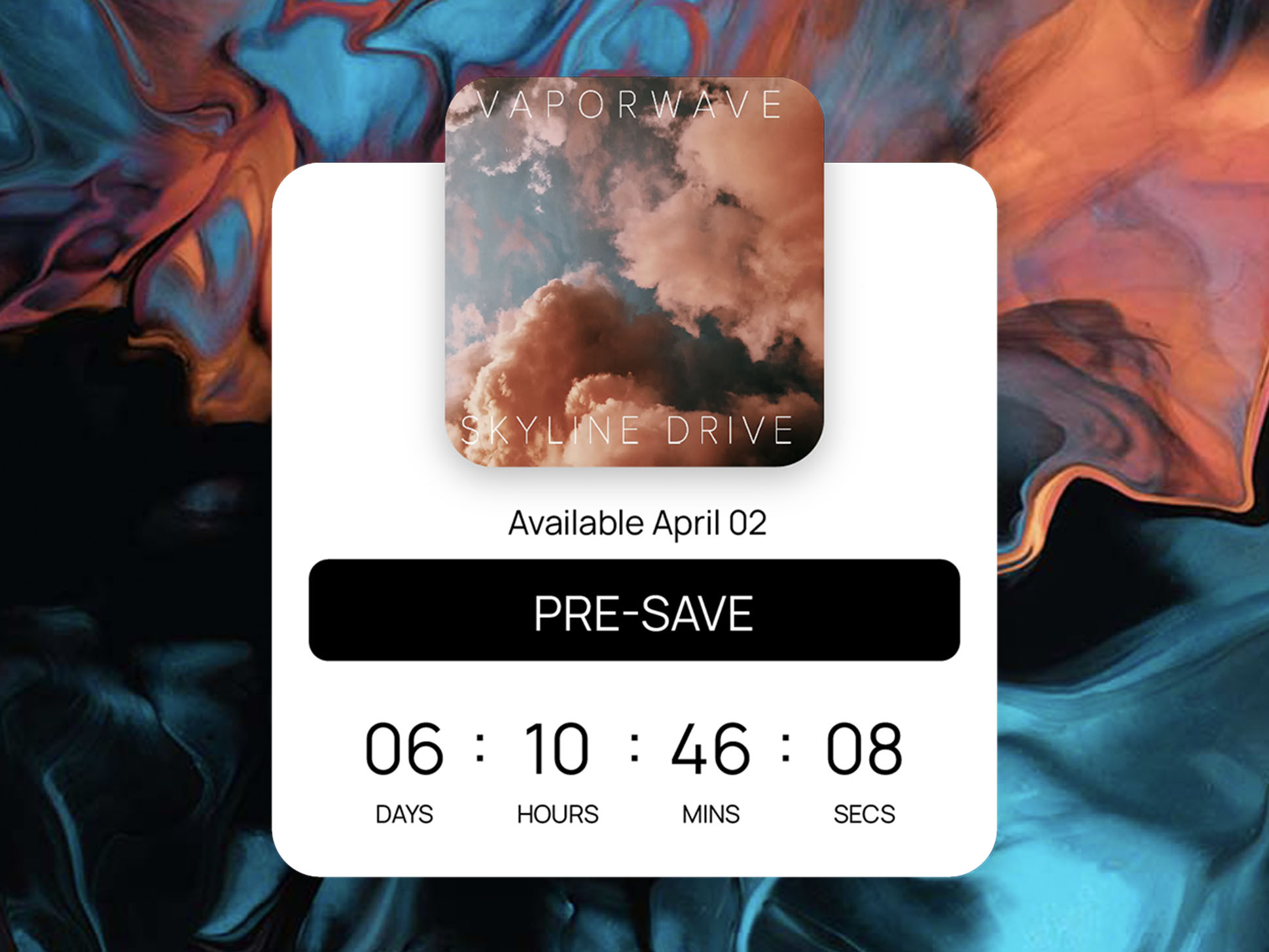
- Pre-saved a particular release
- Followed the artist
- Saved a song, album, or other media
- Connected a streaming account
- Participated in a previous release campaign
Direct fan engagement
- Opted in to email
- Opted in to SMS
- Joined through a particular landing page
- Completed an Action Flow
- Interacted with a campaign
- Has or does not have a particular fan tag
Fan attributes
- City
- State or region
- Country
- Language
- Signup source
- Communication preferences
The most powerful segments often combine several categories.
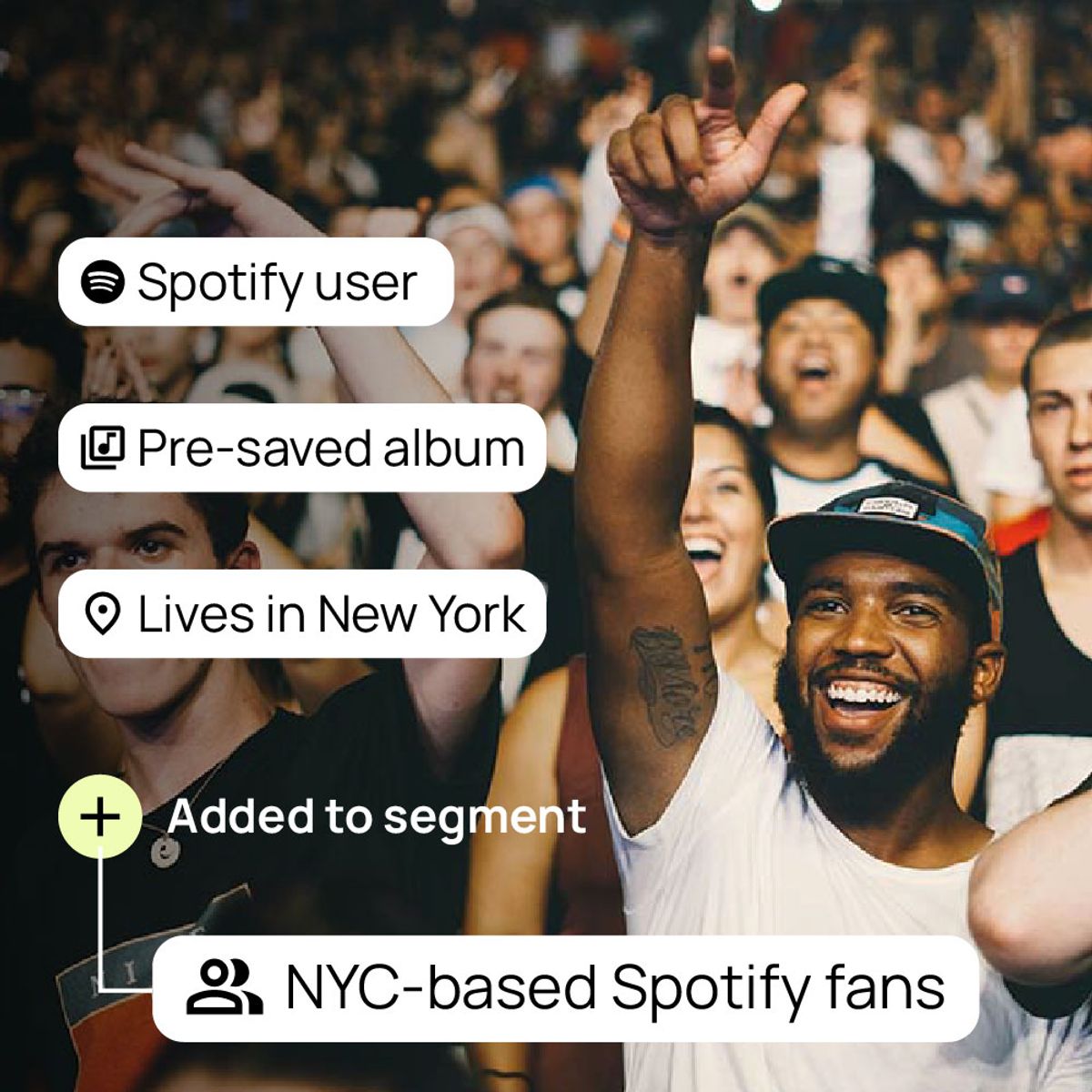
“Customers” is a useful audience. “Customers in Chicago who follow the artist and have not purchased the tour poster” is a much more specific audience with an obvious campaign opportunity.
Why segment music fans by both purchases and streaming?
Purchase history and streaming engagement represent different forms of support.
A purchase may indicate strong financial commitment, but it does not reveal whether the customer is currently listening to or engaging with new music. A pre-save or streaming follow indicates musical interest, but it does not reveal whether the fan has ever purchased.
Using only one side of the relationship can lead to incomplete assumptions.
| Fan behavior | What it suggests | What it does not prove |
|---|---|---|
| Purchased merch | Willingness to support financially | Current engagement with the music |
| Pre-saved a release | Interest in an upcoming release | Intent to purchase |
| Followed on streaming | Ongoing interest in the artist | Purchase history or spending |
| Purchased repeatedly | Strong customer relationship | Engagement with the newest campaign |
| Joined email or SMS | Permission for direct communication | Interest in every product or release |
| Lives in a tour market | Geographic relevance | Interest in a particular event |
Combining these signals provides better context.
An artist can distinguish between someone who purchased once several years ago and a customer who purchases regularly, pre-saves new releases, and follows on streaming. Both are customers, but the second fan has demonstrated a broader and more recent relationship.
Dynamic segments versus static lists
A static list captures a group of people at a particular moment. Unless it is manually updated, its membership remains the same even when fan behavior changes.
A dynamic segment is based on rules. Fans enter or leave the audience as their data begins or stops matching those rules.
Consider a segment defined as:
Pre-saved the new album and did not purchase the vinyl edition.
A fan should enter after completing the pre-save. If the fan later buys the vinyl, they should stop qualifying for the promotional segment.
This makes dynamic segments especially useful for ongoing campaigns because the audience reflects current behavior instead of a one-time export.
Dynamic segmentation can help artists:
- Stop promoting products after purchase
- Add new pre-save participants automatically
- Recognize fans after they complete qualifying actions
- Maintain location-based audiences
- Separate purchasers from non-purchasers
- Build reusable audiences for recurring campaigns
Static lists still have uses, such as preserving the exact audience for a completed campaign or manually selecting a special group. But behavior-based marketing generally benefits from segments that remain current.
How to design a useful fan segment
A useful segment should answer four questions.
1. Who is the audience?
Define the fan using observable behavior or attributes.
Fans who pre-saved the album and live in New York.
2. What has the fan already done?
Existing activity establishes context and prevents repetitive messages.
They pre-saved the album but did not purchase the vinyl edition.
3. What is the next relevant action?
Every marketing segment should have a practical purpose.
Introduce the physical edition associated with the album.
4. Who should be excluded?
Exclusions are often as important as inclusion conditions.
Exclude existing vinyl buyers and fans who have not opted in to the selected messaging channel.
If a segment does not suggest a different message or action, it may not need to exist.
10 useful segments for music marketing
The following examples combine purchase history with streaming behavior and other fan information.
1. Engaged streaming fans who have never purchased
Conditions:
- Pre-saved, followed, or saved music
- Has not purchased any product
Why it matters: These fans have demonstrated interest but may never have encountered a relevant product.
Campaign opportunity: Introduce a small selection of merch connected to the release or action they completed.
Avoid assuming that every engaged listener is ready to buy. The campaign should explain why the product is meaningful rather than presenting an unrelated store promotion.
2. Fans who pre-saved but did not purchase the release merch
Conditions:
- Pre-saved a specific release
- Did not purchase the associated product
Why it matters: The pre-save provides clear context for promoting an album’s vinyl, apparel, poster, or bundle.
Campaign opportunity: Send a focused product message after the pre-save or near release day.
The negative purchase condition prevents existing buyers from receiving unnecessary reminders.
3. Customers who have not engaged with the newest release
Conditions:
- Purchased any or selected products in the past
- Did not pre-save or complete another action for the current release
Why it matters: Previous customers may still be valuable supporters even when they have missed the latest campaign.
Campaign opportunity: Reintroduce them to the music before asking for another purchase.
This segment demonstrates why fan journeys should work in both directions. Streaming fans can become customers, and customers can become more active listeners.
4. Product-specific customer segments
Conditions:
- Purchased a particular product or collection
- Optional additional streaming, location, or engagement conditions
Why it matters: A product can indicate interest in a specific album, era, format, or style.
Campaign opportunity: Promote a complementary item, anniversary release, restock, or related music campaign.
Keep the connection obvious. Buying one shirt does not establish interest in every product in the store.
5. Fans who purchased one product but not another
Conditions:
- Purchased Product A
- Did not purchase Product B
Why it matters: Positive and negative purchase conditions create a precise cross-selling audience.
Campaign opportunity: Introduce a companion product or another format of the same release.
For example:
- Purchased the album shirt, but not the vinyl
- Purchased standard vinyl, but not the signed poster
- Purchased one item in a limited collection, but not the companion item
6. Local customers with streaming engagement
Conditions:
- Lives in a particular city or region
- Purchased a product
- Completed a relevant streaming action
Why it matters: These fans combine geographic relevance with demonstrated support.
Campaign opportunity: Promote a nearby show, pop-up, listening event, local pickup option, or city-specific product.
For tour campaigns, consider defining a broader region rather than matching only the exact city. Fans may travel from nearby areas.
7. Repeat customers who engage with new releases
Conditions:
- Completed multiple purchases or met a purchase threshold
- Pre-saved, followed, or saved recent music
Why it matters: These fans support the artist across both commerce and streaming.
Campaign opportunity: Offer early access, limited products, VIP opportunities, or exclusive content.
Use this segment selectively. If “VIP” fans simply receive more sales messages, the segment does not provide meaningful recognition.
8. High-value customers who are inactive on streaming
Conditions:
- Purchase history or order value exceeds a selected threshold
- Has not completed recent streaming actions
Why it matters: A valuable customer may have become disconnected from the artist’s current music.
Campaign opportunity: Share the newest release, artist update, or pre-save campaign rather than leading with another product.
This audience can reveal the difference between customer value and current fan engagement.
9. Lapsed customers and fans
Conditions:
- Purchased or engaged in the past
- Has no recent purchase or streaming activity
Why it matters: These fans already have an established relationship with the artist, but the relationship may no longer be active.
Campaign opportunity: Re-engage them around a meaningful moment, such as a new release, anniversary, tour, or restock.
Avoid sending a campaign only because a fixed amount of time has passed. Give the audience a real reason to return.
10. Multi-channel supporters
Conditions:
- Purchased a product
- Completed one or more streaming actions
- Opted in to email or SMS
- Optional additional conditions such as recent activity or location
Why it matters: These fans have engaged across several direct channels.
Campaign opportunity: Build an early-access, loyalty, research, or advocacy audience.
This is often a more useful way to identify potential superfans than relying on a single purchase or streaming action.
How to choose AND versus OR conditions
The relationship between segment conditions can dramatically change the audience.
Use AND to narrow the audience
An AND relationship requires every condition to be true.
Purchased the vinyl AND pre-saved the album AND lives in Los Angeles.
This creates a smaller, more specific audience.
Use AND when each condition is necessary for the campaign to be relevant.
Use OR to broaden the audience
An OR relationship requires at least one condition to be true.
Pre-saved the album OR followed the artist OR saved the release.
This creates a larger audience containing several forms of streaming engagement.
Use OR when different actions demonstrate a similar type of intent.
Combine AND and OR carefully
A more advanced segment might be:
Completed a pre-save, follow, or save action
AND
Did not purchase the vinyl edition
AND
Is opted in to email
In plain language:
Email subscribers who engaged with the release on streaming but have not purchased its vinyl edition.
Write the audience definition in a sentence before building the rules. If the sentence is difficult to explain, the segment may be unnecessarily complicated.
Use exclusions to protect the fan experience
Exclusions prevent a campaign from reaching people for whom it is irrelevant.
Common exclusions include:
- Purchased the promoted product
- Already completed the requested streaming action
- Is not opted in to the selected channel
- Recently received a similar campaign
- Belongs to another active campaign audience
- Has already received an exclusive or limited offer
- Is associated with a different artist or project
Consider a vinyl campaign sent to fans who pre-saved an album. Without an exclusion, existing vinyl customers may receive the promotion too.
A better segment is:
Pre-saved the album
AND
Did not purchase the vinyl edition
AND
Is eligible to receive the selected message
Exclusions do more than improve campaign performance. They show that the artist recognizes what fans have already done.
How frequently should artists create new segments?
Artists do not need a separate permanent segment for every campaign variation.
Maintain reusable segments for recurring strategic audiences, such as:
- Customers
- Non-customers
- Engaged streaming fans
- Repeat customers
- Local fans
- High-engagement supporters
- Email subscribers
- SMS subscribers
Create temporary or campaign-specific segments for:
- A particular release
- A specific merch drop
- A tour market
- A limited product
- A pre-save campaign
- An anniversary
- A restock
Too many overlapping segments can make campaign management difficult. Use clear names that describe the rules and purpose.
For example:
Album Name – Pre-saved – No vinyl purchaseArtist Name – Chicago customers and followersShopify – Repeat customers – Email eligibleAlbum Name – Purchased vinyl – No pre-save
A consistent naming system is especially helpful for labels managing multiple artists.
How to build purchase and streaming segments in Sonikit
Sonikit connects fan activity across music marketing and ecommerce so artists and labels can create dynamic audiences from more than one type of behavior.
With Sonikit, a segment can include conditions such as:
- Purchased any Shopify product
- Purchased selected Shopify products
- Did not purchase selected products
- Order value
- Customer location
- Pre-saved a release
- Followed on streaming
- Saved music
- Email or SMS availability
- Other fan properties and engagement data
To build a Shopify-based audience:
- Connect Shopify through Sonikit’s Integrations section.
- Open Audience and select Segments.
- Create a new segment.
- Add a condition for fans who purchased specific products or any product.
- Select the relevant Shopify integration and products when required.
- Add streaming, location, contact, or other conditions.
- Preview the matching audience.
- Name and save the segment.
For example, an artist could create:
Fans who pre-saved the new album
AND
Did not purchase the vinyl edition
AND
Has an email address
That segment can support a focused email campaign promoting the physical release without including existing buyers.
Sonikit also uses shared contact information to match eligible Shopify customers with known streaming fans. This makes it possible for purchase history and music engagement to contribute to the same audience rules.
Learn more about creating audiences from Shopify customer data.
Turn segments into campaigns and automations
A segment is valuable only when it changes what the artist does next.
Depending on the audience, artists can use segments to:
- Send targeted email campaigns
- Send SMS messages
- Begin or guide Action Flows
- Include or exclude fans from a promotion
- Provide early access
- Re-engage previous customers
- Promote a nearby event
- Introduce merch after a streaming action
- Direct customers back toward new music
- Measure behavior across different fan groups
Use the segment definition to guide the message.
| Segment | Appropriate next action |
|---|---|
| Engaged non-buyers | Introduce relevant merch |
| Customers missing a release | Promote the music or pre-save |
| Existing product buyers | Thank, exclude, or cross-sell |
| Local customers and listeners | Promote a nearby event |
| Repeat multi-channel fans | Offer access or recognition |
| Lapsed customers | Rebuild interest with a meaningful update |
Not every segment needs an immediate campaign. Some can be used to understand the audience, compare behavior, or inform future planning.
Common fan segmentation mistakes
Creating segments without a purpose
A segment should correspond to a decision, campaign, or question. If every segment receives the same message, the additional complexity provides little value.
Using too many conditions
Adding more conditions does not automatically improve targeting. Overly narrow segments may exclude relevant fans or become too small to use.
Ignoring negative conditions
Knowing what a fan has not done is often essential. Without exclusions, purchasers may continue receiving sales messages for products they own.
Treating high spending as the only measure of fandom
Customer value matters, but streaming engagement, recency, frequency, direct opt-ins, and campaign participation provide additional context.
Failing to preserve artist context
Labels should avoid assuming that a customer of one artist is interested in every artist on the roster.
Sending every segment more messages
Segmentation should improve relevance and reduce unnecessary communication. It should not simply create more opportunities to contact the same people.
Final takeaway
Music fan segmentation helps artists and labels turn disconnected fan activity into usable audiences.
Purchase history can show what a customer bought. Streaming actions can show which music a fan engaged with. Location, direct opt-ins, and campaign history provide additional context.
Together, those signals make it possible to identify:
- Active listeners who have never purchased
- Customers who missed a new release
- Fans who pre-saved but did not buy the associated product
- Product-specific customer groups
- Local customers with streaming engagement
- Repeat supporters active across multiple channels
The strongest segments do more than describe fans. They point toward a relevant next action—and clearly identify who should be excluded.
With Sonikit, artists and labels can combine Shopify purchases with streaming and fan data to build dynamic audiences for more focused campaigns.
Explore music merch marketing with Sonikit or connect Shopify to begin building customer segments.
Frequently asked questions
What is music fan segmentation?
Music fan segmentation is the process of grouping known fans based on shared behavior or attributes, such as purchases, pre-saves, streaming follows, location, engagement history, and communication preferences.
What is a dynamic fan segment?
A dynamic fan segment is an audience defined by rules rather than a fixed list. Fans can enter or leave the segment as their data changes—for example, when a fan pre-saves a release or purchases the product being promoted.
Can artists segment fans by Shopify purchases?
Yes. When Shopify is connected to a compatible music marketing platform, artists can build audiences based on purchases of any product or selected products, as well as conditions such as order value or customer location.
Can purchase and streaming conditions be used together?
Yes. Connected fan data can support segments such as fans who pre-saved a release but did not purchase its vinyl edition, or customers who purchased merch but have not followed the artist on streaming.
What is the difference between AND and OR segment conditions?
AND requires a fan to match every connected condition, creating a narrower audience. OR requires a fan to match at least one condition, creating a broader audience. A segment can combine both relationships when the platform supports grouped logic.
How does Sonikit match Shopify customers with streaming fans?
Sonikit uses shared contact information to match eligible Shopify customers with known fan profiles. When an appropriate match exists, purchase history and recognized streaming activity can be used together in audience segments.

Keep reading
All posts
How to Build a 3-Step Action Flow: SMS Sign-Up to Pre-Save and Follow

New Project or New Landing Page? How to Structure Sonikit for Multiple Releases, Artists, or Tours