Instagram DM Automation Examples for Musicians
Instagram has become one of the most important platforms in modern music marketing, but many artists still treat it primarily as a content distribution channel.
They post release announcements.
They share snippets.
They upload stories.
They encourage engagement.
Then they hope fans take the next step.
The problem is that attention and action are not the same thing.
A fan can watch a Reel, leave a comment, and genuinely love a song without ever clicking a pre-save link, joining an email list, following on Spotify, or taking any measurable action that contributes to long-term audience growth.
This gap between engagement and action is one of the biggest challenges facing independent artists.
Instagram DM automation exists to close that gap.
Rather than treating engagement as the end goal, automated workflows allow artists to respond to fan behavior in real time, transforming signals of interest into meaningful audience actions.
The technology itself is relatively straightforward.
The strategy behind it is where the real value emerges.
Why DM Automation Has Become So Important
Every release campaign is fundamentally an exercise in capturing and directing attention.
The challenge is that attention is fleeting.
A fan who comments on a teaser today may forget about the release tomorrow. A listener who expresses excitement about an upcoming single may never complete a pre-save if too many steps separate their interest from the desired action.
This phenomenon is often best understood through the concept of intent decay.
When fans demonstrate interest, there is a window of opportunity to guide them toward the next action. The longer that action is delayed, the less likely it becomes.
Instagram DM automation helps reduce intent decay by responding immediately to engagement signals.
A comment becomes a conversation.
A conversation becomes an action.
An action becomes a relationship.
This progression sits at the center of modern fan relationship systems.
Example 1: Comment-to-Pre-Save Campaign
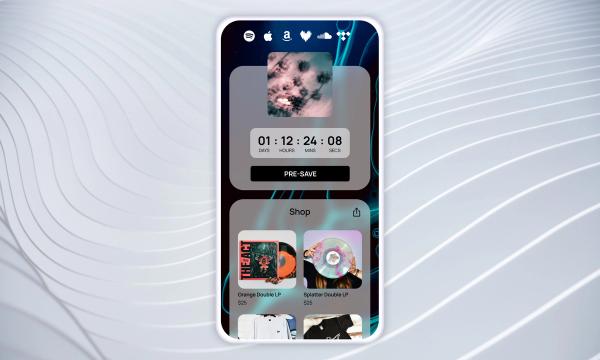
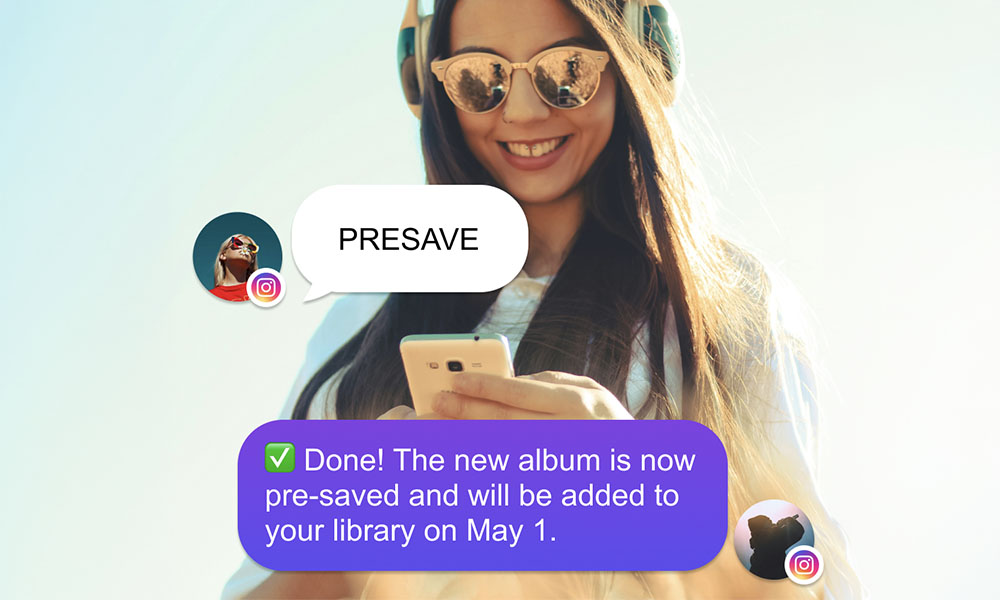
The most widely adopted DM automation workflow in music marketing is the comment-to-pre-save campaign.
An artist publishes a teaser for an upcoming release and encourages fans to comment with a specific keyword.
When the comment is detected, the system automatically sends a direct message containing a pre-save link.
The workflow appears simple:
| Trigger | Response |
|---|---|
| Fan comments "READY" | Sends DM |
| Fan opens DM | Receives pre-save link |
| Fan clicks link | Completes pre-save |
The effectiveness comes from friction reduction.
Instead of asking fans to navigate to a profile, locate a bio link, and complete multiple steps independently, the next action arrives directly within the interaction they have already initiated.
The campaign feels less like a marketing funnel and more like a conversation.
Example 2: Spotify Follower Growth Campaign
Pre-saves are valuable, but they are not the only streaming signal artists can generate.
Spotify followers remain one of the strongest indicators of long-term audience interest because they create future opportunities for discovery and engagement.
An artist might post a teaser and invite fans to comment a keyword to receive an exclusive listening link.
The DM workflow then encourages fans to follow the artist on Spotify before accessing the content.
The process turns social engagement into a streaming platform relationship.
Viewed strategically, this is an example of audience migration.
The fan begins on Instagram but establishes an additional connection elsewhere in the artist's ecosystem.
Example 3: SMS Subscriber Acquisition
One of the recurring themes throughout modern music marketing is the distinction between rented audiences and owned audiences.
Instagram followers belong to a platform.
SMS subscribers belong to the artist.
This distinction has made SMS list growth a common objective for DM automation campaigns.
A fan comments on a release post or sends a keyword through direct message.
The workflow responds with an invitation to join the artist's text list in exchange for exclusive content, early access, release reminders, or behind-the-scenes material.
A simplified journey might look like this:
Instagram engagement → DM conversation → phone number collection → SMS subscription
The automation is not merely collecting contact information.
It is transforming platform engagement into a direct audience relationship.
Example 4: Exclusive Content Delivery
Many artists struggle to create incentives strong enough to motivate action.
One solution is to exchange exclusive content for engagement.
A fan comments on a teaser post.
The automation responds with a direct message containing:
- An unreleased demo
- An acoustic version
- Behind-the-scenes footage
- Early merchandise access
- Exclusive artwork
- Private listening experiences
The content itself becomes the reward for participation.
More importantly, the interaction creates an opportunity to deepen the fan relationship.
The exclusive asset attracts attention, but the conversation creates connection.
Example 5: Release Day Reminder Campaign
One challenge with pre-release strategy is maintaining momentum between announcement and launch.
Fans often express excitement early in the campaign but gradually lose awareness as release day approaches.
Instagram automation can help bridge this gap.
Fans who engage with pre-release content can be directed into a workflow that captures contact information or subscription preferences.
When release day arrives, the artist can reconnect with listeners who previously demonstrated interest.
This creates continuity throughout the campaign.
Instead of treating each interaction as isolated, the artist builds an ongoing relationship that spans the entire release cycle.
Example 6: Fan Data Collection
One of the least discussed applications of DM automation is audience intelligence.
Every engagement signal tells a story.
A comment indicates interest.
A keyword reveals intent.
A subscription demonstrates commitment.
Over time, these actions create a clearer picture of audience behavior.
Artists can learn:
- Which releases generate the strongest response
- Which content formats drive engagement
- Which campaigns convert most effectively
- Which fans consistently participate
This information becomes increasingly valuable as audience size grows.
Marketing improves when decisions are informed by behavior rather than assumptions.
Example 7: Tour and Event Promotion
The principles that power pre-save campaigns also apply to live events.
An artist promoting an upcoming show might encourage followers to comment a city name or keyword to receive ticket information.
The automation immediately responds with event details, ticket links, and additional information.
This creates a more seamless experience than directing every interested fan to search for information independently.
Once again, the underlying mechanism remains the same.
The system identifies intent and responds while attention is still active.
Example 8: Merchandise Launch Campaigns
Merchandise promotion often suffers from the same friction problems that affect music releases.
Fans may be interested in a product but fail to complete a purchase because the path between discovery and checkout is too long.
DM automation can shorten that journey.
A teaser post generates comments.
Comments trigger conversations.
Conversations deliver product information, early access opportunities, or purchase links.
The workflow transforms engagement into commerce while maintaining the conversational experience that makes social platforms effective.
Choosing the Right Automation Objective
One mistake artists frequently make is attempting to accomplish everything within a single campaign.
A release post might simultaneously promote a pre-save, Spotify follow, email signup, SMS subscription, merchandise offer, and ticket sale.
The result is often confusion rather than conversion.
The strongest automation campaigns typically focus on a single primary objective.
| Campaign Goal | Primary Action |
| Upcoming release | Pre-save |
| Audience ownership | SMS signup |
| Streaming growth | Spotify follow |
| Fan engagement | Exclusive content |
| Tour promotion | Ticket purchase |
| Merch launch | Product purchase |
Secondary objectives can still exist, but the primary action should remain clear.
Reducing decision complexity is often just as important as reducing technical friction.
From Automation to Audience Infrastructure
The most important lesson from these examples is that automation itself is not the objective.
Automation is simply a mechanism.
The larger objective is building audience infrastructure.
Each workflow captures a signal.
Each signal creates an action.
Each action strengthens a fan relationship.
Over time, these relationships accumulate.
The artist develops direct communication channels, audience intelligence, and a growing collection of engaged fans who are increasingly likely to support future releases.
This is where marketing infrastructure begins to compound.
Every campaign contributes to the next one.
Every interaction increases future opportunities.
Every release becomes more efficient than the one before.
The Future of Instagram DM Marketing
The future of music marketing will likely involve more personalization, more automation, and more direct audience ownership.
As platforms become increasingly competitive, artists will need systems that help convert engagement into measurable outcomes.
Instagram DM automation is valuable because it operates at the intersection of attention and action.
It captures intent while it exists.
It reduces friction before interest fades.
And it creates pathways that transform temporary engagement into long-term audience relationships.
The specific workflows may evolve, but the underlying principle is unlikely to change.
The artists who build sustainable careers will increasingly be those who recognize engagement as the beginning of the journey rather than the end.
Conclusion
Instagram DM automation gives musicians a practical way to transform social engagement into meaningful fan actions.
Whether the objective is generating pre-saves, growing SMS subscribers, increasing Spotify followers, promoting merchandise, or supporting album release promotion, the most successful workflows share a common characteristic: they reduce friction between interest and action.
More importantly, they contribute to something larger than a single campaign.
They help build fan relationship systems that convert attention into audience ownership, strengthen release strategies over time, and create marketing infrastructure that compounds with every interaction.
The most effective DM automations are not simply tools for sending messages.
They are systems for turning engagement into growth.