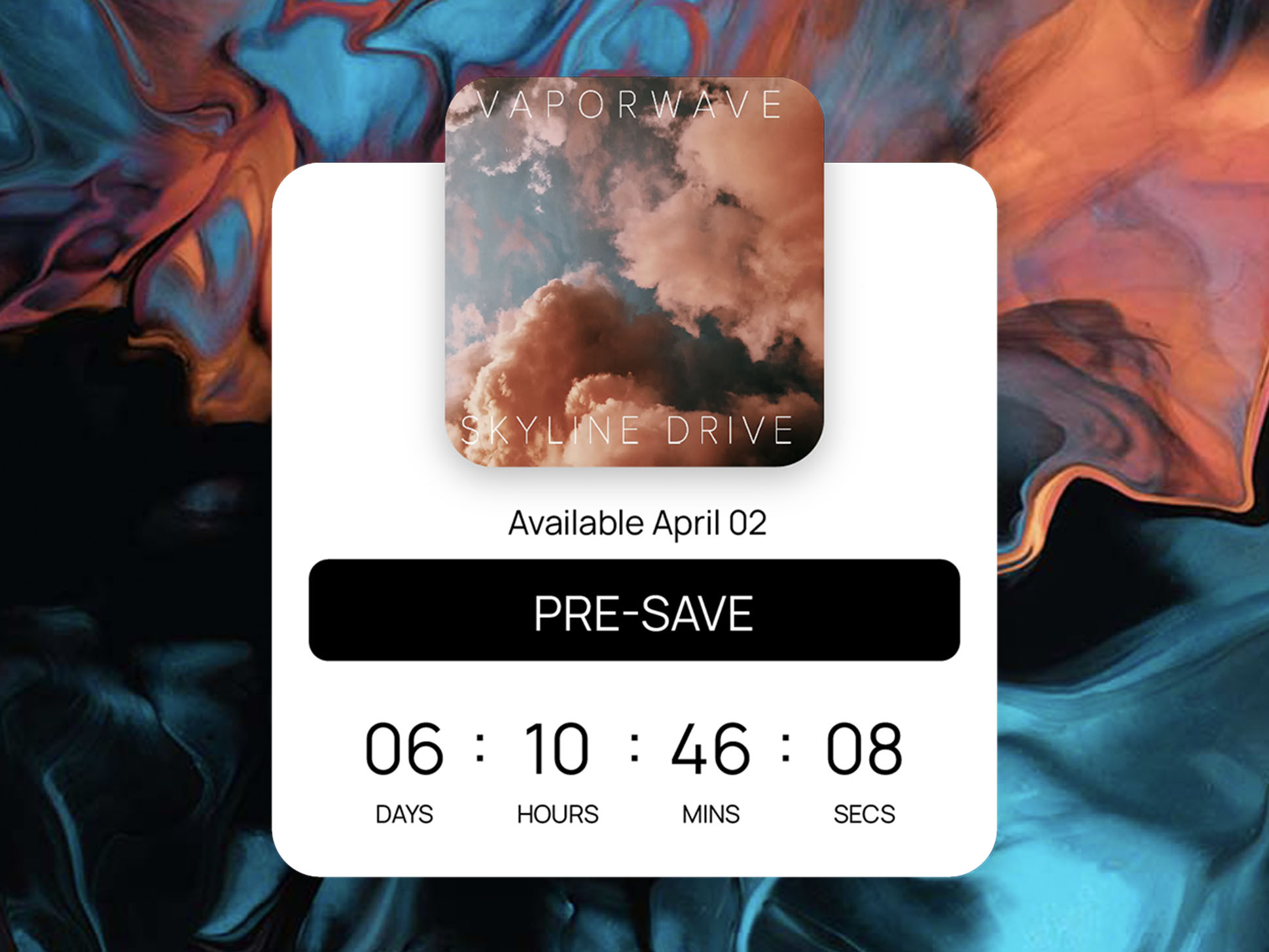
Pre-Save vs Smart Link: What’s the Difference? (And Which Actually Grows Your Audience)
In modern music marketing, few tools are used more frequently and understood less clearly than pre-save links and smart links.
Artists often treat them as interchangeable. Both involve sharing a single URL. Both connect listeners to streaming platforms. Both appear throughout release campaigns. As a result, many campaigns deploy the wrong tool at the wrong moment, weakening momentum before or after release without realizing why.
The distinction between pre-saves and smart links is not technical. It is strategic.
Each serves a different role within the release lifecycle, and understanding that difference is essential for building a campaign that creates sustained engagement rather than fragmented attention.
Within the campaign engine framework introduced throughout this series, pre-saves and smart links operate at entirely different stages of audience behavior.
A Simple Definition of Each Tool
A pre-save link allows listeners to commit to an unreleased track or album before it becomes available. After authorization through Spotify (or another streaming service), the release is automatically added to the listener’s library when it launches.
A smart link is a routing page that directs listeners to the correct streaming platform after a release is already live. Instead of choosing between Spotify, Apple Music, Amazon Music, or other services manually, listeners click one link and select their preferred destination.
At a surface level, both appear to solve distribution friction. In practice, they solve entirely different marketing problems.
Pre-saves capture intent. Smart links distribute access.
Where Each Fits in the Release Lifecycle
The easiest way to understand the difference is to view them through the three-phase release structure discussed across the Pre-Save Strategy Authority Hub:
| Campaign Phase | Listener Mindset | Primary Tool |
|---|---|---|
| Awareness | “Something new is coming” | Content, storytelling |
| Intent Capture | “I want this when it drops” | Pre-save link |
| Activation & Discovery | “I want to listen now” | Smart link |
Pre-saves operate before release. Smart links operate after release.
Using a smart link during a pre-release campaign removes the opportunity to capture early commitment. Using a pre-save link after launch introduces unnecessary friction when listeners simply want to play the music immediately.
Timing determines effectiveness.
What Happens Psychologically When Fans Click Each
The deeper difference between these tools lies in listener psychology.
A pre-save asks for anticipation. A smart link satisfies curiosity.
When a listener pre-saves, they are making a forward-looking decision. They are signaling interest without immediate reward. That action requires motivation and emotional investment, which is why pre-saves function as strong intent signals within a release strategy.
A smart link, by contrast, supports instant gratification. The listener already wants to hear the music. The goal is to remove obstacles between desire and playback.
Because these actions reflect different psychological states, they generate different types of audience behavior.
Pre-saves coordinate future engagement. Smart links maximize present consumption.
Why Pre-Saves Matter Before Release
As explored in earlier articles, pre-saves help synchronize listener activity around launch day. They concentrate engagement during the period when Spotify’s recommendation systems evaluate early performance signals most closely.
By capturing intent in advance, pre-save campaigns prepare audiences to behave collectively once music goes live. This coordination increases the likelihood of strong early engagement velocity, which can influence algorithmic testing beyond an artist’s existing fanbase.
Pre-saves are therefore less about promotion and more about preparation.
They align audience attention before the release moment arrives.
Why Smart Links Matter After Release
Once music is live, the strategic objective shifts from coordination to accessibility.
Listeners discovering a release through social media, press coverage, ads, or word of mouth may use different streaming platforms. Sending each listener to a platform-specific link introduces friction and increases drop-off.
Smart links solve this by acting as universal access points.
A well-designed smart link:
- Detects or allows platform preference
- Routes listeners instantly to playback
- Supports sharing across diverse audiences
- Enables cross-platform campaign measurement
At this stage, reducing friction matters more than capturing intent. The goal is to convert attention into streams as quickly as possible.
Common Campaign Mistakes
Many release campaigns underperform because the distinction between these tools is ignored.
A frequent mistake is promoting smart links before release. Listeners arrive expecting music, encounter unavailable tracks, and leave without taking action. The opportunity to capture intent disappears.
Another common error is continuing to promote pre-save links after release. Fans who simply want to listen must navigate authentication steps unnecessarily, increasing abandonment rates.
Both scenarios create subtle friction that compounds across thousands of potential listeners.
Effective campaigns transition tools as audience needs evolve.
Pre-Saves and Smart Links Inside the Campaign Engine
Within the broader marketing infrastructure model, these tools serve complementary functions rather than competing ones.
A simplified flow looks like this:
- Storytelling and content generate awareness.
- Pre-save links convert attention into measurable commitment.
- Release-day messaging activates committed listeners.
- Smart links distribute music widely after launch.
Each step builds on the previous one. Removing or misplacing a stage weakens the entire system.
This is why mature release strategies rarely rely on a single link type throughout a campaign. They evolve alongside audience behavior.
Data Differences Between the Two
Pre-saves and smart links also produce different types of marketing insight.
Pre-save campaigns reveal intent signals. They identify listeners willing to engage before hearing music, often representing an artist’s most invested audience segment.
Smart links reveal discovery behavior. They show where listeners arrive from, which platforms convert best, and how audiences consume music after release.
Together, they provide a more complete picture of audience development across the lifecycle of a release.
Viewed strategically, pre-saves measure anticipation while smart links measure demand.
When to Transition From Pre-Save to Smart Link
One of the most important operational decisions in a release campaign is knowing when to switch messaging.
A practical rule is simple: the moment music becomes available publicly, promotional focus should shift toward smart links.
However, the transition should feel continuous to listeners. Effective campaigns prepare audiences in advance by communicating that the pre-save action leads directly into release-day listening.
This continuity reinforces trust. Fans experience a clear payoff for early participation rather than a disconnected marketing sequence.
Why Modern Artists Need Both
Pre-saves and smart links reflect a broader shift in music marketing toward lifecycle thinking.
Success is no longer determined solely by how many people discover a release after launch. Increasingly, outcomes depend on how well artists prepare audiences beforehand and sustain engagement afterward.
Pre-saves build momentum. Smart links extend reach.
Together, they form the bridge between anticipation and discovery.
Artists who rely only on post-release promotion often struggle to generate early algorithmic momentum. Artists who focus only on pre-saves may fail to scale listening once music becomes available.
The strongest campaigns treat both tools as infrastructure supporting different stages of audience behavior.
The Strategic Takeaway
The question is not whether pre-saves or smart links are better. It is whether each is being used at the correct moment.
Pre-saves exist to capture intent and coordinate engagement before release. Smart links exist to remove friction and maximize listening after release.
Understanding this distinction transforms links from promotional utilities into components of a cohesive release system.
And in a streaming environment increasingly shaped by timing, engagement velocity, and audience relationships, using the right tool at the right stage often determines whether momentum builds or dissipates.

Keep reading
All posts
How to Build a 3-Step Action Flow: SMS Sign-Up to Pre-Save and Follow

New Project or New Landing Page? How to Structure Sonikit for Multiple Releases, Artists, or Tours