Shopify for Musicians: How to Turn Purchases Into Long-Term Fan Relationships
Search for advice about Shopify as a musician, and you'll quickly notice a pattern.
Most guides explain how to launch a store.
They cover product photography, print-on-demand services, inventory management, shipping, payment processing, and storefront design. Those are all important topics. A successful merchandise business begins with a reliable ecommerce platform, and Shopify has invested heavily in helping creators build exactly that.
But once the store is live, a different question emerges.
Now what?
Launching a store is not the finish line. It is the beginning of a relationship.
Every purchase creates new information about a fan. It reveals interests, preferences, timing, and levels of commitment that can improve every future marketing decision. Yet many artists continue treating Shopify as an isolated sales channel rather than part of a larger marketing system.
Throughout this content series, we have explored a recurring idea: marketing infrastructure becomes more valuable as it accumulates fan intelligence across connected experiences.
That principle applies just as strongly to ecommerce as it does to streaming, email, SMS, or release campaigns.
The opportunity is not simply to sell more merchandise.
It is to build stronger fan relationships because someone chose to buy it.
The Store Is Only One Stage of the Fan Journey
Purchasing merchandise is often viewed as the end of a funnel.
A fan discovers the artist, listens to the music, visits the store, completes a purchase, and the transaction is finished.
That model reflects ecommerce.
It does not reflect relationships.
From a fan perspective, buying merchandise is simply another way of participating in an artist's career.
Some people begin by streaming.
Others discover an artist through social media.
Some attend a live show before hearing the latest release.
Others buy a vinyl record before joining the mailing list.
There is no universal sequence.
Instead of treating purchases as the conclusion of a campaign, modern music marketing recognizes them as one signal among many that helps explain where someone is in their relationship with an artist.
A Purchase Tells You More Than Revenue
Revenue is the most obvious outcome of a Shopify order.
It is rarely the most interesting one.
Every purchase answers additional questions that become valuable over time.
Which products does this fan prefer?
Do they purchase during album releases or months later?
Do they respond to limited editions?
Have they purchased multiple times?
Do they tend to buy physical music, apparel, or accessories?
When these questions are viewed individually, they provide useful ecommerce reporting.
When they are combined with streaming, messaging, and audience data, they become fan intelligence.
That distinction is central to modern marketing infrastructure.
The goal is not simply to understand what someone bought.
It is to understand what that purchase reveals about the broader relationship.
Merchandise Buyers Are Not All the Same
One of the most common mistakes in ecommerce marketing is assuming every customer belongs in the same audience.
In reality, merchandise buyers often represent several distinct groups.
Some purchase every release.
Some only collect vinyl.
Some buy tour merchandise in person.
Others make a single purchase during the holidays and never return.
Each group requires different communication because each represents a different stage of the fan relationship.
Throughout this content cluster, we have argued that connected experiences create better marketing than isolated campaigns.
The same principle applies here.
Instead of asking whether someone has purchased before, marketers should ask:
- How recently did they purchase?
- What kinds of products interest them?
- How often do they return?
- What other signals of engagement have they demonstrated?
Those questions produce far more useful audiences than a simple list of previous customers.
Connect Purchases With the Rest of the Fan Relationship
Purchases become significantly more valuable when viewed alongside other behaviors.
Imagine two customers.
Customer A
- Purchased a hoodie eighteen months ago.
- Has not opened recent emails.
- Does not follow on Spotify.
- Ignored the latest release.
Customer B
- Purchased a vinyl record last month.
- Pre-saved the newest album.
- Follows on Spotify.
- Joined SMS updates.
- Opened every campaign email.
Both generated revenue.
Only one appears deeply engaged today.
This example illustrates another recurring framework throughout this series.
Fan intelligence comes from combining signals, not collecting isolated metrics.
Streaming actions reveal listening intent.
Purchases reveal financial commitment.
Email and SMS reveal communication preferences.
Location reveals local opportunities.
Together, they create a much richer understanding of audience relationships than any single platform can provide.
Different Fans Should Receive Different Marketing
One of the simplest ways to improve merchandise marketing is to stop treating every subscriber identically.
A fan who already owns the featured vinyl does not need another reminder to buy it.
Someone who streams every release but has never purchased merchandise probably needs different messaging than a repeat collector.
Audience segmentation allows campaigns to reflect those differences.
Examples include:
| Audience | Appropriate Campaign |
|---|---|
| Previous merchandise customers | Early access to new collections |
| Engaged listeners who have never purchased | Product introductions connected to recent releases |
| Recent purchasers | Behind-the-scenes content, shipping updates, and future previews |
| Lapsed customers | Anniversary editions or products related to previous purchases |
| Local fans | Tour merchandise and event-specific promotions |
This is where ecommerce begins supporting relationship marketing instead of existing alongside it.
Every Purchase Should Lead Somewhere
One overlooked question in music ecommerce is what happens immediately after checkout.
For many stores, the answer is very little.
The order confirmation arrives.
Shipping updates follow.
The conversation ends.
Yet purchasing merchandise represents one of the strongest expressions of fan commitment an artist can receive.
That moment creates opportunities to strengthen the relationship rather than simply complete the transaction.
Post-purchase communication might include:
- Exclusive content connected to the release.
- Invitations to future campaigns.
- Behind-the-scenes videos.
- Early announcements.
- Fan community invitations.
- Requests to join SMS or email updates if they have not already.
The objective is not to immediately sell another product.
It is to acknowledge that someone has moved deeper into the relationship and should experience the benefits of doing so.
Release Marketing and Store Marketing Should Not Compete
Many artists unintentionally separate ecommerce from release campaigns.
One calendar promotes music.
Another promotes merchandise.
The result is duplicated work and fragmented fan experiences.
A stronger approach treats merchandise as one component of the release itself.
This is why campaign-oriented landing pages are so valuable.
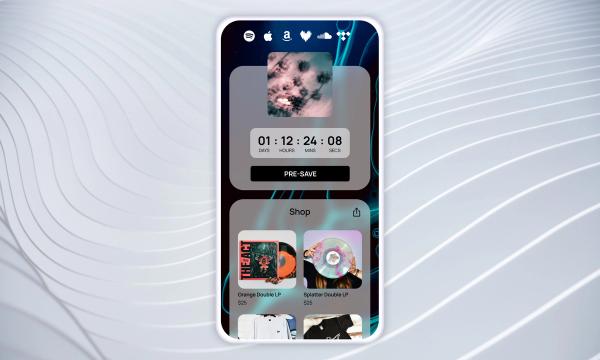
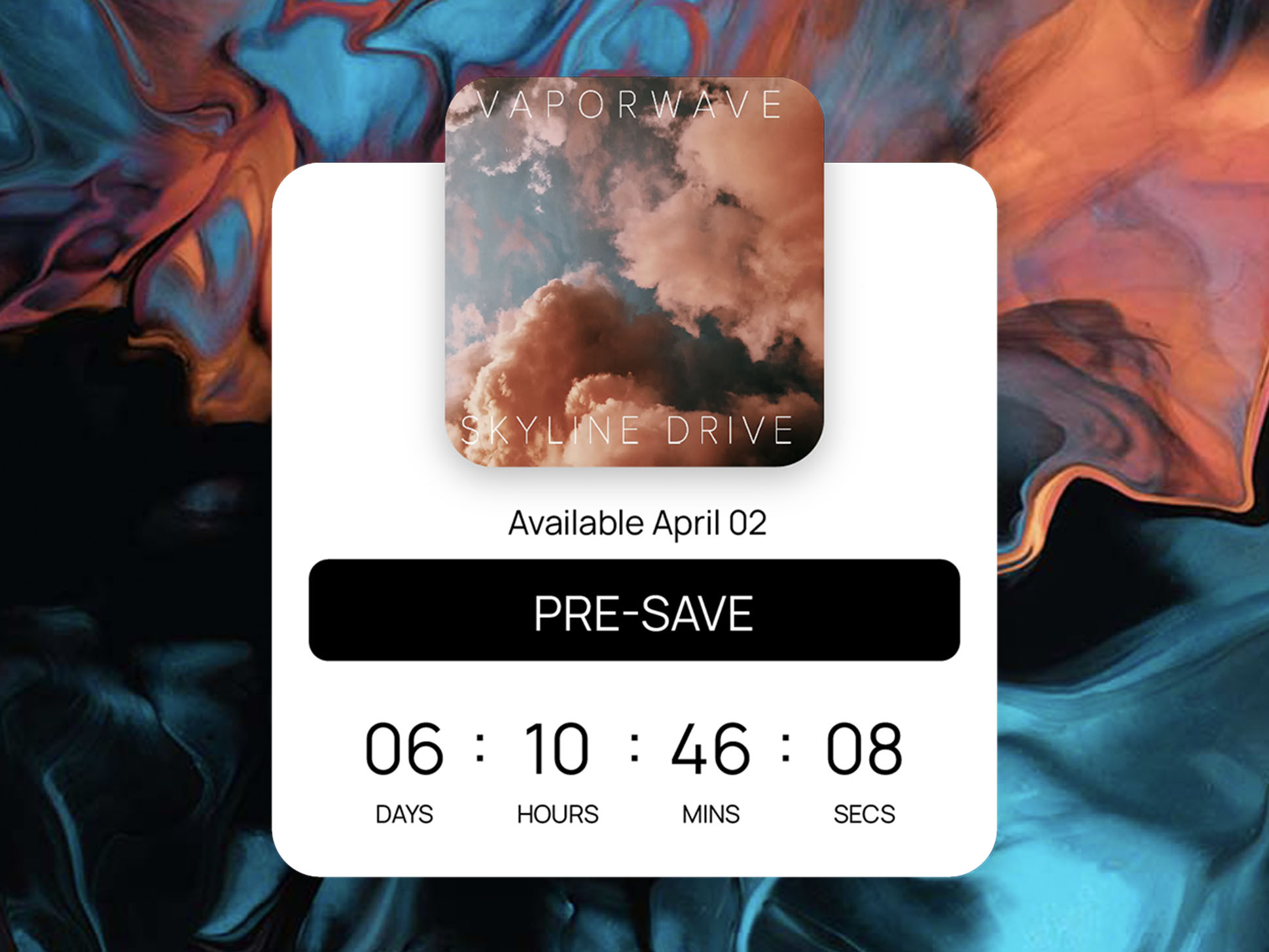
Instead of sending fans to disconnected destinations, they allow streaming links, pre-saves, merchandise, videos, tour dates, and audience signup forms to exist together within the same campaign experience.
Each interaction supports the others.
Someone arriving to hear a new single discovers the accompanying vinyl.
Someone purchasing merchandise watches the latest music video.
Someone joining the mailing list becomes part of future campaigns.
This connected approach reinforces one of the central ideas developed throughout this cluster: campaigns become more effective when every channel contributes to the same fan journey.
Fan Behavior Should Continuously Improve Marketing
The strongest marketing systems learn from every campaign.
Every purchase, pre-save, stream, email open, SMS response, and live event contributes another piece of fan intelligence.
That information should not remain trapped inside separate reporting dashboards.
It should improve future outreach.
Questions worth asking include:
- Which products attract first-time buyers?
- Which releases generate repeat customers?
- Which audience segments respond best to SMS?
- Which fans consistently purchase physical music?
- Which cities produce the highest merchandise engagement?
- Which campaigns convert listeners into customers?
The answers shape future releases, merchandise planning, audience segmentation, and communication strategies.
This is another important distinction between reporting and marketing infrastructure.
Reporting describes what happened.
Marketing infrastructure changes what happens next.
Shopify Becomes More Valuable When It Is Connected
Shopify is exceptionally good at what it was designed to do.
It helps creators manage products, inventory, orders, fulfillment, and commerce at scale.
For musicians, however, a store exists within a much larger ecosystem.
Fans stream music.
Watch videos.
Attend shows.
Subscribe to email.
Join SMS campaigns.
Purchase merchandise.
Share releases with friends.
No single platform captures that complete relationship on its own.
That is why the future of music marketing is increasingly centered on connected experiences.
Merchandise becomes more valuable when it supports release campaigns.
Streaming becomes more valuable when it informs audience segmentation.
Landing pages become more valuable when they connect discovery with action.
Every campaign becomes more effective because fan intelligence compounds over time.
From that perspective, Shopify is no longer just an ecommerce platform.
It becomes one source of relationship data inside a broader marketing system that grows stronger with every purchase, every release, and every interaction between artist and fan.